

 Back
Back


 Back to
topics
Back to
topics




Table of Contents
 22-Sep-2025
Author-Maria Thompson
Your Certified Associate in Project Management (CAPM) Certification says you know the rules of Project Management. But in the interview chair, it’s your ability to apply them that sets you apart. For freshers, it’s about proving you can think like a Project Manager. For experienced professionals, it’s about showing growth, adaptability, and leadership potential.
In this blog, these Top 20+ CAPM Interview Questions can be your
crash course in answering with clarity, precision, and impact. We’ve taken the
most frequently asked CAPM Interview Questions, spanning PMBOK concepts, tools,
and real-world problem-solving and paired them with explanations and polished
sample answers. The goal? To transform your nervous energy into confident
storytelling. Start Preparing!
Table of Contents
1)
CAPM Interview Questions and
Answers
a)
What does the Work Breakdown
Structure (WBS) mean?
b)
What is a Project Charter?
c) What is a Gantt chart?
d)
What is the triple constraint
triangle of Project Management?
e)
What is the difference between
constraints and assumptions in Project Management?
f)
What is EVM?
g)
What do you understand by a
Risk Register?
h)
How would you describe a failed
project?
i)
What is Project Communication
Management?
j)
How does a Project Manager
motivate their team members?
2)
Conclusion
CAPM Interview Questions and Answers
The following CAPM Interview Questions and answers are designed to
help you prepare effectively, covering key concepts, tools, methodologies, and
practical scenarios. By reviewing them, you’ll gain the confidence to respond
clearly, showcase your skills, and stand out as a strong candidate for Project
Management roles.
1) What does the Work Breakdown Structure (WBS) mean?
This question evaluates your understanding of project planning and your
ability to organise work into manageable tasks.
Sample Answer
“The Work Breakdown Structure (WBS) is a hierarchical decomposition
of a project into smaller, manageable tasks or deliverables. It helps define
scope, assign responsibilities, track progress, and improve clarity. WBS
ensures efficient planning, resource allocation, and control throughout the
project lifecycle.”

2) What is a Project Charter?
This tests your knowledge of foundational project documentation and
its role in formally authorising and setting the direction for a project’s
execution.
Sample Answer
“A Project Charter is an official document that authorises a
project, defining its objectives, scope, stakeholders, and deliverables. It
outlines roles, responsibilities, and authority, ensuring alignment among
stakeholders. Serving as a central reference, it guides decision-making and
keeps the team focused on meeting agreed goals throughout the project
lifecycle.”
3) What is a Gantt chart?
This examines your familiarity with project scheduling tools and
visual planning methods.
Sample Answer
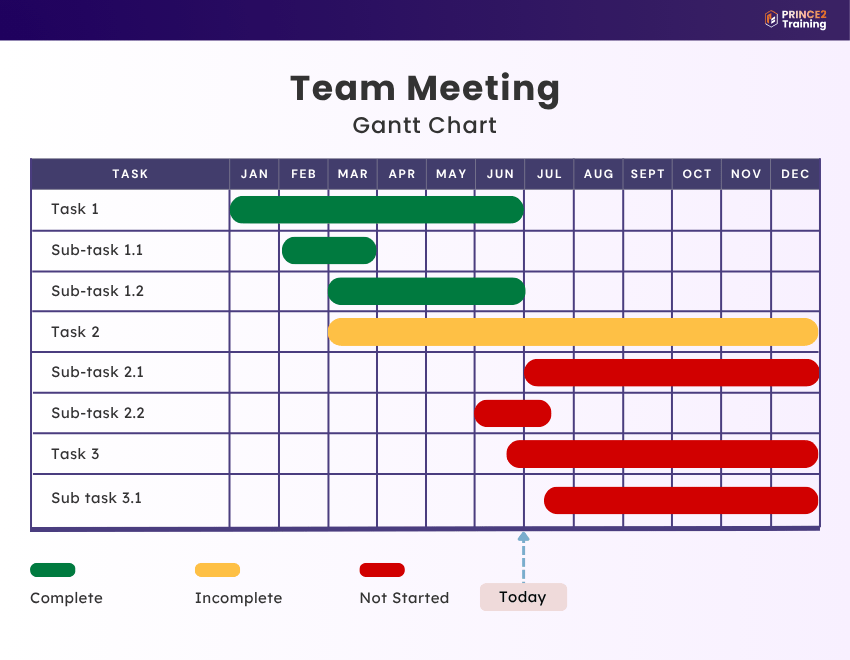
“A Gantt chart is a visual Project Management tool that displays
tasks, durations, dependencies, and timelines in a clear format. It helps
managers schedule activities, allocate resources efficiently, and track
milestones. By providing a visual overview, it ensures progress stays aligned
with deadlines and project objectives throughout the lifecycle.”
4) What is the triple constraint triangle of Project Management?
This assesses your understanding of the three primary constraints in
Project Management and how they influence each other when balancing project
goals and quality.
Sample Answer
“The triple constraint triangle represents the relationship between
scope, time, and cost in Project Management. Adjusting one constraint impacts
the others, requiring careful balance. It helps guide trade-offs,
prioritisation, and decision-making to achieve project objectives while
maintaining quality and meeting stakeholder expectations within agreed
parameters.”
5) What is the difference between constraints and assumptions in Project Management?
This evaluates your understanding of how constraints and assumptions
influence project planning and execution.
Sample Answer
“Constraints are limiting factors that affect how a project must be
executed, such as budget, deadlines, or resource availability. Assumptions are
considered true for planning purposes, even if not verified. Both influence
scope, schedule, and risk. By documenting and reviewing them regularly, I
ensure realistic planning and can quickly adapt if conditions change.”
6) What is EVM?
This tests your knowledge of project performance measurement
techniques and how they integrate scope, time, and cost.
Sample Answer
“Earned Value Management (EVM) is a method that measures project
performance by comparing planned work with completed work and actual costs. It
integrates scope, schedule, and cost data to identify variances, forecast
project performance, and support informed decision-making throughout the
project lifecycle.”
7) What do you understand by a Risk Register?
This checks your knowledge of risk documentation and tracking tools.
Sample Answer
“I use a Risk Register to record, monitor, and manage identified risks
throughout a project. I include details such as risk description, probability,
impact, mitigation strategies, and assigned ownership. Keeping it updated
allows me to address potential issues proactively and maintain project
stability and success.”
Take charge of organisational risk - Complete our
Management
of Risk (MoR) Training
to strengthen control and
deliver certainty!"
8) How would you describe a failed project?
This assesses your ability to identify project failures and evaluate
the factors contributing to unsuccessful outcomes.
Sample Answer
“I describe a failed project as one that doesn’t meet objectives
within the agreed scope, time, or cost, or fails to deliver value. In my
experience, common causes include poor planning, inadequate resources,
ineffective communication, or unmanaged risks, all of which can derail project
success.”
9) What is Project Communication Management?
This tests your understanding of effective communication processes
in projects.
Sample Answer
“Project Communication Management involves planning, distributing,
and monitoring information throughout a project. It ensures stakeholders
receive timely, relevant updates, fostering collaboration and informed
decision-making. Effective communication reduces misunderstandings, builds
trust, and keeps the project aligned with its objectives from initiation to
closure.”
10) How does a Project Manager motivate their team members?
This inquiry examines the applicant’s ability to inspire and
maintain team morale.
Sample Answer
“A Project Manager motivates their team by recognising achievements,
providing constructive feedback, and encouraging professional growth. They
maintain open communication, promote collaboration, and create a supportive
work environment. These actions build trust, enhance morale, and keep the team
focused on delivering quality results within deadlines.”
Accelerate your Project Management career - Prepare, practice, and
pass it with our proven
PMP®
Exam Prep Boot Camp Course
now!
11) What is a Prototype? What are some types of Prototypes?
This tests your knowledge of early product models and their role in
development.
Sample Answer
“A prototype is an initial version of a product used to test design
and functionality. Types include low-fidelity, high-fidelity, functional, and
mock-up prototypes. Prototyping helps identify improvements early, gather user
feedback, and reduce risks before full-scale production or deployment.”
12) What are the skills needed for Project Managers?
This checks your understanding of the competencies essential for
managing projects.
Sample Answer
“Key skills for Project Managers include leadership, communication,
problem-solving, time management, negotiation, and risk management. Technical
knowledge, adaptability, and stakeholder engagement are equally vital. These
skills enable managers to guide teams effectively, manage resources, and meet
project objectives within defined constraints.”
13) What is a Decision Support System (DSS)?
This evaluates your awareness of tools that aid project
decision-making.
Sample Answer
“A Decision Support System (DSS) is a computer-based application
that helps managers make informed choices by analysing data. It combines
databases, analytical models, and user interfaces to present insights, enabling
better planning and problem-solving for complex project decisions.”
14) What do you know about the critical path method?
This tests your understanding of scheduling techniques for
identifying essential project activities.
Sample Answer
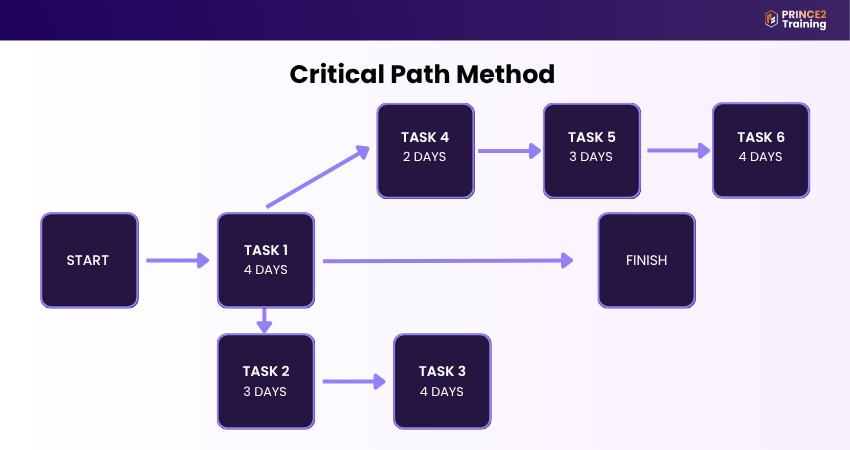
“In my work, I use the critical path method to identify the sequence
of dependent tasks that determine the project’s minimum duration. I monitor
these tasks closely, as delays directly impact the schedule, and allocate
resources effectively to ensure timely project completion.”
15) What are the principles of Project Stakeholder Management?
This checks your understanding of effectively engaging and managing
stakeholders.
Sample Answer
“Principles include identifying stakeholders early, understanding
their needs, maintaining open communication, managing expectations, and
fostering trust. Effective stakeholder management ensures alignment, reduces
conflicts, and builds long-term relationships, supporting project success from
initiation through completion.”
16) Can you explain the major types of risks that you will encounter in a project?
This evaluates your awareness of risk categories in Project
Management.
Sample Answer
“In my projects, I encounter risks such as technical, financial,
operational, schedule, legal, and compliance risks, as well as external factors
like market changes or natural disasters. I focus on identifying these early so
I can develop and implement effective mitigation strategies to protect project
success.”
17) What is an organisational structure in Project Management? What are its types?
This tests your understanding of how authority, roles, and
communication are structured in projects.
Sample Answer
“An organisational structure defines the arrangement of roles,
authority, and communication. Types include functional, matrix (weak, balanced,
strong), and projectised structures. Each affects decision-making, control, and
collaboration, influencing how projects are managed and delivered.”
18) Why is the project management life cycle crucial for accomplishing project objectives or targets?
This checks your understanding of structured project execution.
Sample Answer
“The Project Management life cycle, initiation, planning, execution,
monitoring, and closure provides a structured framework for achieving
objectives. It ensures proper planning, resource allocation, and risk control,
helping deliver projects successfully on time, within budget, and to the
desired quality standards.”
19) What is the difference between a Project management plan and Project documents?
This evaluates your ability to distinguish between planning tools
and supportive documents.
Sample Answer
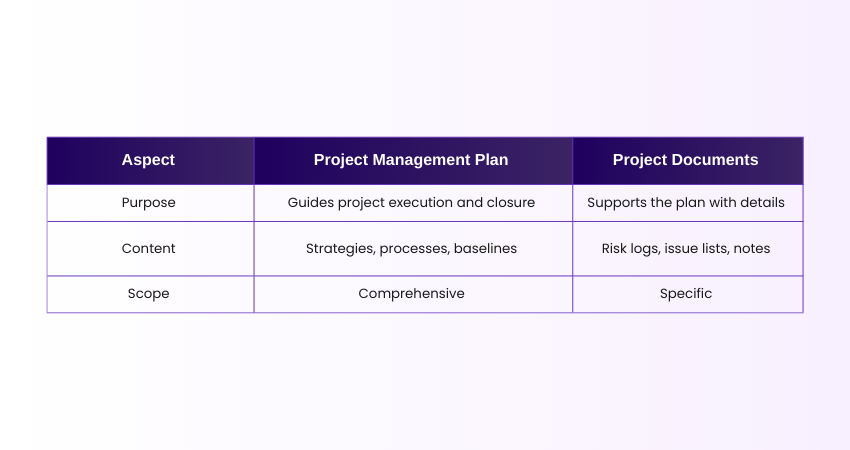
“A Project Management plan is a comprehensive document outlining how
the project will be executed, monitored, and closed. Project documents are
supplementary records like risk registers or issue logs, providing additional
details but not forming part of the main plan.”
20) What is the schedule variance of a project if the earned value is 899 and the planned value is 1099?
This tests your understanding of project performance metrics and
your ability to interpret them effectively.
Sample Answer
“Schedule Variance (SV) is calculated as Earned Value (EV) minus
Planned Value (PV). In this case, SV = 899 – 1099 = –200. A negative SV means
the project is behind schedule. This indicates potential timeline risks,
requiring immediate corrective measures to realign activities and avoid further
delays.”
21) Which one is more important to a Project Manager, the customer, or the development team?
This inquiry examines your prioritisation skills and ability to
balance stakeholder needs.
Sample Answer
“Both are equally important. I believe in maintaining a balance by
ensuring the customer’s needs are met while supporting the development team’s
capabilities. Satisfied customers and a motivated team together create the
foundation for successful project delivery.”
Conclusion
Preparing for a CAPM interview means knowing the concepts and being
able to explain them clearly. These Top 20+ CAPM Interview Questions and
answers will help you understand what to expect and how to respond. Whether you
are new to Project Management or have experience, these answers can boost your
confidence and improve your chances of success. Best of luck!
Unlock global career doors and step into leadership with our PMI® Certification – Sign up today!