

 Back
Back


 Back to
topics
Back to
topics



Table of Contents

 30-Jul-2025
Author-Veronica Davis
Imagine 10 teams rowing in different directions. Would the boat move forward? That is what happens when Agile teams work without coordination. Unclear goals cause delays, confusion, and blockers. Fortunately, there’s a way to fix this. That’s where Scrum of Scrums comes in to make the work easier.
This is a powerful Agile technique that helps teams stay connected, manage dependencies, and solve cross-team blockers before they impact progress. It provides a clear and simple structure to stay aligned without losing focus. Read on to discover how Scrum of Scrums works, who is involved, best practices, and tips to run it successfully.
Table of Contents
1) What is Scrum of Scrums?
2) How Does Scrum of Scrums Work?
3) Scaled Structure of Scrum of Scrums
4) Purpose of Scrum of Scrums
5) Who is Involved in a Scrum of Scrums?
6) Best Practices for Effective Scrum of Scrums
7)How to Conduct a Productive Scrum of Scrums?
8) Conclusion
What is Scrum of Scrums?
Scrum of Scrums (SoS) is a scaled Agile meeting structure designed to coordinate work between multiple Scrum teams working on the same project or product. It helps large projects where many Scrum teams are working at the same time.
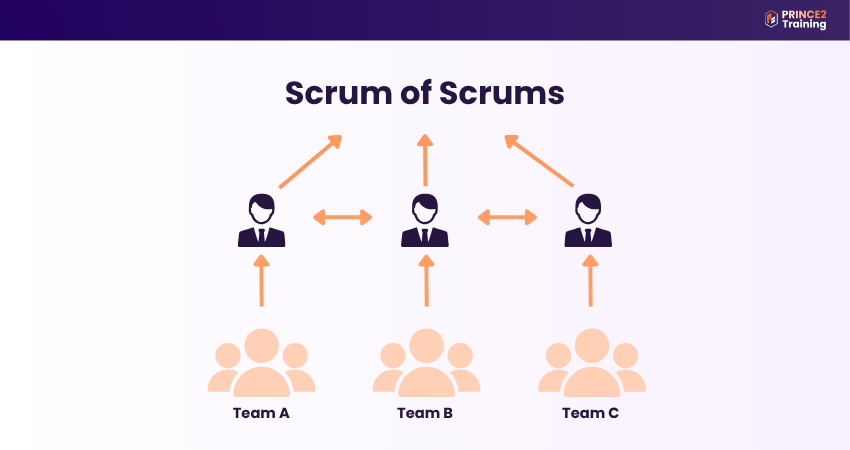
Each Scrum team has daily meetings called Daily Scrums. But when there are many teams, selected members from each team go to the Scrum of Scrums meeting. In that meeting, they share updates, talk about problems, and plan how to work better together. It is like a meeting made up of people who attend other team meetings.

How Does Scrum of Scrums Work?
Scrum of Scrums happens regularly, either every day or a few times a week. Each team selects one member as an ambassador to attend the meeting. In that meeting, each of them share:
1) What their team has completed
2) What they plan to do next
3) Any obstacles that are blocking progress
4) Tasks that depend on or involve other teams
The goal of this meeting is not about solving every problem but about knowing what is going on and who needs help. If there is a big issue, teams can meet again to fix it. Usually, these meetings are short, between 15 and 30 minutes, and focused only on coordination between teams.
Scaled Structure of Scrum of Scrums
The Scaled Structure of Scrum of Scrums (SoS) is a way to help many Scrum teams work together on the same product or project. It keeps everyone in sync, helps fix problems between teams, and makes sure the work fits together smoothly.
1) Scrum Teams
Each team works independently using the Scrum framework with its own Scrum Master, Product Owner, and Development Team. They manage their own sprints, backlogs, and goals.
2) Scrum of Scrums (SoS)
Each team sends one employee, usually a Scrum Master, to a regular meeting. They share updates, discuss blockers, manage dependencies, and align sprint goals across teams.
3) Scrum of Scrums Master
This person leads the SoS meetings, helps remove blockers, makes impediments visible across teams, and supports ongoing improvement in teamwork and delivery.
4) Meta Scrum
Meta Scrum includes Product Owners or stakeholders from multiple teams. It focuses on aligning product vision, setting priorities, and managing the product backlog at a broader level.
Define product visions and manage backlogs with our
Scrum Product Owner Certification
– Register today!
Purpose of Scrum of Scrums
The Scrum of Scrums has one main goal of helping many teams work together as one. Let’s look at the purposes of using it:
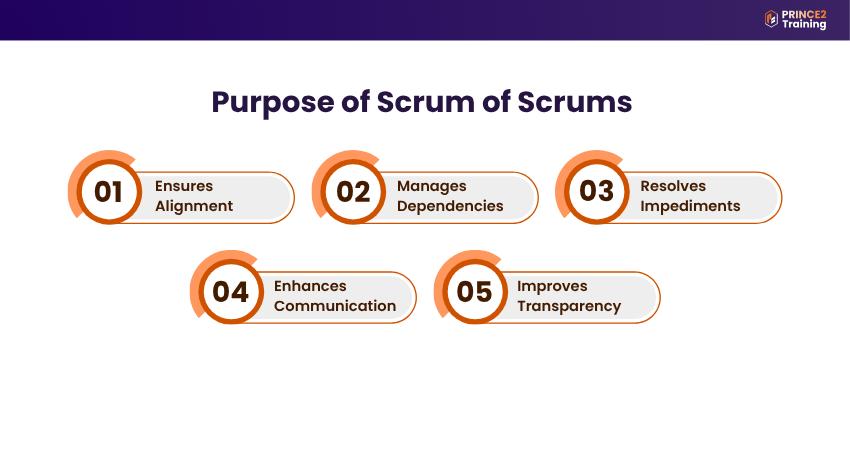
1) Ensures Alignment
SoS brings together employees from each Scrum team to make sure everyone is working toward the same goals. This shared understanding keeps all teams aligned with the overall vision of the project.
2) Manages Dependencies
The meetings of SoS help find and handle work that depends on other teams. By talking about these early, teams can plan better, avoid waiting too long, and keep things moving smoothly. They also make sure that no team is held back because another team’s work is delayed.
3) Resolves Impediments
Cross-team blockers are discussed and solved during SoS meetings. By sharing different perspectives, teams can find better solutions quickly and prevent issues that tend to affect the delivery process.
4) Enhances Communication
Regular SoS meetings improve the flow of information between teams. This ensures that all the teams have the latest updates, reducing miscommunication and confusion. It also helps build trust and teamwork by keeping everyone informed and involved.
5) Improves Transparency
SoS increases visibility into each team’s progress, challenges, and risks. This transparency helps in better decision-making and allows teams to adapt quickly when it is necessary. It ensures that problems are spotted early and that shared solutions can benefit multiple teams.
Who is Involved in a Scrum of Scrums?
While conducting a Scrum of Scrums meeting, not everyone joins it. It consists of key members from each team and mirrors the structure of a standard Scrum, scaled up for coordination.
1) Product Owner:
Shares backlog updates, helps avoid duplicate work, and aligns teams on the product vision and definition of "done."
2) Facilitator (Scrum of Scrums Leader):
Often a senior Scrum Master or Agile Coach, they guide the meeting, track progress, and help remove cross-team impediments.
3) Team Representatives:
Usually Scrum Masters or rotating members who share updates, risks, and concerns from their teams.
4) Optional Roles:
Depending on the project, architects or stakeholders may join to offer expert input or resolve issues.
Discover the principles, roles, and technical practices of Scrum with our
Scrum Developer Training
– Join now!
Best Practices for Effective Scrum of Scrums
To get the most value from your Scrum of Scrums meetings, it is important to apply strategies that improve communication, issue resolution, and keep teams aligned. Here are the best practices for you:
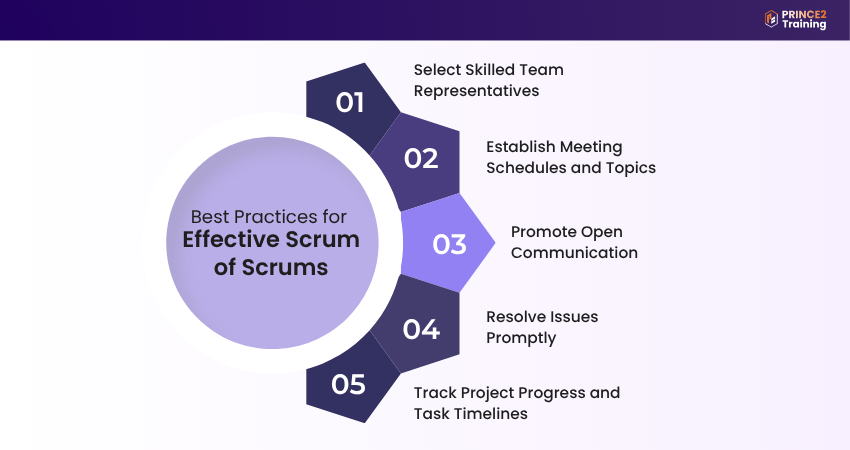
1) Select Skilled Team Representatives
Each team should select someone who can clearly explain their team’s work and problems. These individuals should understand what the team is doing and speak for them in the meeting.
1) Choose someone who can explain the team’s work clearly
2) Pick someone who can make decisions when needed
3) Make sure they can share updates and listen to others, too
2) Establish Meeting Schedules and Topics
Plan your meetings ahead of time. Keep them short and only talk about important things. This helps save time and keeps everyone focused.
1) Hold meetings once or twice a week
2) Keep the meeting around 15–30 minutes
3) Talk about team progress, blockers, risks, and timelines
3) Promote Open Communication
Create an open and supportive space where everyone can speak honestly. They need to feel comfortable sharing updates, delays, and challenges.
1) Encourage honest, clear updates from each team
2) Foster a transparent culture where issues can be raised early
3) Support respectful listening and constructive feedback
4) Resolve Issues Promptly
If there is any problem, discuss it right away or plan to fix it after the meeting. Don’t wait too long or let issues grow. Instead, take quick action and follow-ups.
1) Identify blockers and assign follow-up owners
2) Address minor issues during the meeting when possible
3) Set up another meeting to fix big or technical issues
5) Track Project Progress and Task Timelines
Track how long issues take to resolve and how much time remains to complete deliverables. This ensures better prediction of project timelines and timely adjustments.
1) Use simple tools like task boards or charts
2) Monitor how quickly blockers are addressed
3) Check the time left before deadlines or the sprint ends
How to Conduct a Productive Scrum of Scrums?
So far, you might have an idea of what Scrum of Scrums is and how it helps with a project. Let’s now check how to conduct a productive Scrum of Scrums meeting:
1) Share the Right Info:
Each team knows exactly what to report, such as progress, blockers, risks, and dependencies.
2) Send the Right Person:
Choose representatives who can speak for the team and make decisions. It doesn’t always have to be the Scrum Master.
3) Keep It Short:
Keep meetings short and consistent, ideally 15–30 minutes. It is also not conducted more than twice a week.
4) Focus on Problem-solving:
Use the meeting to discuss and plan how to resolve cross-team blockers and not just give updates.
5) Create a Safe Space:
Encourage honest communication and idea sharing with trust and transparency.
6) Relay Info Back:
Each member who attended the meeting needed to take important updates and actions back to their own teams, so everyone stays informed.
7) Stay Agile, Not Waterfall:
Use the meeting to collaborate, adapt, and improve, not just to report status.
Conclusion
Scrum of Scrums isn't just another meeting; it is a vital tool for keeping large Agile teams connected, focused, and efficient. When done right, it helps teams avoid delays, reduce confusion, and deliver together. Start small, follow the best practices, and experience how powerful scaled collaboration can be.
Promote collaboration and improve efficiency in project delivery with our Scrum Master Training – Be a part of it immediately!
Frequently Asked Questions?
The Scrum of Scrums is typically joined by representatives from each Agile team, often called ambassadors or Scrum Masters. These participants share updates, highlight cross-team issues, and coordinate efforts to ensure alignment, remove blockers, and keep progress on track.
The Daily Scrum is a quick meeting within a single team to discuss daily progress and blockers. On the other hand, Scrum of Scrums involves members from multiple teams and focuses on coordination, dependencies, and cross-team issues, ensuring all teams stay aligned and work smoothly on a shared project goal.
The meeting is often led by a Chief Scrum Master, Release Train Engineer (RTE), or a designated team representative. In smaller projects, teams can take turns running the meeting. The leader should keep the session short, focused, and valuable.