Table of Contents

What are Project Controls

calender 06-Jun-2026

Author-Maria Thompson

Projects rarely go as planned. With tight deadlines, rising costs, shifting priorities, and unexpected risks, even well-planned projects can become difficult to manage. This is why Project Controls play a crucial role in helping organisations manage complex projects with greater clarity, control, and confidence.

From construction and engineering to IT and business operations, Project Controls help organisations improve oversight, strengthen communication, and support better decision-making throughout the project lifecycle. In this blog, you will learn about their importance, elements, types, benefits, and how they contribute to better project performance.

What are Project Controls?

Project Controls are a set of processes, methods, and tools used to plan, monitor, and manage project activities throughout the project lifecycle. They help organisations track progress, manage schedules, control costs, and maintain quality standards to ensure projects achieve their goals effectively.

Project Controls are especially important in large and complex projects where budgets, timelines, and resources require close monitoring. They help Project Managers identify risks early, measure performance, and make informed decisions, which directly contribute to project success.


Why are Project Controls Important?

Project Controls are important because they help organisations manage projects more efficiently and improve the chances of successful project delivery. By providing regular updates on costs, schedules, progress, and quality, they enable Project Managers to monitor performance closely and make informed decisions when issues arise. This helps projects stay organised, focused, and aligned with business objectives.

Also, Project Controls support better budget estimation, cost management, and timeline planning throughout the project lifecycle. They help reduce unnecessary expenses, improve team coordination, and keep employees engaged by creating clearer direction and accountability. In competitive industries, effective Project Controls provide organisations with an advantage by improving overall project performance and delivery outcomes.

Key Elements of Project Controls

Project Controls rely on several connected elements that help organisations manage project performance, reduce uncertainty, and improve overall project delivery. Let’s look at them below:

1) Cost Management and Budget Control: This element focuses on managing project expenses and maintaining financial stability. It involves creating realistic budgets, tracking spending, identifying cost variances, and controlling expenses to keep the project financially healthy.

2) Schedule Management and Timeline Control: Schedule Management helps teams plan and monitor project timelines effectively. By tracking milestones, deadlines, and task dependencies, organisations can identify delays early, minimise disruptions, and keep projects progressing.

3) Quality Assurance and Control: Quality Management ensures project deliverables meet the required standards and stakeholder expectations. Quality assurance focuses on improving processes to prevent issues, while quality control checks deliverables to identify and resolve problems.

4) Risk Management and Mitigation: Risk Management helps organisations identify potential risks, assess their impact, and prepare suitable response strategies. Also, regular risk monitoring improves project readiness and helps teams respond quickly to unexpected challenges.

5) Change Management and Scope Control: Change Management provides a structured process for handling project modifications and change requests. It helps evaluate the impact of changes on cost, schedule, and resources while preventing scope creep and maintaining project stability.

Types of Project Controls

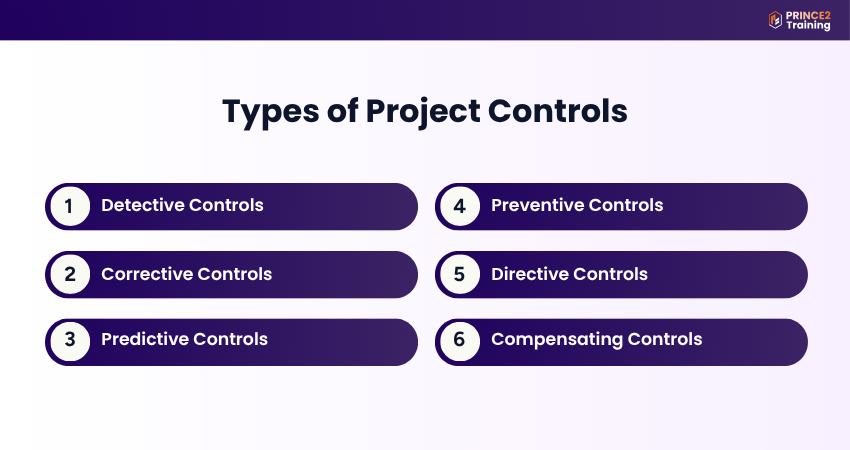
Different types of Project Controls help organisations take a balanced approach to managing projects. They enable teams to prevent issues, monitor performance, and respond effectively to challenges throughout the project lifecycle. Let’s explore the key types below:

Project Control Types

1) Detective Controls

Detective controls help teams identify issues and performance gaps during project execution. Tools such as progress reports, dashboards, and variance analysis allow organisations to monitor activities effectively. These controls improve visibility, enabling teams to detect problems early and take timely corrective actions before they escalate.

2)  Corrective Controls

Corrective controls focus on resolving issues after they have been identified. This may include recovery planning, reallocating resources, or adjusting schedules. These actions help bring projects back on track, minimise delays, and ensure objectives are still achieved despite disruptions.

3) Predictive Controls

Predictive controls use historical data, trends, and forecasting techniques to anticipate future challenges. Methods such as trend analysis and predictive modelling support proactive decision-making. By identifying potential risks early, these controls allow organisations to take preventive measures before issues impact project performance.

4) Preventive Controls

Preventive controls aim to reduce the likelihood of problems occurring before project execution begins. They include detailed planning, resource allocation, stakeholder analysis, and clear project structures. These controls create a strong foundation, reducing risks and supporting smoother project execution from the outset.

5) Directive Controls

Directive controls provide guidance on how project work should be performed. They include standard procedures, approval workflows, project methodologies, and governance frameworks that help maintain consistency and compliance throughout the project.

6) Compensating Controls

Compensating controls act as alternative measures when primary controls cannot be fully implemented. They include contingency plans, exception handling processes, and temporary solutions. These controls ensure continuity, allowing projects to adapt and continue effectively under changing conditions.

Learn the fundamentals of project success with the PRINCE2® Foundation Training – Sign up now!

When to Use Project Controls?

Project Controls are applied throughout the entire project lifecycle to manage performance, reduce risks, and improve outcomes. Their use varies across different project stages, ensuring consistent control and visibility:

1) Project Planning

During project planning, Project Controls are established at the beginning when teams define objectives, create schedules, allocate resources, estimate costs, and identify stakeholders. They help organisations develop realistic timelines and budgets while reducing the risks associated with inaccurate planning.

2) Project Closure

As the project progresses, Project Controls are used to track performance, monitor schedules, manage resources, and control costs. They enable teams to identify delays, bottlenecks, or quality issues early, allowing Project Managers to take timely corrective actions and maintain project momentum.

3)  Project Execution & Project Monitoring

As the project progresses, Project Controls helps teams track performance, monitor schedules, manage resources, and control project costs. They help identify delays, bottlenecks, and quality issues early, allowing Project Managers to take corrective action quickly and keep the project on track.

What are the Benefits of Effective Project Controls?
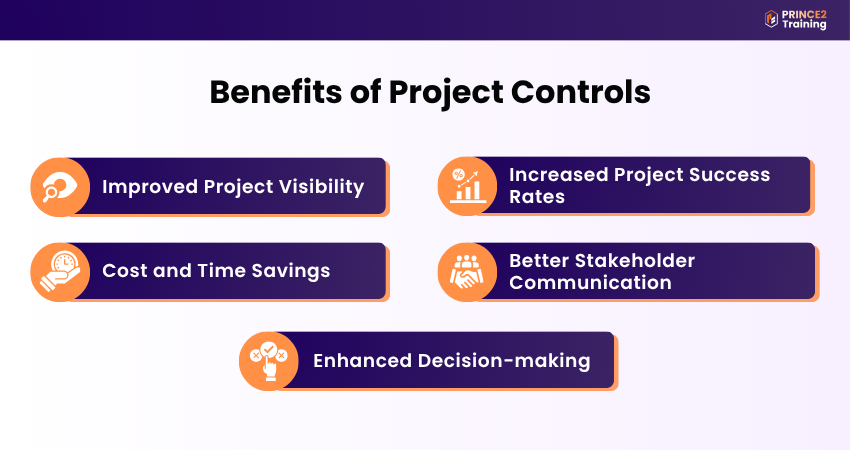
Effective Project Controls provide several advantages that help organisations manage projects more efficiently and achieve better outcomes. They strengthen oversight, improve coordination, and ensure projects remain aligned with objectives throughout the lifecycle. Let’s explore the key benefits below:


1) Improved Project Visibility

Project Controls provide clear insights into project progress, performance, costs, and potential risks. This enhanced visibility enables teams to monitor activities effectively. With real-time data and reporting, teams can maintain better control, quickly identify issues, and ensure the project stays on track.

2) Cost and Time Savings

Project Controls help optimise resource allocation, reduce unnecessary expenses, and minimise delays. Early identification of issues allows organisations to act before problems escalate. This leads to better cost management, improved scheduling, and greater overall efficiency across the project lifecycle.

3) Enhanced Decision-making

By providing accurate and timely information, Project Controls support faster and more informed decision-making. They enable Project Managers to analyse trends and assess performance effectively. This allows for proactive decision-making, helping teams address challenges early and reduce the risk of major disruptions.

4) Increased Project Success Rates

Effective Project Controls help teams spot deviations quickly and resolve issues before project objectives are affected. This improves the likelihood of completing projects successfully while maintaining stakeholder satisfaction and organisational credibility.

5) Better Stakeholder Communication

Project Controls supports regular and transparent communication with stakeholders by providing reliable updates on project status, achievements, and challenges. This helps build trust, improve collaboration, and maintain alignment throughout the project lifecycle.

Take project leadership to the next level and lead complex projects confidently with the PRINCE2® Practitioner Training – Join now!

How to Implement Project Controls?

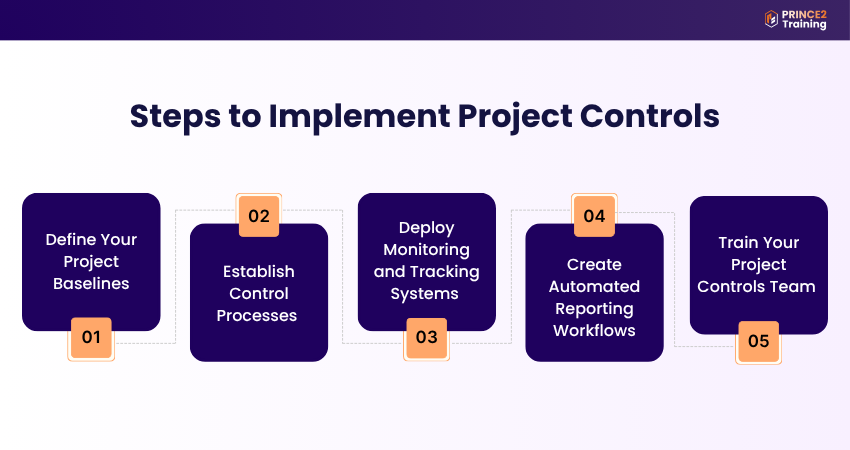
Project Controls requires a structured approach that helps organisations monitor performance, manage risks, and maintain consistency throughout the project lifecycle. Let’s look at the implementation steps below:


Step 1: Define Your Project Baselines

Start by establishing clear baselines for project scope, schedule, and budget. These baselines act as reference points for measuring performance. They provide a benchmark for comparison, allowing teams to identify deviations early and take corrective action during execution.

Step 2: Establish Control Processes

Develop clear processes for monitoring progress, analysing performance, managing changes, and resolving issues. Assign roles and define workflows across the team. This improves accountability, ensures consistency, and enables a structured approach to managing project activities.

Step 3: Deploy Monitoring and Tracking Systems

Use appropriate tools and systems to track schedules, costs, resources, and performance metrics. Dashboards and automated tracking systems enhance visibility. These tools enable real-time monitoring, helping teams detect issues quickly and respond proactively.

Step 4: Create Automated Reporting Workflows

Develop reporting processes that provide stakeholders with timely and accurate project updates. Automated reports help improve communication, reduce manual effort, and ensure better visibility into project progress.

Step 5: Train Your Project Controls Team

Provide training to help teams develop both technical and communication skills related to Project Controls. Continuous learning helps organisations improve Project Management practices and adapt to changing project requirements effectively.

Project Controls Examples

Project Controls uses different tools, processes, and documents to help organisations manage project performance, reduce risks, and maintain better oversight. Let’s look at some common examples of Project Controls used across different industries and project types:

1) Project Baselines: Project baselines are reference points used to measure project performance throughout execution. Cost, scope, and schedule baselines help Project Managers compare planned progress with actual performance to identify delays, budget issues, or scope changes.

2) Change Control Plan: A change control plan helps organisations manage project changes in a structured manner. It supports the identification, evaluation, approval, and tracking of change requests while maintaining clear communication with stakeholders.

3) Risk Register: A risk register is used to identify, assess, and monitor potential project risks. It also helps teams prepare contingency plans and response strategies to minimise the impact of unexpected issues on project performance.

4) RACI Chart: A RACI chart defines who is Responsible, Accountable, Consulted, and Informed for each project activity. It improves role clarity, communication, and accountability, especially in large or complex projects.

5) Quality Management Plan: A quality management plan outlines the standards, processes, and activities required to maintain project quality. It helps ensure project deliverables meet stakeholder expectations and organisational requirements.

6) Project Status Report: Project status reports provide regular updates on project progress, costs, timelines, risks, and completed tasks. They help stakeholders stay informed and support better project decision-making.

7) Project Contracts: Project contracts help define responsibilities, budgets, timelines, and risk management measures between involved parties. They support project governance, accountability, and smoother project execution.

8) Construction WIP Report: A Work in Progress (WIP) report is commonly used in construction projects to track project costs, completed work, and financial performance. It helps organisations monitor progress and make informed project decisions.

Bring agility into every project and start delivering Agile projects confidently with the PRINCE2 Agile® Foundation Training – Sign up today!

Project Controls vs Project Management
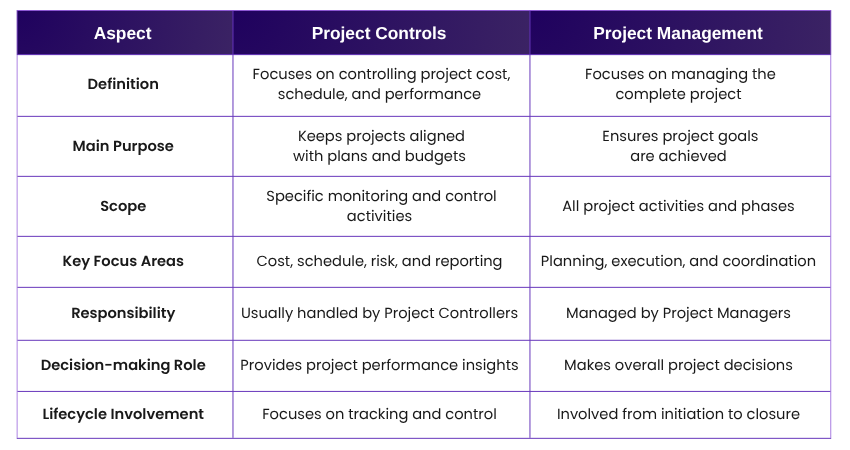
Project Controls and Project Management are closely related, but they serve different purposes within a project. Let’s look at their core differences in the table below:

Difference Between Project Controls and Project Management

Project Controls is a specialised part of Project Management that focuses on tracking project performance and identifying issues related to cost, schedule, scope, and risks. Project Controllers analyse project data, monitor progress, and provide reports that help teams make informed decisions. Their primary objective is to maintain project stability and prevent delays or budget overruns.

In contrast, Project Management is broader and covers the complete management of a project. Project Managers are responsible for planning, coordinating teams, managing stakeholders, allocating resources, and ensuring project objectives are achieved successfully. While Project Controls supports monitoring and analysis, Project Management oversees the overall direction and delivery of the project.

Conclusion

Project Controls help organisations improve project visibility, manage risks, and maintain better control throughout the project lifecycle. By supporting accurate planning, monitoring, and decision-making, they help businesses improve efficiency, reduce delays, and achieve successful project outcomes consistently.

Learn to shape successful projects with confidence by joining the PRINCE2® Certification now!

Frequently Asked Questions?

Usually, Project Controls are managed by Project Controls Managers, Analysts, Engineers, and planning or cost specialists. These professionals monitor project schedules, costs, risks, and performance data to support informed decision-making, while the Project Manager remains responsible for overall project delivery.

Project Controls contribute to successful project delivery by helping organisations monitor costs, schedules, risks, and project performance effectively. They provide data-driven insights that support informed decision-making and keep projects aligned with planned objectives, timelines, and budgets.

Project Managers should use Project Controls software to monitor project costs, schedules, risks, and performance accurately. These tools provide real-time insights, automated reporting, and forecasting capabilities that support faster decision-making, reduce manual errors, and improve project efficiency.

cross

Get in Touch With Us

red-star Who Will Be Funding the Course?

red-star
red-star
+44
red-star

Preferred Contact Method

cross
discount

40%

SPECIAL BIG DEALS

Level Up Your Skills – Enroll Now!

Unlock up to 40% off today!

red-star Who Will Be Funding the Course?

red-star
red-star
+44
red-star