

 Back
Back


 Back to
topics
Back to
topics



Table of Contents
 04-Jun-2025
Author-Veronica Davis
Code and creativity, deadlines and innovation, people and processes, all working in harmony! This is the masterful balancing act that Technical Project Managers ensure. They serve as part strategist, part tech expert and part team motivator to make sure projects run smoothly from idea to delivery.
Essentially, it's a role that blends technical know-how with leadership finesse, where strategic vision meets hands-on problem-solving. This blog explores the key aspects of the Technical Project Manager role, including the skills you'll need, salary range and the top tools. So read on and bridge the gap between technology and leadership!
Table of Contents
1) What is a Technical Project Manager?
2) Types of Technical Project Managers
3) How to Become a Technical Project Manager
4) Essential Skills for Technical Project Managers
5) Average Salary of a Technical Project Manager
6) Top Five Tools Every Technical Project Manager Should Use
7) Conclusion
What is a Technical Project Manager?
A Technical Project Manager is someone who understands Information Technology (IT), manages IT projects, and guides technical teams in a company. Since the job needs both technical knowledge and management skills, it's seen as a mix of the two roles.
Essentially, a Technical Project Manager not only bridges the gap between engineering teams and business stakeholders but also ensures that projects stay aligned with timelines and budgets. They are skilled in translating complex technical requirements into actionable plans, resolving bottlenecks and cultivating collaboration across departments.

Types of Technical Project Managers
There are two types of projects that require the service of a Technical Project Manager:
Software Projects
These involve the planning, development, and delivery of software applications ranging from web and mobile apps to large-scale software systems. Technical Project Managers in this area need a strong understanding of the Software Development Lifecycle (SDLC), including methodologies like Agile and Scrum. Proficiency in version control systems and the ability to collaborate closely with developers are also essential.
Infrastructure Projects
These focus on building and maintaining the foundational components of IT systems such as servers, networks, data centres, and storage solutions. Technical Project Managers in this area need knowledge of hardware components and Infrastructure Configuration Management. Infrastructure projects demand careful planning around deployment, replacements, upgrades, and integration into existing environments.
How to Become a Technical Project Manager
Consider these steps to streamline your path to becoming a Technical Project Manager:
Since this role requires a blend of technology and management, you'll need to strengthen your skills in both areas. On the management side, skills in team leadership, organisation and training are key. Additionally, mastering project scheduling tools like Gantt charts, Kanban boards, and project software can be helpful.
For technical expertise, focus on the industry you want to work in. For example, a gaming Project Manager may need experience with game development, cloud services like AWS, and Agile or Lean methods.
3) Gain Hands-on Technical and Project Management Experience
To build relevant experience, apply your learning to real projects. Look for contract or volunteer opportunities where you can serve as a Project Manager. You can also create and manage your own project to demonstrate initiative and practical ability.
4) Create a Strong Technical Project Manager CV
As you gain experience along with certifications, put together a professional CV that spotlights your technical and management strengths. Research roles on job portals, structure your qualifications to match each job description and present your achievements clearly.
5) Prepare for Common Technical Project Manager Interview Questions
Before applying, make sure you're well-prepared to answer typical interview questions. Employers may ask questions regarding what motivates you in technical Project Management, how much experience you have, how you've applied technical skills to projects etc. Practising is the key to confidently describing your expertise.
6) Apply for Technical Project Manager Positions
Armed and ready with your CV and interview skills, start applying to Technical Project Manager positions. Focus on those roles that fit your qualifications and career goals. Ask yourself if the job requirements align with your skills and whether the projects excite you.
Become the practitioner every modern project needs with our
PRINCE2 Agile® Practitioner Training
- register now!
Essential Skills for Technical Project Managers
A candidate needs mastery of numerous hard and soft skills to successfully manage IT projects. Here are some of the essential skills required for this position of a Technical Project Manager:
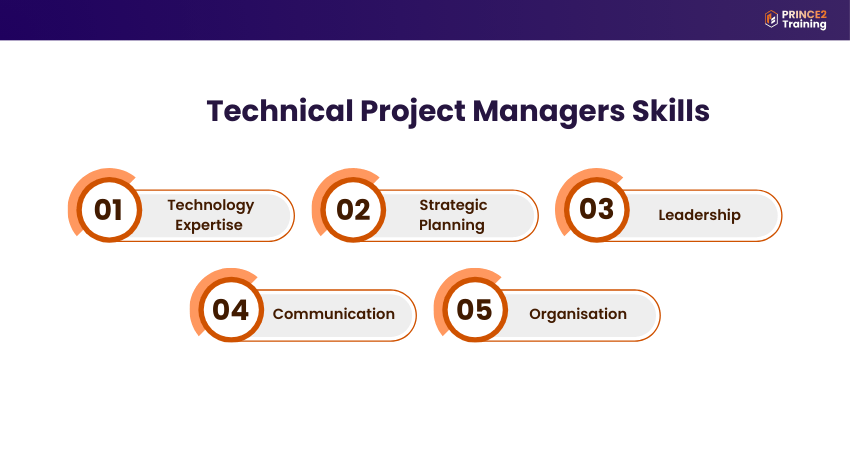
1) Technology Expertise
1) Technical Project Managers must have expertise in areas such as software and hardware installation, upgrades and site maintenance.
2) They have to keep up to date with the latest technologies to support successful project delivery.
3) They must use their technical skills to determine the feasibility of projects.
4) They should have a strong understanding of architecture and infrastructure for overseeing technical processes in the workplace.
2) Strategic Planning
1) Project Managers need strategic planning skills to break projects into smaller, time-bound tasks.
2) They use planning skills to set overall goals for project completion.
3) This ability helps them guide and support their team to achieve successful results.
3) Leadership
1) Employers prefer candidates who can effectively lead a project team.
2) Strong leadership skills help motivate and inspire team members to perform well.
3) Leadership skills enable coaching of team members for growth and improvement.
4) They also allow effective delegation of tasks based on each member's skill set.
4) Communication
1) A Technical Project Manager uses active listening, written, and verbal communication skills to manage projects.
2) They communicate technical information in writing for team members and clients.
3) They use communication and listening skills to explain project goals clearly.
4) These skills help them understand team challenges and resolve issues effectively.
5) They also use communication to discuss business strategies and allocate responsibilities.
5) Organisation
1) Employers expect Technical Project Managers to show strong organisational skills when handling projects.
2) They use these skills to maintain project budgets effectively.
3) Organisational ability helps them create and manage technical documents.
4) It ensures projects are completed on time and within scope.
5) Good organisation while supervising each stage reduces confusion and improves workflow.
6) Problem-solving
1) Difficulties can arise at any stage of a technical project.
2) Employers prefer Technical Project Managers with strong skills to find quick solutions.
3) They use risk-mitigation strategies to address potential technical issues.
4) Creativity helps them develop innovative solutions when challenges occur.
5) Analytical thinking allows them to assess problems and choose effective resolutions.
7) Negotiation
1) A Project Manager negotiates both priorities and people during technical projects.
2) They may negotiate contracts with suppliers, vendors, employees, or clients to ensure timely project completion.
3) They can adjust and negotiate payment terms with clients when project requirements change.
4) Strong negotiation skills help reduce overall project costs.
5) Negotiation also supports resolving technical issues effectively.
8) Time Management
1) Time Management is an essential skill for Technical Project Managers.
2) They use it to design project schedules and timelines.
3) It helps ensure that project timelines are realistic and achievable.
4) Time Management supports handling multiple projects and meeting deadlines.
5) This skill also enables task prioritisation and timely project completion.
Own the product and drive the vision that customers love. Sign up for our
Scrum Product Owner Certification
now!
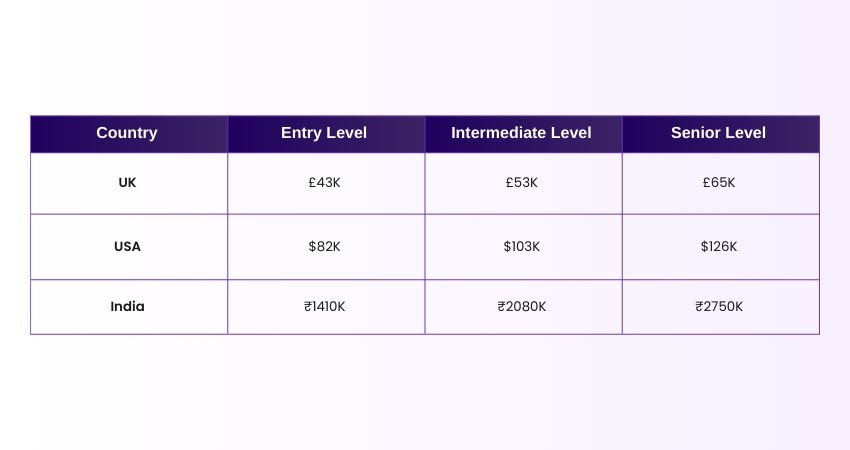
Average Salary of a Technical Project Manager
A Technical Project Manager's salary can vary based on several factors. These include their level of experience, education, professional certifications, industry, company size and geographical location. Here are the salary ranges across three major regions:
Source
:
Glassdoor
,
Glassdoor
,
Salary.com
Top Five Tools Every Technical Project Manager Should Use
Hardware and software are not strictly associated with Developers or IT Managers. As a Technical Project Manager, you'll also need the right tools to keep projects on track. Here are five essential tools:
1) Work OS for Project Management
1) monday.com goes beyond basic Task Management with a full Work OS.
2) It's an open platform where you can build the exact tools your team needs using automation, integrations, and custom dashboards.
3) Features include multiple project views (Gantt, Kanban, Timeline, etc.)
4) It also includes task assignments, communication tools, workload tracking, bug tracking, privacy settings, and in-depth reporting.
5) It even offers low-code apps to design custom solutions.
2) Predict! for Risk Analysis
1) Every project involves risks and Predict! helps you identify and evaluate them.
2) It offers a visual, easy-to-use interface with configurable analysis, KPI and tracking.
3) It has advanced visualisations like heat grids, tornado diagrams, scatter charts, and S curves.
4) All these features make Risk Management much simpler.

3) Slack for Team Communications
1) Clear communication is vital for Technical Project Managers.
2) Slack provides one-to-one and group chats, file sharing, searchable history, and reactions
3) It also provides GIFs, mobile and desktop apps, and a workflow builder.
4) Additionally, it integrates seamlessly with monday.com to centralise teamwork.
4) Zoom for Video Conferencing
1) For situations where messaging isn't enough, Zoom delivers reliable video communication.
2) It supports team meetings, one-on-one calls, private chats, phone features, and contact storage.
3) Its wide range of integrations makes it an ideal tool for remote or global collaboration.
5) Google Workspace for Workplace Documentation
1) As a Technical Project Manager, much of your knowledge needs to be documented and shared.
2) Google Workspace helps you create and manage documents, spreadsheets, and presentations.
3) You can also use it to build a project wiki.
4) It keeps vital information accessible for your entire team.
Conclusion
Becoming a Technical Project Manager requires you to blend leadership, strategy and technical expertise into one dynamic package of a role. With the right qualifications and experience, you can guide teams, streamline any project process and deliver impactful results. If you're ready to bridge technology and management, this career should be your go-to path.
Unlock global recognition as you lead projects with unparalleled precision and control. Sign up for our PRINCE2® Certification now!
Frequently Asked Questions?
No FAQs available