

 Back
Back


 Back to
topics
Back to
topics




Table of Contents

 18-Apr-2026
Author-David Walter
Have you ever finished a sprint and wondered if your work truly meets expectations or delivers real value? This is where a Sprint Review becomes important. It gives teams a clear moment to showcase progress, validate outcomes, and ensure that what is built aligns with stakeholder needs in an Agile environment.
It creates a space for meaningful feedback, encourages transparency across teams and stakeholders, and ensures each sprint delivers real progress toward business goals. In this blog, you will learn about, what is a Sprint Review, its purpose, how it works, its benefits, and more. Let's begin!
What is a Sprint Review?
A Sprint Review is a collaborative Scrum event held at the end of each sprint, where the team shares completed work with stakeholders and gathers feedback. It is an interactive session focused on inspecting progress and adapting the product, with the team presenting work that supports the product goal.
This event is time-boxed, typically up to four hours for a one-month sprint, with shorter durations for shorter sprints. It encourages open discussion and helps teams evaluate outcomes and decide the next steps for continuous improvement.

What is the Main Purpose of a Sprint Review?
The purpose of a Sprint Review is to gather feedback, ensure transparency, and guide the next steps in the development process. It allows the team to demonstrate completed work to stakeholders, helping everyone clearly understand what has been achieved during the sprint.
Also, it helps to align progress with the product vision while collecting valuable input to refine future priorities. Additionally, the Sprint Review creates an opportunity to recognise team achievements and identify areas for improvement. This supports continuous growth and better outcomes in future sprints.
Key Participants During a Sprint Review
A Sprint Review involves key members of the Scrum team along with relevant stakeholders. Bringing together a diverse group ensures meaningful feedback and helps the product evolve in line with user and business needs. Let's look at the key participants below:
1) Developers:
They present the completed work, explain delivered features, and address any questions about the sprint outcomes.
2) Product Owner:
They lead the session, ensure feedback is captured, and clarify priorities and next steps.
3) Scrum Master:
They facilitate the event, ensuring smooth communication and collaboration among participants.
4) Stakeholders (Customers or Business Owners):
They provide feedback, share insights, and guide product direction.
How the Sprint Review Process Works?
The Sprint Review process is a structured and collaborative event that helps teams showcase progress, gather feedback, and adjust priorities for the next sprint. It ensures that the product evolves based on real input and stays aligned with business goals. Let's look at how it works below:
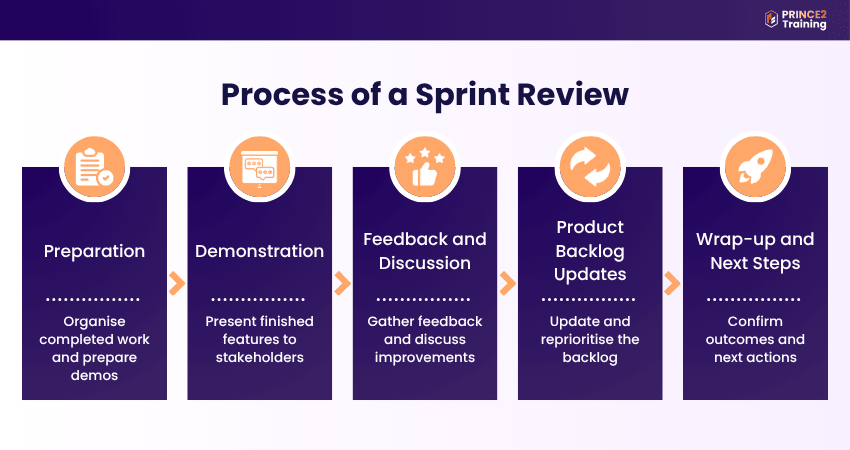
1) Preparation:
The Scrum team organises completed work that meets the Definition of Done (DoD) and prepares demos, visuals, or supporting materials. This step ensures the review runs smoothly and clearly communicates progress.
2) Demonstration:
Developers present finished features or product increments to stakeholders. They explain what was delivered, how it works, and how it meets the sprint goals and requirements.
3) Feedback and Discussion:
Stakeholders actively share feedback, ask questions, and discuss the product's functionality, value, and potential improvements. This makes the session interactive and collaborative.
4) Product Backlog Updates:
Based on the feedback received, the team works with the Product Owner to refine, adjust, and reprioritise the product backlog. This helps reflect changing needs and priorities.
5) Wrap-up and Next Steps:
The meeting concludes with a clear understanding of outcomes, updated priorities, and agreed next steps. This helps guide upcoming sprint planning and continuous improvement efforts.
Turn ideas into high-impact product outcomes with the Scrum Product Owner Certification – Sign up now!
Benefits of a Sprint Review
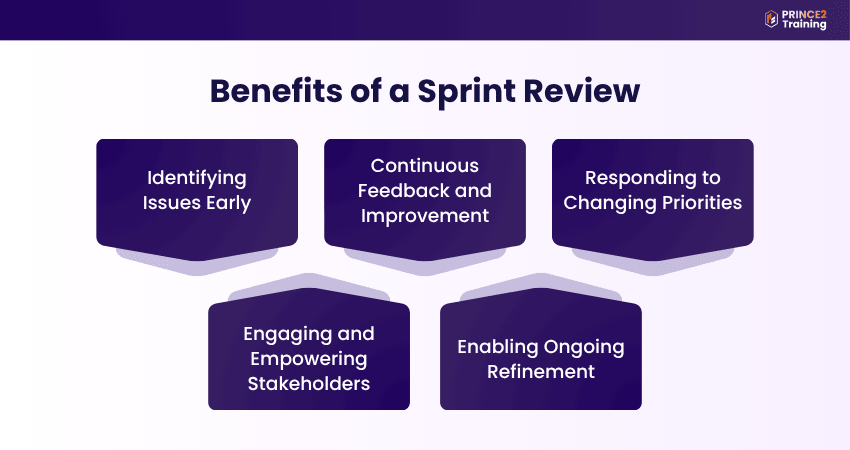
A Sprint Review offers several benefits that help Agile teams improve collaboration, adapt to change, and deliver better products. Let's look at the key benefits below:
1) Identifying Issues Early
By regularly showcasing the completed work, teams can identify misunderstandings, gaps, or defects early. This helps resolve potential issues before they become costly or difficult to fix later.
2) Continuous Feedback and Improvement
Sprint Reviews create a continuous feedback cycle between the team and stakeholders. This ongoing interaction allows teams to make timely adjustments based on real-time input. This ensures the product evolves in alignment with user needs and business goals.
3) Responding to Changing Priorities
Sprint Reviews allow teams to respond effectively to evolving business needs, market trends, or customer expectations. This flexibility ensures that the product stays relevant and competitive in the market.
4) Engaging and Empowering Stakeholders
Stakeholders are actively involved in the Sprint Review process, giving them a voice in decision-making. This increases overall engagement, builds trust, and strengthens collaboration between teams and stakeholders.
5) Enabling Ongoing Refinement
Feedback gathered during the Sprint Review enables teams to refine features, enhance functionality, and improve quality in a structured way. This iterative approach ensures steady progress and better outcomes over time.
Learn to code faster, smarter, and more collaboratively with the
Scrum Developer Training
– Join today!
Common Challenges of Sprint Review
While Sprint Reviews are crucial for feedback and alignment, certain challenges can reduce their effectiveness. Addressing these with practical solutions keeps the session structured and focused on delivering real value. Let's look at it below:
1) Low Engagement or Silence
Participants may hesitate to share feedback due to a lack of clarity, confidence, or interest. This can result in minimal discussion and missed opportunities to improve the product, making the Sprint Review less interactive and less valuable.
Solution:
Encourage interaction by asking open-ended questions, involving key stakeholders early, and creating a safe, informal environment where everyone feels comfortable sharing.
2) Limited Stakeholder Participation
Stakeholders may skip the Sprint Review if they do not see its relevance or if it is poorly scheduled. This reduces the diversity of input and can lead to decisions that are not fully aligned with business or user needs.
Solution:
Send clear invitations with a structured agenda, highlight the importance of their input, and demonstrate how their feedback impacts product decisions.
3) Presenting Incomplete Work
Showing unfinished features or poorly prepared demos can confuse stakeholders and create uncertainty about progress. Also, it can reduce trust in the team's ability to deliver quality outcomes.
Solution:
Follow the Definition of Done (DoD), present only completed increments, and rehearse demonstrations to ensure clarity and professionalism.
4) Turning Reviews Into Status Meetings
When the session becomes a one-way update, it limits collaboration and reduces the effectiveness of the Sprint Review. This approach prevents valuable feedback from being shared.
Solution:
Focus on meaningful conversations by encouraging feedback on product value, user experience, and improvements instead of simply reporting progress.
5) Not Recognising Achievements
Failing to acknowledge the team's efforts and progress can lower morale and reduce motivation over time. Also, this can make the Sprint Review feel overly critical instead of making it balanced for everyone involved.
Solution:
Take time to recognise achievements, celebrate milestones, and appreciate the team's contributions to maintain a positive and motivated environment.
6) Ignoring Backlog Updates
If the feedback is not captured or reflected in the backlog, teams may miss important insights and fail to adjust priorities effectively. This can lead to repeated issues and slower improvement.
Solution:
Make backlog updates part of the Sprint Review by recording feedback, refining user stories, and aligning on clear next steps with stakeholders.
Lead complex projects with flexibility and control by joining the
Agile Project Management (AgilePM®) Foundation & Practitioner Training
now!
How Often are Sprint Reviews Conducted or Held?
Sprint Reviews are conducted once at the end of every sprint, making them a regular and essential part of the Scrum cycle. Generally, sprints last between two and four weeks and Sprint Reviews are held with the same frequency, immediately after the sprint work is completed.
The exact timing depends on the length and structure of the sprint within a project. Regardless of duration, the Sprint Review is always scheduled at the end of each sprint. This is crucial for showcasing completed work, gathering stakeholder feedback, and preparing for the next phase of development.
Best Practices for Effective Sprint Reviews
Applying best practices ensures that Sprint Reviews remain focused, collaborative, and valuable for both the team and stakeholders. Let's look at some of the best practices below:
1) Clearly Define "Done"
Establish a clear definition of what "done" means, such as fully tested and ready for release. This ensures that only complete and potentially shippable work is presented, avoiding confusion and maintaining high quality standards.
2) Actively Involve the Product Owner
The Product Owner should be engaged throughout the sprint and actively participate in the Sprint Review. Their involvement ensures clarity, proper alignment, and effective communication with stakeholders.
3) Celebrate Small Wins
Use the Sprint Review to recognise progress and achievements, even if they are small. Celebrating these wins helps boost team morale, motivation, and a sense of accomplishment.
4) Keep it Casual
Sprint Reviews should be interactive rather than presentation heavy. Demonstrate working software instead of using slides, and encourage open, conversational feedback from stakeholders.
Conclusion
Sprint Review plays a crucial role in ensuring continuous improvement, stronger collaboration, and consistent value delivery in Agile projects. By creating space for feedback, alignment, and reflection, teams can adapt quickly to changing needs and refine their products. When done right, it enhances transparency, drives better decision-making and long-term success.
Lead Agile teams that deliver real results with the Scrum Master Training – Sign up today!
Frequently Asked Questions?
A Sprint Review focuses on what the team has built, showcasing completed work and gathering stakeholder feedback. In contrast, a sprint retrospective focuses on how the team worked, identifying improvements in processes and collaboration.
A Sprint Review is timeboxed to a maximum of 4 hours for a one-month sprint. For shorter sprints, it should be shorter, with a common guideline of about 1 hour per sprint week.
A Sprint Review should not include work that does not meet the Definition of Done (DoD). Avoid presenting unfinished features, detailed technical reports, or treating it as a status update.