

 Back
Back


 Back to
topics
Back to
topics



Table of Contents
 16-Jul-2025
Author-Veronica Davis
Have you ever worked on a project where priorities kept changing, deadlines felt tighter, and teams found it challenging to remain aligned? In the present scenario of business landscapes, traditional planning cannot keep up with the rapid pace and constant change. That is where the importance of Scrum Methodology comes in, helping teams stay flexible, and focused while delivering meaningful progress.
In this methodology, teams work in short cycles, adapt quickly to new information or emerging technology, and keep communication clear. So, if you are ready to help teams deliver results with confidence and clarity, keep reading. In this blog, you will learn what is Scrum Methodology, how it works, its principles, and more.
What is Scrum Methodology?
Scrum Methodology is an Agile framework used to manage complex projects through iterative and incremental delivery. It provides a structured approach where teams work in short cycles called Sprints to deliver usable outcomes. Scrum is commonly used in Software Development, but it can be applied across many industries and types of work.
In Scrum, the team has clear roles and meets often to talk about what they are doing. It also helps the team stay open, solve problems early, and make changes if needed. Scrum helps teams stay on track and finish good work faster.

How Does Scrum Work?
Scrum is easy to understand but takes time to master. Created by Jeff Sutherland and Ken Schwaber, Scrum’s core ideas are explained in The Scrum Guide, which outlines how to apply Scrum effectively.
Key Concepts Include:
1) Self-organising teams that plan and manage their own work
2) Time-boxed Sprints that typically last 1–4 weeks
3) Customer-focused delivery in every Sprint
4) Defined roles with Scrum Master, Product Owner and Developers
5) Regular events such as Sprint Planning, Daily Scrum, Sprint Review and Retrospective
6) Core artefacts including Product Backlog, Sprint Backlog and Increment
Scrum Principles and Values
Scrum principles and values are useful for guiding how teams apply the Scrum Methodology. They help understand how Scrum functions, how teams collaborate, and how work should be managed. Let’s look at its principles and values below:
1) Principles
1) Self-organisation:
Scrum teams manage their own work, make decisions together, and take responsibility for the outcomes. Here, teams collaborate to solve problems and organise tasks efficiently.
2) Time-boxing:
Scrum uses fixed time limits for activities, such as Sprints, Sprint Planning, and Retrospectives. This keeps teams focused, maintains momentum, and completes work within the set timeframe.
3) Value-based Prioritisation:
Here, work in the product backlog is prioritised based on the value it delivers to users and stakeholders. High-value items are completed first, ensuring the most important outcomes are delivered early.
4) Iterative Development:
Work is completed in short cycles called Sprints. After each cycle, progress is reviewed, and improvements are made. This continuous feedback helps teams refine their product and adapt to changing needs.
5) Collaboration:
Scrum relies on teamwork and open communication. Events, such as Daily Scrums or Sprint Reviews, allow teams to share progress, resolve issues, and improve performance.
2) Values
1) Commitment:
Team members commit to achieving Sprint Goals and supporting each other. In Scrum, they take ownership of their work and remain dedicated to delivering meaningful results.
2) Courage:
Scrum teams face challenges openly, raise concerns clearly, and make difficult decisions when required. This keeps quality and transparency intact.
3) Focus:
Everyone concentrates on the work agreed for each Sprint. Limiting distractions and setting clear desired outcomes for each Sprint brings efficiency in achieving the goals.
4) Openness:
Teams share progress, challenges, and feedback with each other and with stakeholders. Transparency builds trust and prevents problems from growing.
5) Respect:
Each team member values the skills and contributions of others. Respect supports collaboration, encourages diverse perspectives, and strengthens teamwork.
Learn effective Agile delivery from beginning to finish with
Agile Project Management (AgilePM®) Foundation & Practitioner Course
today!
Scrum Methodology and Processes
The Scrum Methodology is built on a simple but powerful process that helps teams stay focused, collaborate effectively, and improve continuously. Here’s how the Scrum process works:
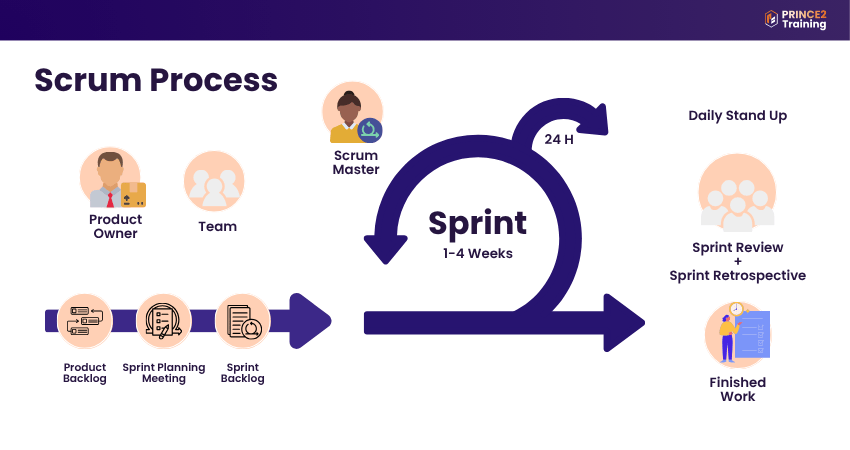
The Scrum process begins with the product backlog, a list of features, fixes, and ideas managed and updated by the Product Owner. Before each Sprint, the team holds Sprint Planning to select tasks from the product backlog, set a clear goal, and create a focused plan called the Sprint Backlog.
During Sprint Execution, which usually lasts 1 to 4 weeks, the team works together to complete selected tasks by breaking them into smaller, manageable parts. Throughout the Sprint, the team meets daily for a short Daily Scrum to share progress and identify any blockers. Then, they conduct a Sprint Review to present completed work to stakeholders and gather feedback.
This is followed by the Sprint Retrospective, where the team reflects on what went well and what could improve in the future. Finally, each Sprint ends with Increment Delivery, where a fully completed, usable part of the product is delivered.
Scrum Roles and Responsibilities
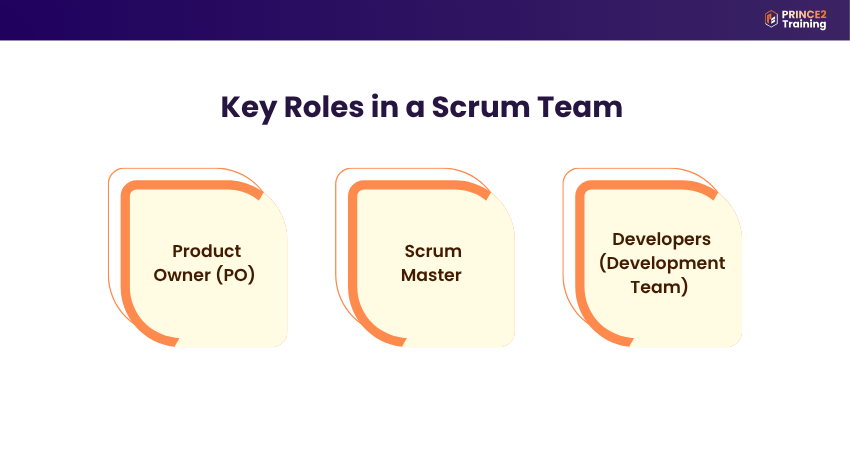
A Scrum team has three roles: Scrum Master, Scrum Product Owner, and Developers. Everyone works together and shares the work. The team is small, about 10 people, to stay clear and productive.
1) Product Owner (PO)
The Product Owner ensures the team is building the right things. They manage the Product Backlog, a list of tasks and ideas for the product. The Product Owner talks to customers and others to understand what is important. They choose what the team should work on next. Only the Product Owner can change the backlog. Everyone must respect their choices.
2) Scrum Master
The
Scrum Master
helps everyone understand and use Scrum the right way. They guide the team and help them stay on track. The Scrum Master is not the boss; they are more like a coach. They help the team solve problems, work better together, and follow the Scrum process. They also help the Product Owner and even the whole company use Scrum well.
3) Developers (Development Team)
Developers are the people who build the product. They work in the team and do the tasks planned for the Sprint. They help plan the work, build it, and check that it’s done right. Developers follow the rules of quality and help each other every day to reach the goal. The skills they need depend on the work, but their job is to create usable work every Sprint.
Learn essential Scrum Developer skills and build better products faster. Join our
Scrum Developer Training
now!
What are Scrum Events?
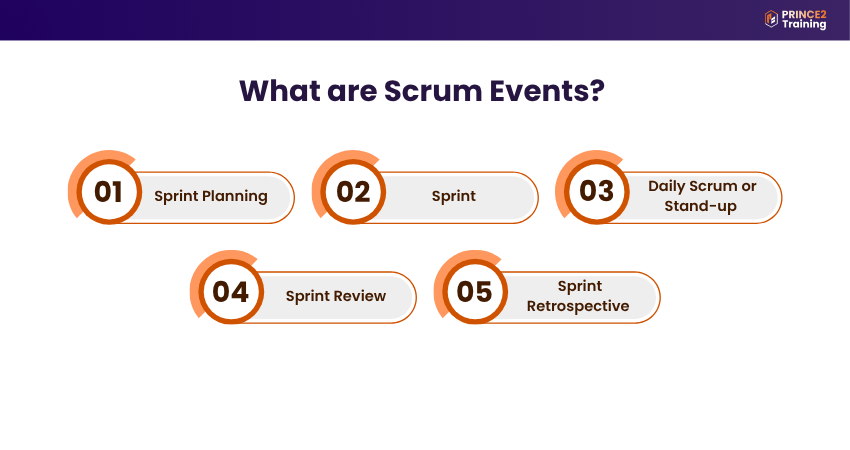
Scrum events are structured meetings that help teams plan, collaborate, review progress, and improve continuously. Let's look at its events below:
1) Sprint Planning
Sprint Planning occurs at the beginning of the Sprint. Here, the team reviews the product backlog, selects the important tasks, and decides how to achieve them. This helps teams stay focused, set clear goals, and understand how the work will progress.
2) Sprint
The Sprint is the main event of the Scrum Methodology. It is a fixed time for completing selected work from the backlog. Each Sprint must be of the same length, but it can range from one to four weeks depending on team needs.
3) Daily Scrum or Stand-up
The Daily Scrum is a short, time-boxed meeting held every day. Team members align on the progress and plan their work for the next day. Generally, they answer the following questions:
1)
What did I complete today?
2)
What will I work on today?
3)
Are there any blockers?
4) Sprint Review
The Sprint Review takes place at the end of the Sprint. Here, the team and stakeholders review the completed work, collect feedback, and update the backlog if needed. This ensures the product continues to meet user and stakeholder expectations.
5) Sprint Retrospective
The Sprint Retrospective focuses on improving how the team works. Members reflect on the Sprint by discussing what went well, what did not, and what changes should be made next time. This supports continuous improvement in teamwork and Scrum Methodology processes.
What are Scrum Artefacts?
Scrum Teams use special tools called artefacts to help plan, manage, and finish their work. These tools give clear information to the team and to others about what is being done. There are three main Scrum Artefacts:
1) Product Backlog
The Product Backlog is a list of everything that needs to be done for the project. It includes features, ideas, fixes, and changes. It's the team’s big to-do list. The list keeps changing as new things are added or old ones removed. The Product Owner updates this list often.
2) Sprint Backlog
The Sprint Backlog is a smaller list taken from the Product Backlog. It shows the tasks the team plans to do during the current Sprint. Before each Sprint, the team picks the tasks they will work on. This list can change a little during the Sprint if needed.
3) Product Increment
An Increment is the finished work at the end of a Sprint. It is a working part of the product that can be used or shown. Each Sprint should give a useful result. The team may work in different ways, but they always aim to meet their Sprint Goal.
Learn how to build strong Agile project foundations today with the
Agile Project Management Foundation (AgilePM® V3) Course
!
Benefits of Scrum Methodology
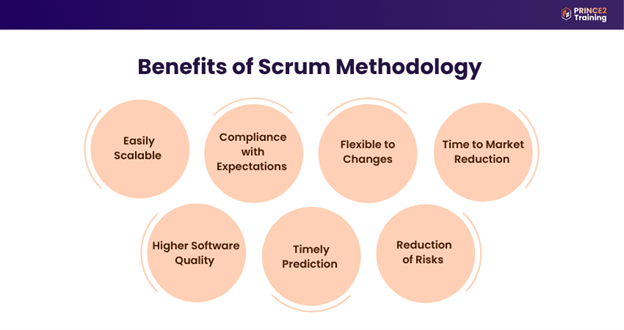
Scrum helps teams deliver usable work each Sprint, ensuring better quality and efficient use of resources. These are the benefits of Scrum Methodology:
1) Easily Scalable
Scrum divides work into short, structured Sprints, making it easier to expand or adjust the product. Teams can add new features, improve functionality, and refine the design without disrupting the workflow. This supports growth while keeping development manageable.
2) Compliance with Expectations
Scrum keeps customers and stakeholders involved throughout the project. Regular Sprint Reviews enable them to share progress, provide feedback, and confirm if requirements are being met. This ensures the product matches user needs.
3) Flexible to Changes
Change is common in complex projects, and Scrum Methodology handles it effectively. Teams can adjust priorities, update requirements, and respond to new information. This flexibility helps organisations stay competitive and deliver solutions that remain relevant.
4) Time to Market Reduction
Scrum focuses on delivering the most important features first. This allows users to start benefitting from key functionality early. Also, releasing usable increments sooner helps organisations respond quickly to market demands.
5) Higher Software Quality
Scrum emphasises frequent testing, review, and improvement. Delivering a working product increment at the end of each Sprint helps teams to identify issues and fix them proactively. This continuous feedback and refinement maintain the product’s consistent quality
6) Timely Prediction
Scrum teams measure their progress during each Sprint, often using performance indicators, such as delivery speed. This data helps to estimate timelines more accurately and plan future work with greater confidence.
7) Reduction of Risks
Scrum reduces project risks by focusing on high-value features first and reviewing progress regularly. Potential problems are identified proactively through frequent feedback and inspection. This enables teams to make timely adjustments and avoid major issues.
Lead Agile teams confidently with
Scrum Master Training
now!
Challenges of Scrum Methodology
Scrum Methodology brings various benefits, but it is important to understand some of the challenges that come along with it. Let’s look at the key ones below:
1) Requires Experienced Teams:
Scrum relies on team members to understand Agile principles. Without the right knowledge or experience, teams may struggle with planning and decision-making.
2) Risk of Scope Creep:
Scrum encourages adaptability, but frequent changes can quickly expand the backlog. This may overload teams with work leading to a loss of focus on key objectives.
3) Challenges with Large Teams:
Scrum is designed for small, collaborative teams. When large teams are spread across locations, it becomes complex and loses efficiency.
4) Requires a Mindset Shift:
Organisations used to rigid hierarchies may find it difficult to adopt Scrum Methodology which requires trust, collaboration, and a willingness to embrace change.
5) Time and Ceremony Fatigue:
Regular events, such as Daily Scrums or Reviews, are essential, but if they are poorly facilitated, they may become burdensome for teams.
6) Difficulty in Measuring Progress:
Scrum focuses on iterative delivery. Thus, organisations accustomed to fixed plans and timelines may find it challenging to adjust to different ways.
Agile vs Scrum
Understanding the differences between Agile and Scrum helps teams choose the right approach for managing projects and delivering value effectively. Let’s look at their differences in the table below:
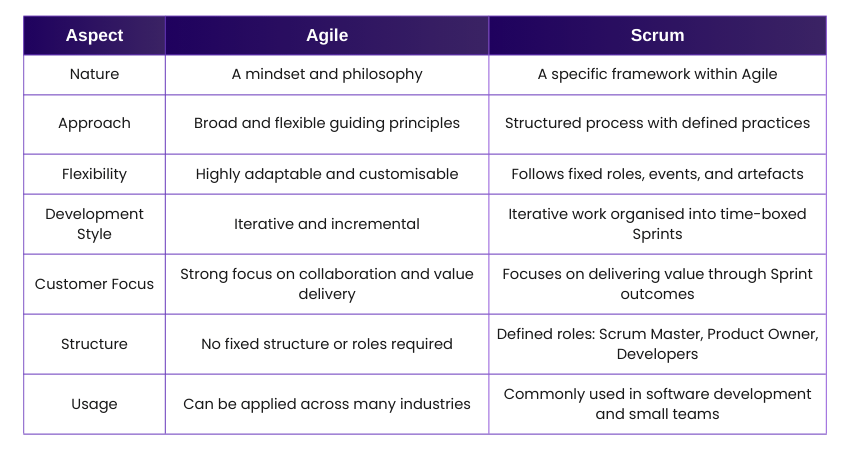
Agile is a flexible philosophy that emphasises collaboration, customer value, and responding to change. It provides guiding principles allowing teams to adapt their processes based on project needs. Scrum, however, is a structured framework that applies Agile principles through defined roles, artefacts, and time-boxed Sprints, helping teams manage work in an organised and disciplined way.
In simple terms, Agile is the broader mindset, and Scrum is one practical way to implement it. Many teams use both together, combining Agile’s adaptability with Scrum’s structure to create a balanced and effective approach to project delivery.
Example of Scrum Methodology
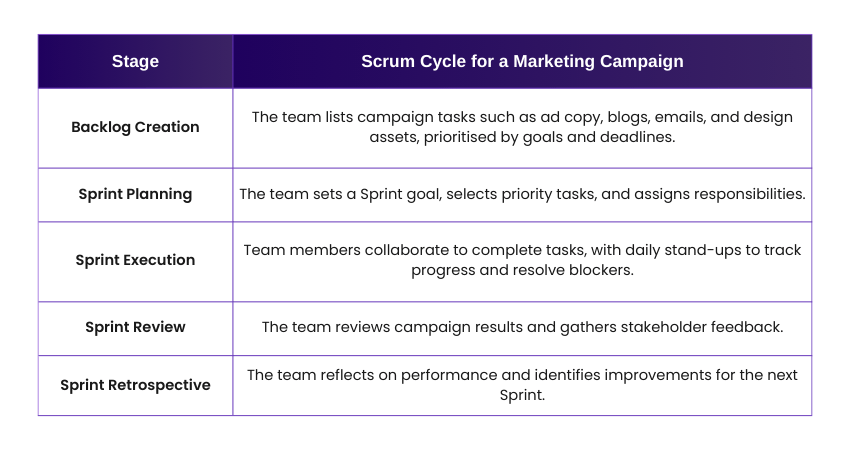
Scrum Methodology can be used beyond Software Development. For example, a marketing team can apply Scrum to plan and manage a campaign through structured stages and regular feedback. Let's look at the table below to show how this works practically:
Conclusion
Scrum Methodology helps teams stay organised, deliver work faster, and respond easily to changes. It brings clear roles, regular check-ins, and better teamwork. Whether in software or other industries, Scrum supports smooth Project Management. Also, ensure your investment of time and resources leads to high-quality results. If you're looking for a simple, effective way to manage projects, the Scrum framework is a great place to start.
Become a skilled Product Owner and maximise product value today. Join our Scrum Product Owner Certification now!
Frequently Asked Questions?
The rules of Scrum include:
1) Time-boxed Sprints: Work is completed within fixed durations.
2) Done Increment: Each Sprint delivers usable work.
3) Defined Roles: Product Owner, Scrum Master, and Developers.
4) One Product Backlog: Prioritised and managed by the Product Owner.
5) Inspect and Adapt: Improve through regular Scrum events.
The three pillars of Scrum Methodology are:
1) Transparency: Work, progress, and standards are visible and clearly understood by everyone.
2) Inspection: Progress and outcomes are checked regularly to identify issues.
3) Adaptation: Teams adjust plans and processes quickly to improve results.
No, Scrum is not Six Sigma. They are different methodologies with distinct goals and approaches. Scrum is an Agile framework that focuses on flexibility, speed, and iterative development. In contrast, Six Sigma is a data-based approach to reduce defects, minimise variation, and improve process quality.