

 Back
Back


 Back to
topics
Back to
topics




Table of Contents
 13-Aug-2025
Author-Veronica Davis
In the world of project delivery, two roles often spark confusion: Scrum Master vs Project Manager. They both lead, coordinate, and help teams deliver results, so what’s the real difference? One champions agility and team empowerment; the other drives structure and end-to-end execution.
In this blog, we’ll break down Scrum Master vs Project Manager in plain terms, what they do, how they differ, and when you need one over the other. Whether you're switching roles, building a team, or just curious, this will help you make sense of it all. Keep Reading!
Table of Contents
1) What is a Scrum Master?
2) What is a Project Manager?
3) Scrum Master vs Project Manager: Key Differences
4) Scrum Master vs Project Manager: Salaries
5) Conclusion
What is a Scrum Master?
A Scrum Master is a crucial role within the Scrum framework, part of Agile Project Management. They serve as a facilitator, coach, and servant-leader for the Scrum team, helping them stay aligned with Agile values and Scrum principles.
Unlike a traditional manager, the Scrum Master doesn't assign tasks or manage people directly. Instead, they empower the team to self-organise, promoting collaboration, accountability, and continuous improvement. They guide the team through Scrum ceremonies such as daily stand-ups, sprint planning, sprint reviews, and retrospectives.

What Does a Scrum Master Do?
A Scrum Master plays a vital role in enabling Agile teams to work efficiently and deliver value. Their main responsibilities include:
1) Facilitating Scrum Events:
They organise and guide daily stand-ups, sprint planning, reviews, and retrospectives, ensuring each meeting has purpose and structure.
2) Removing Impediments:
They identify and resolve obstacles that slow the team down, from workflow issues to external distractions.
3) Coaching the Team:
Scrum Masters train and mentor team members on Agile principles and the Scrum framework, encouraging self-organisation and continuous improvement.
4) Promoting Collaboration:
They foster open communication within the team and between stakeholders, ensuring alignment of goals and expectations.
5) Shielding the Team:
Scrum Masters protect the team from unnecessary interruptions or scope changes during a sprint.
6) Supporting the Product Owner:
They assist the Product Owner in backlog management, prioritisation, and planning to maximise product value.
What is a Project Manager?
A Project Manager is a professional responsible for leading and overseeing a project from initiation to completion. They ensure that the project is delivered on time, within budget, and according to scope and quality standards. Project Managers handle key tasks such as planning project timelines, setting goals, managing resources, and assigning responsibilities.
They coordinate efforts across teams, monitor progress, and manage risks and issues as they arise. A vital part of their role is communicating with stakeholders to provide updates, align expectations, and ensure that the project continues to meet business objectives.
What Does a Project Manager Do?
A Project Manager is responsible for leading a project from initiation to completion while ensuring it meets its objectives. Their key responsibilities include:
1) Planning and Scheduling:
They create detailed project plans, define milestones, and set realistic timelines to guide execution.
2) Managing Resources:
Project Managers allocate people, tools, and budgets, ensuring resources are used efficiently throughout the project.
3) Leading the Team:
They assign tasks, coordinate activities, and motivate the team to stay focused and productive.
4) Monitoring Progress:
They track key metrics, adjust plans when needed, and keep the project aligned with goals and deadlines.
5) Managing Risks and Issues:
Project Managers identify potential risks early, develop mitigation strategies, and resolve problems as they arise.
6) Stakeholder Communication:
They act as the main point of contact for stakeholders, providing updates, gathering feedback, and ensuring expectations are managed.
7) Closing the Project:
They oversee project handover, evaluate outcomes, and document lessons learned for future improvement.
Turn Agile theory into action with
Scrum Developer Training
– Register today for better results!
Scrum Master vs Project Manager: Key Differences
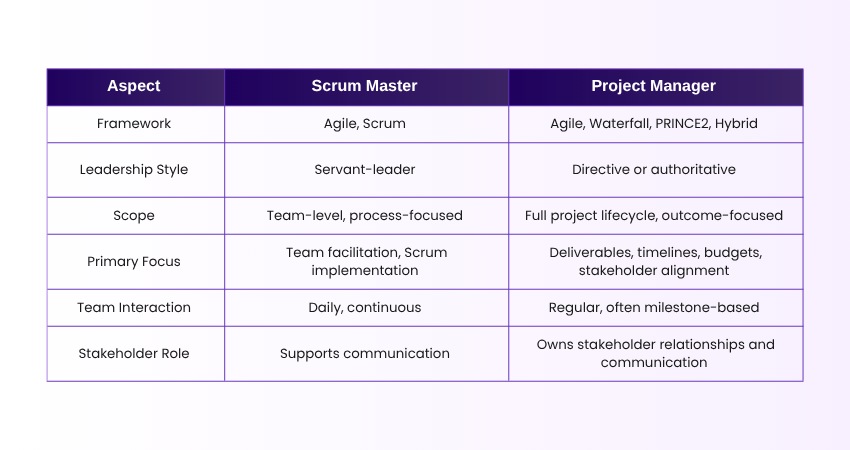
While both roles involve leadership and coordination, a Scrum Master and a Project Manager operate under different frameworks, responsibilities, and approaches to project delivery. Here's how they differ:
1) Methodologies and Frameworks
Scrum Master operates strictly within the Agile methodology, particularly the Scrum framework. Scrum focuses on iterative development, continuous feedback, and adaptive planning. The Scrum Master ensures the team adheres to Agile principles and facilitates Scrum ceremonies like daily stand-ups, sprint planning, and retrospectives.
On the other hand, Project Manager can work with a wide range of Project Management methodologies, including Waterfall, PRINCE2, Agile, or hybrid models. Their flexibility allows them to manage diverse project types, from construction and IT to marketing and product launches.
Best Choice:
You can choose Scrum Master for Agile/Scrum; Project Manager for Waterfall or hybrid.
2) Leadership Style
Scrum Master practices a servant-leadership model. Instead of directing work, the Scrum Master empowers the team, removes roadblocks, and creates an environment that supports collaboration and continuous improvement. They lead by influence rather than authority.
Project Manager adopts a directive or authoritative leadership style. They are responsible for planning, decision-making, and ensuring the team delivers on objectives. Their role involves more top-down control, often with direct accountability for the project’s outcome.
Best Choice:
Opt for Scrum Master for coaching teams; Project Manager for directive leadership.
3) Scope and Responsibilities
Scrum Master has a narrower focus, concentrating on team-level performance and the implementation of Scrum practices. Responsibilities include coaching the team, ensuring process adherence, and removing obstacles that hinder progress.
The Project Manager has a broader scope encompassing the entire project lifecycle, from initiation and planning to execution, monitoring, and closure. Responsibilities include managing scope, cost, time, quality, procurement, risk, communication, and stakeholder satisfaction.
Best Choice:
Rely on Scrum Master for team-level focus; Project Manager for full project oversight.
4) Role and Focus
The primary focus of a Scrum Maste is on team facilitation and process excellence. They ensure that the Scrum team operates efficiently and that Agile values are embedded in daily work. The Scrum Master is not accountable for delivery outcomes but for enabling high-performing teams.
Whereas Project Manage focuses on delivering the project on time, within budget, and to the agreed scope. They balance competing demands, align the project with business goals, and are directly accountable for project success or failure.
Best Choice:
Select Scrum Master for process improvement; Project Manager for goal-driven delivery.
5) Interaction with the Team
Scrum Master works closely and continuously with the Scrum team. They are part of the team’s daily routine, constantly coaching and observing interactions to improve team dynamics and remove impediments.
Project Manager coordinates with the team regularly but may not be as embedded in day-to-day collaboration. Their interaction is more structured, focusing on task assignments, performance tracking, and ensuring the team meets deadlines.
Best Choice:
You can pick Scrum Master for daily team support; Project Manager for milestone-based coordination.
Accelerate your career with expert-led
Scrum Product Owner Certification
- Sign up now!
6) Stakeholder Engagement
Scrum Master Supports communication between the development team and external stakeholders but does not own stakeholder management. Their focus is internal on helping the team function effectively.
Project Manager directly manages stakeholder expectations, ensures alignment between stakeholders and project goals, and communicates progress, risks, and changes. They are often the key point of contact between the project team and executives or clients.
Best Choice:
Go for Scrum Master when the Product Owner manages stakeholders; Project Manager for direct stakeholder communication.
Scrum Master vs Project Manager: Salaries
Understanding salary trends across project management and Agile roles can help professionals make informed career choices. Roles such as Project Manager, Scrum Master, Product Owner, and Agile Project Manager vary not only in responsibilities but also in earning potential. This comparison highlights how different job titles align with varying levels of base pay and additional earnings.
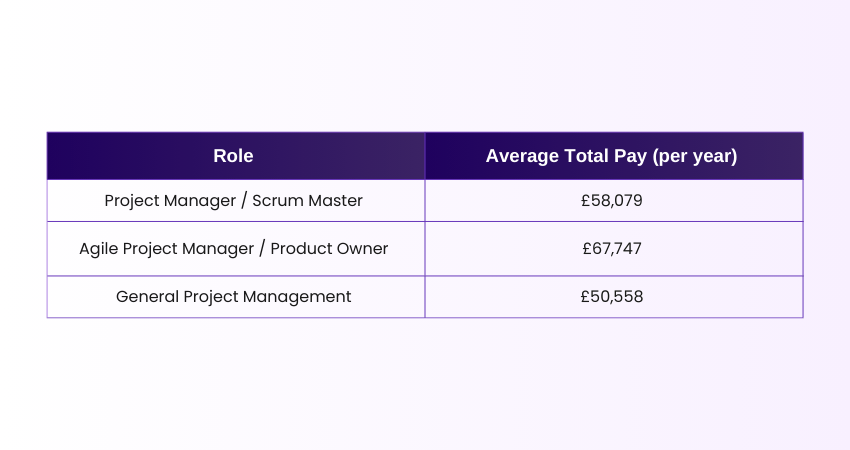
Source : Glassdoor
Conclusion
Understanding Scrum Master vs Project Manager is essential for choosing the right role or hiring the right professional. Each brings unique strengths suited to different methodologies and project needs. By aligning the role with your project’s goals and structure, you can ensure smoother delivery, stronger collaboration, and better overall outcomes.
Be the change in your team – Strat with Scrum Master Training and deliver better results!
Frequently Asked Questions?
No FAQs available