
 Back
Back


 Back to
topics
Back to
topics



Table of Contents
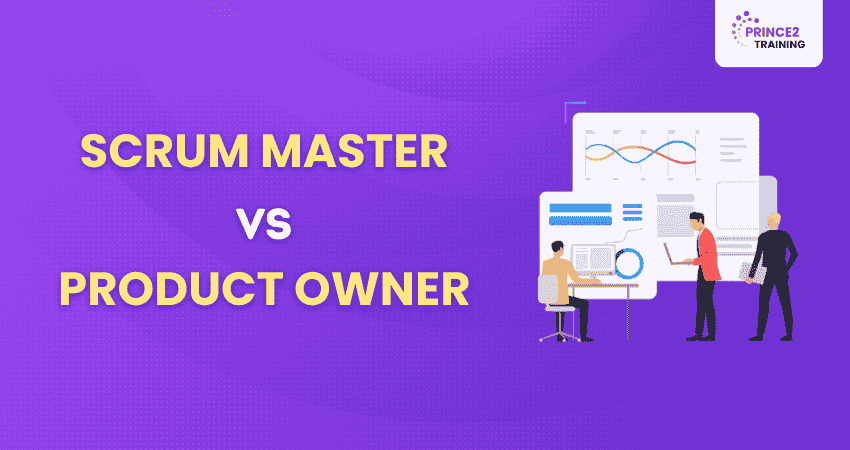
In Agile teams, people often wonder who is responsible for guiding the team and who decides what the team should build. This is where the discussion of Scrum Master vs Product Owner becomes important. Both roles are essential, but they serve different purposes. While one focuses on helping the team follow Agile practices, the other ensures the product delivers real value to customers and the business.Understanding Scrum Master vs Product Owner helps organisations build stronger Agile teams and avoid confusion about responsibilities. When these roles work together effectively, teams can prioritise work clearly, solve problems faster and deliver better products. In this blog, you will explore the differences between these two prominent roles, their responsibilities, and more. So read on!
Table of Contents
1) What is a Scrum Master?
2) What is a Product Owner?
3) Difference Between Scrum Master and Product Owner
4) Benefits of a Scrum Master
5) Benefits of a Product Owner
6) Scrum Master vs Product Owner: Which Career Path is Right for You?
7) Conclusion
What is a Scrum Master?
A Scrum Master acts as a servant-leader for the Scrum team. They’re not a traditional Manager or project lead but a Coach who effectively helps the team follow Agile principles. Their main responsibility is to support the team by eliminating obstacles, facilitating key Scrum events, and ensuring that Agile processes are followed smoothly.
Their influence is subtle yet powerful. When done right, a Scrum Master builds a culture of trust, self-organisation, and continuous improvement. The role is ideal for individuals who love fostering collaboration, problem-solving, and nurturing a high-performance environment.
Scrum Master Roles and Responsibilities
Let’s look at some core Scrum Master roles and responsibilities below:
a) Acting as an Agile Coach: The Scrum Master guides the team on Scrum principles, practices and Agile values to ensure everyone understands how the framework works.
b) Removing Obstacles: They identify and remove issues that slow down the team’s progress, thus helping members stay focused on completing sprint tasks.
c) Supporting Team Collaboration: The Scrum Master encourages teamwork and ensures that the team members communicate effectively during Scrum events.
d) Facilitating Communication With Stakeholders: They bridge the communication gap between stakeholders and the development team to ensure clear expectations.
e) Adapting to Project Needs: Depending on the project requirement, Scrum Masters may take on additional responsibilities to support team performance and project success.
What is a Product Owner?
The Product Owner is the product's visionary. They define what the team should build and why it matters. Acting as the link between business stakeholders and the development team, they ensure that the work delivered real value to customers and is aligned with business strategy.
They own the product backlog, the dynamic to-do list of features, fixes and updates. But it’s not just about ticking boxes. A good Product Owner understands market needs, prioritises work for maximum impact and communicates requirements to the development team.
Product Owner Role and Responsibilities
Let’s look at some core Product Owner role and responsibilities below:
a) Collaborating With Stakeholders: The Product Owner works closely with stakeholders to maintain clear and transparent communication between them and the development team.
b) Gathering User Requirements: They collect requirements from end-users and turn them into clear tasks or features for the team.
c) Managing and Refining the Product Backlog: The Product Owner regularly updates and prioritises the backlog to reflect changing business needs and product goals.
d) Participating in Sprint Planning: They help to plan upcoming sprints by selecting and prioritising backlog items that the team should work on next.
e) Providing Guidance During the Sprint: The Product Owner remains available throughout the sprint to clarify requirements and make important product decisions.
Advance your project leadership skills with PRINCE2® Practitioner Course – Join now!
Difference Between Scrum Master and Product Owner
While both roles are essential to an Agile team, they serve different purposes. The Scrum Master enables the team’s ‘how’, while the Product Owner directs the ‘what’ and ‘why’. Here’s a deep dive into their differences across various dimensions:
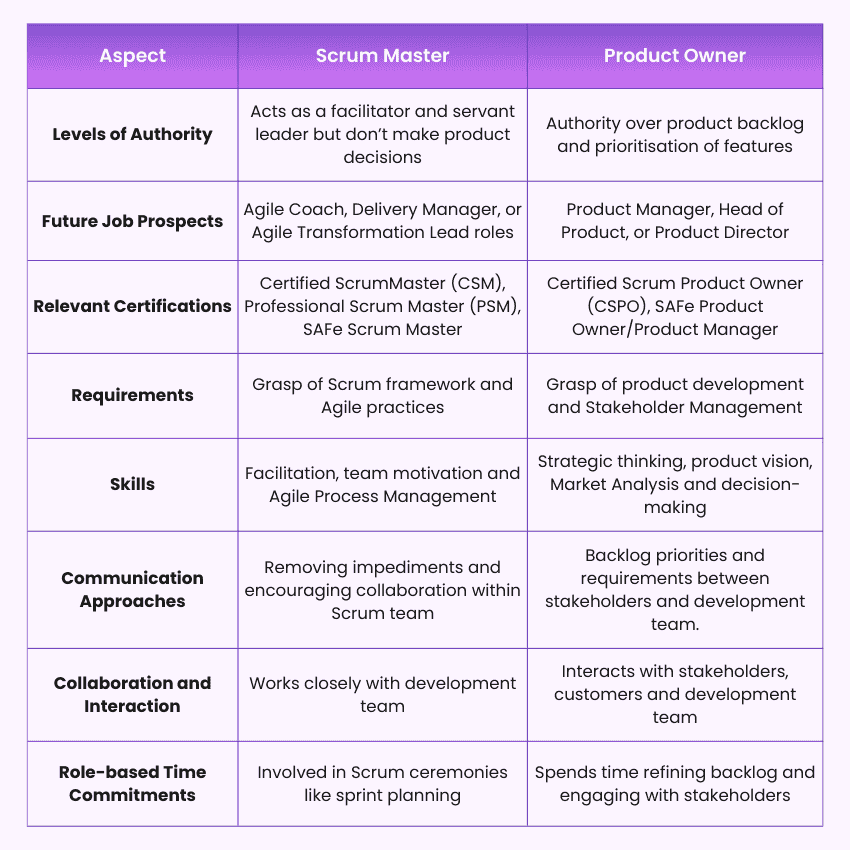
1) Level of Authority
a) Scrum Master Authority Level:
a) They do not have formal decision-making authority over the product.
b) They influence the team through coaching, guidance, and Agile expertise.
b) Product Owner Authority Level:
a) They hold authority over the product backlog and its priorities.
b) They decide what features should be built and when they should be delivered.
2) Future Job Prospects
a) Scrum Master Job Prospects:
a) Demand continues to grow as more organisations adopt Agile practices.
b) Opportunities exist across industries, such as technology, finance, healthcare, and manufacturing.
b) Product Owner Job Prospects:
a) Highly valued in organisations that focus on product development and customer value.
b) Strong demand in industries that require user-focused products and digital services.
3) Relevant Certifications
a) Scrum Master Certifications:
a) Scrum Master
b) Professional Scrum Master (PSM)
c) SAFe Scrum Master
d) Scrum Professional
b) Product Owner Certifications:
a) PMI Agile Certified Practitioner
b) Product Owner
c) Product Manager Logo
These certifications add credibility and deepen your understanding of Agile principles and tools.
4) Requirements
a) Scrum Master Requirements:
a) A bachelor’s degree in IT or Computer Science is recommended, although it is not always mandatory.
b) Basic knowledge of Scrum practices and a recognised Scrum Master certification are often expected.
b) Product Owner Requirements:
a) Generally, requires several years of experience in product development or a related field.
b) Strong understanding of Agile methodology along with excellent communication and leadership skills.
5) Skills
The skill sets required for these two roles reflect their core responsibilities.
a) Scrum Master Skills:
a) Deep understanding of Agile and Scrum methodologies
b) Excellent facilitation and coaching abilities
c) Strong interpersonal and communication skills
d) Conflict resolution and problem-solving mindset
e) Ability to foster a culture of self-organisation and transparency
b) Product Owner Skills:
a) Business acumen and market awareness
b) Stakeholder Management and negotiation skills
c) Sharp prioritisation and decision-making abilities
d) Strong written and verbal communication
e) Technical awareness to liaise effectively with development teams
Learn how to lead Agile projects confidently with the PRINCE2 Agile® Practitioner Course – Sign up now!
6) Communication Approaches
a) Scrum Master Communication Approach:
a) Focuses mainly on internal communication within the Scrum team.
b) Encourages open discussions, feedback, and collaborative problem-solving.
b) Product Owner Communication Approach:
a) Communicates with both stakeholders and the development team.
Translates customer needs and business goals into clear product requirements and priorities.
7) Collaboration and Interaction
a) Scrum Master:
a) Supports smooth collaboration within the team and ensures the Product Owner can clearly share the product vision and priorities.
b) Facilitates Scrum events such as sprint planning, backlog refinement, and reviews to maintain effective teamwork.
b) Product Owner:
a) Provides clear direction on what the team should build and communicates product priorities.
b) Works closely with the Scrum Master and development team to ensure requirements and goals are well understood.
8) Role-based Time Commitments
1) Scrum Master:
a) Usually works full-time with a dedicated Scrum team, guiding Agile practices and team processes.
b) Participates daily by facilitating meetings, supporting team organisation, and tracking overall progress.
2) Product Owner:
a) May manage one or multiple products depending on the organisation’s structure.
b) Ideally works full-time with the team to prioritise backlog items and guide product decisions.
9) Salary
a) Scrum Master Salary:
a) The average annual salary for a Scrum Master range between £46K and £64K, depending on experience, organisation, and industry.
b) Entry-level professionals may start with lower salaries, while experienced Scrum Masters can earn significantly higher as Agile adoption continues to grow.
b) Product Owner Salary:
a) The average annual salary for a Product Owner typically ranges between £44K and £67K.
b) Salaries increase with experience, especially in product-driven organisations where managing product value and customer needs is highly important.
10) Career Advancement Paths
Where do these roles lead?
a) Scrum Master Career Paths: |
a) Senior Scrum Master
b) Agile Coach
c) Product Owner
d) Senior Management
b) Product Owner Career Paths:
a) Senior Product Manager
b) Head of Product
c) Director of Product Strategy
d) Chief Product Officer (CPO)
While Scrum Masters tend to grow into broader Agile leadership roles, Product Owners often evolve into business and product strategy positions. Learn the Basics, Lead with Confidence – Start with Introduction to Project Management Course today!
Benefits of a Scrum Master
Working as a Scrum Master offers several professional and personal advantages. As organisations increasingly adopt Agile methodologies, the role of a Scrum Master has become highly valuable across many industries. Let’s look at some of the benefits below:
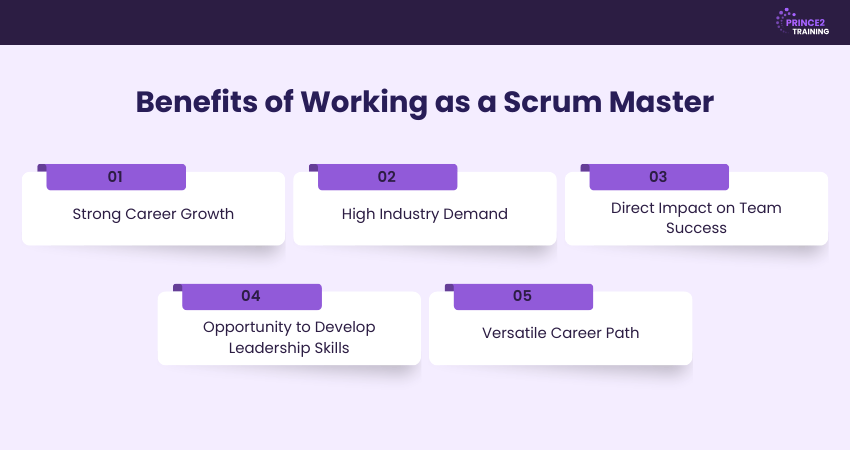
1) Strong Career Growth
The Scrum Master role helps professionals develop valuable skills, such as leadership, coaching, facilitation, and Agile Project Management. These capabilities support long-term career development and can open opportunities in roles, such as Agile Coach, Project Manager, or Delivery Manager.
2) High Industry Demand
As Agile practices are widely adopted in sectors such as technology, finance, healthcare and manufacturing, organisations actively look for qualified Scrum Masters. This growing demand leads to strong job prospects and competitive salaries.
3) Direct Impact on Team Success
Scrum Masters help teams remove obstacles, improve workflows, and maintain focus during sprints. Through supporting team productivity and promoting collaboration, they play an important role in ensuring projects are delivered successfully and consistently.
4) Opportunity to Develop Leadership Skills
The Scrum Master acts as a servant leader who guides the team instead of directing it. This role strengthens important leadership skills, such as mentoring, conflict resolution, communication, and team facilitation.
5) Versatile Career Path
The skills gained as a Scrum Master are applicable across many industries and roles. Expertise in Agile frameworks, communication, and problem-solving allows professionals to transition into various management or strategic positions.
Build strong Project Management basics with the PRINCE2® Foundation Course – Sign up now!
Benefits of a Product Owner
Working as a Product Owner offers rewarding opportunities for professionals who enjoy strategy, collaboration, and product development. By defining product priorities and delivering customer value, the Product Owner plays a central role in guiding the success of a product. Let’s look at some of the benefits below:
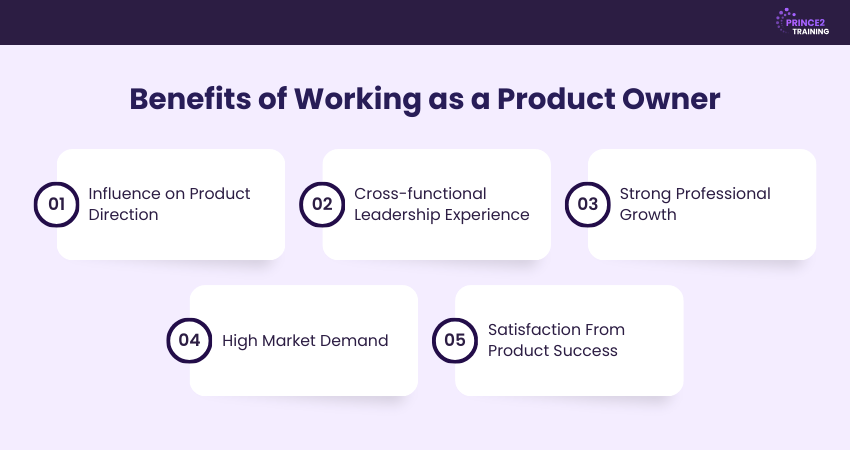
1) Influence on Product Direction
Product Owners play a major role in shaping the vision and priorities of a product. By deciding what features should be developed and when, they directly influence how the product evolves and succeeds in the market.
2) Cross-functional Leadership Experience
The role of a Product Owner involves working closely with development teams, designers, stakeholders, and customers. This collaboration helps Product Owners develop leadership skills, while managing communication across different teams.
3) Strong Professional Growth
Product Owners need to continuously learn about market trends, customer needs, product strategy, and Agile practices. This continuous learning helps them grow professionally and stay relevant in fast-changing and ever evolving industries.
4) High Market Demand
Organisations increasingly focus on building customer-driven products, which increases the demand for skilled and competent Product Owners. This demand results in competitive salaries and stable career opportunities across various industries.
5) Satisfaction From Product Success
Product Owners experience strong professional satisfaction by seeing their product ideas turn into real solutions and tangible results. Watching a product improve, benefit users, and deliver business value can be highly rewarding.
Develop structured and Agile delivery with our PRINCE2 Agile® Foundation and Practitioner Course – Sign up now!
Scrum Master vs Product Owner: Which Career Path is Right for You?
Not sure which Agile role fits you best? Here's a quick side-by-side overview to help you decide between Scrum Master vs Product Owner:
a) Team Support vs Product Strategy:
Scrum Masters guide teams and remove blockers; Product Owners focus on product goals and customer value.
b) Process Champion vs Visionary:
Scrum Masters uphold Agile practices; Product Owners shape the product roadmap and set priorities.
c) People-focused vs Product-focused:
Scrum Masters improve team dynamics; Product Owners drive features and functionality.
d) Facilitator vs Decision-maker:
Scrum Masters keep communication flowing; Product Owners make key sprint decisions.
e) Internal Guide vs External Link:
Scrum Masters work closely with teams; Product Owners engage with customers and stakeholders.
Conclusion
Understanding the difference between Scrum Master vs Product Owner helps organisations build effective Agile teams. While the Scrum Master supports the team and ensures the Scrum process runs smoothly, the Product Owner focuses on product value and priorities. Both roles are essential for successful Scrum implementation, and when they collaborate effectively, teams can consistently deliver high-quality results.
Where Agile meets control – Begin with PRINCE2 Agile® Foundation Course!