

 Back
Back


 Back to
topics
Back to
topics




Table of Contents
 04-Oct-2025
Author-James Smith
Managing a project shouldn't feel like putting out fires every day. But for many teams, that is exactly what it becomes with constant problem-solving, last-minute decisions, and racing against risks no one saw coming. Without a structured approach, projects can quickly spiral into chaos, draining time, resources, and team morale.
That's where the RAID in Project Management becomes a solution with a simple, structured approach to keeping your project under control from start to finish. It provides a clear view of what could go wrong and how to stay ahead of it. If you want to lead projects with less stress and more confidence, it is time to make RAID part of your process. Want to know how? Read this blog!
Table of Contents
1) What is RAID in Project Management?
2) What are the Components of RAID?
3) How to Implement RAID in Your Projects?
4) Benefits of RAID in Project Management
5) Challenges and Limitations of RAID Analysis
6) Real-world Applications of RAID Project Management
7) Future Trends in RAID and Project Management
8) Conclusion
What is RAID in Project Management?
RAID is a specific technique in Project Management that helps teams keep track of the most important parts of a project that could affect its success. It brings clarity by breaking complex project challenges into manageable categories. RAID stands for:
1) Risks
2) Assumptions
3) Issues
4) Dependencies
It gives Project Managers a way to organise and manage things that can go wrong, cause delays, or depend on others. RAID in Project Management acts like a control panel that helps everyone stay aligned and in control from beginning to end.

What are the Components of RAID?
Each part helps the team stay on top of potential problems and manage the project smoothly. Let's break down what each part of RAID means:
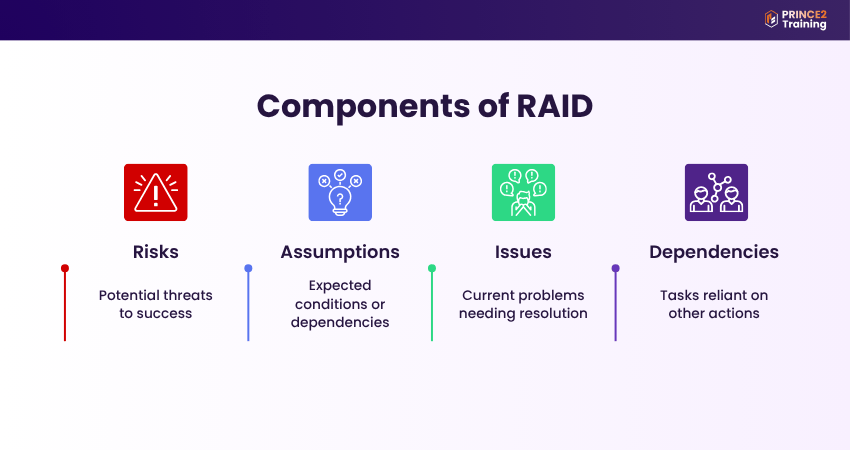
1) Risks
Risks refer to possible events that could happen during your project and negatively affect its outcome. These might include delays, cost overruns, technical issues, or external changes like regulation shifts.
With a RAID strategy, you can prepare for risks before they occur. This involves:
1) Identifying potential risks
2) Reviewing risks from similar past projects
3) Creating plans to manage or avoid them
4) Allocating the right resources in advance
2) Assumptions
Assumptions are things you believe to be true without solid proof at the time of planning. These assumptions can affect your project, especially if they later turn out to be false. While many assumptions seem reasonable, they still need to be documented, tracked, and reviewed.
RAID helps you:
1) Clearly define all project assumptions
2) Understand their potential impact
3) Plan what to do if any assumption turns out to be invalid
4) Keep projects flexible and prepared
3) Issues
Issues are problems that have already happened and need immediate attention. They can come from previously identified risks or failed assumptions. Unlike risks, issues can actively affect your project.
RAID encourages you to have a clear Issue Management plan in place. This involves:
1) Quickly identifying the issue
2) Assessing its impact
3) Assigning someone to resolve it
4) Taking action to prevent it from recurring
4) Dependencies
Dependencies are the parts of your project that rely on other tasks, teams, or individuals. These relationships must be managed carefully, as a delay in one area can hold up others. It can be internal (within your own team) or external (with clients, vendors, or third parties).
RAID helps you:
1) Map out all dependencies
2) Understand who or what each task relies on
3) Monitor the timing and progress of those linked tasks
4) Ensure smoother project flow
Build a strong foundation in Project Management with our
PRINCE2® Foundation Training
– Register today!
How to Implement RAID in Your Projects?
When RAID is actively used in daily projects, it becomes a practical tool for staying ahead of problems. Here's how you can implement it in your projects:
Identifying and Managing Risks
Proactively identifying and managing risks helps you prevent problems before they occur. It is not just about spotting what could go wrong. It is more about planning your response in advance. Here's how you can manage project risks effectively:
1) Brainstorm with stakeholders to identify a broad range of risks
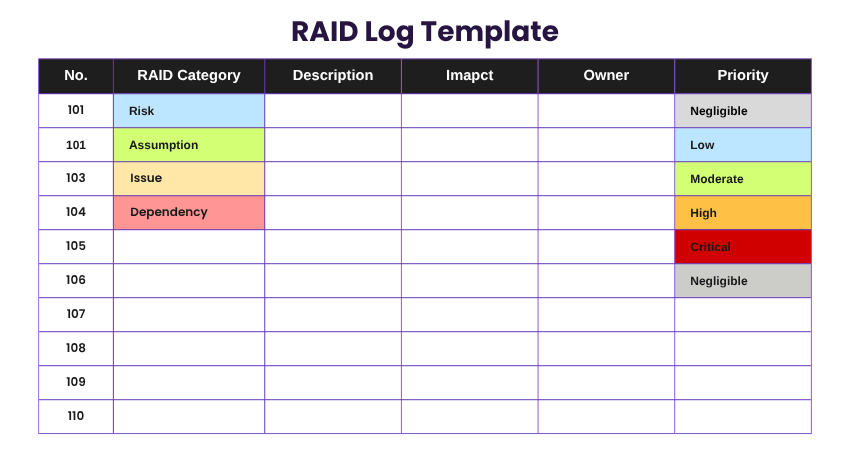
2) Maintain a risk register to log impact and mitigation plans
3) Use SWOT analysis to uncover internal and external threats
4) Review past projects for lessons learned and recurring risks
5) Consult experts for specialised risks others may miss
6) Run risk workshops to analyse, map, and prioritise risks
7) Apply risk tools like heat maps or impact-probability matrices
8) Monitor risks regularly, updating plans as needed
Assumptions and Their Impact
Assumptions often seem harmless but can become serious problems if they turn out to be false. That's why managing assumptions requires a clear and structured approach. Here's how to handle them effectively:
1) Identify assumptions in plans, timelines, and decisions
2) Validate each one with data, expert input, or prior experience
3) Document assumptions clearly, including the rationale
4) Monitor them often to ensure they remain valid
5) Communicate openly so everyone is aligned
6) Update as needed based on new information
7) Plan backups in case assumptions prove false
8) Log all changes to track impact and ensure transparency
Benefits of RAID in Project Management
RAID analysis offers several benefits that manage complexity, reduce uncertainty, and deliver better results. Here are the key advantages:
1) Enhanced Risk Management
RAID helps teams identify and manage potential risks before they escalate. When conducted regularly and collaboratively, it allows teams to:
1) Spot risks early in the project lifecycle
2) Create actionable mitigation plans
3) Reduce the likelihood and severity of negative events
This proactive approach ensures smoother execution and fewer costly surprises.
2) Improved Decision-Making
By capturing and organising the components of RAID in a central log, RAID helps teams:
1) Gain a clear view of current challenges and project health
2) Make informed decisions based on accurate information
3) Prioritise resource allocation to the most critical areas
4) It leads to smarter, faster, and more strategic decision-making.
3) Increased Project Transparency and Stakeholder Confidence
RAID promotes transparency by offering a detailed view of what's going on in a project. It helps:
1) Keep stakeholders informed about risks, issues, and key decisions
2) Demonstrate that challenges are being tracked and addressed
3) Build trust through proactive updates
This boosts stakeholder confidence and strengthens overall support for the project.
4) Better Alignment with Organisational Goals
RAID helps align projects with broader business objectives by:
1) Highlighting any conflicts with organisational policies or goals
2) Identifying opportunities for collaboration with other teams or projects
3) Supporting strategic decisions at both project and portfolio levels
This alignment ensures that projects deliver real value to the organisation.
Take your Project Management skills to the next level with our
PRINCE2® Practitioner Training
– Join now!
Challenges and Limitations of RAID Analysis
While RAID analysis is highly beneficial, it also has some limitations. Here are the main challenges to consider:
1) Overcomplication in Small Projects
RAID can sometimes feel too heavy for simpler projects.
1) May introduce unnecessary documentation and steps
2) Can delay decision-making in fast-paced projects
3) Adds complexity where simplicity is more effective
4) Requires time that small teams may not have
Risk of making low-risk projects seem overly critical
2) Time and Resource Demands
Maintaining RAID properly takes consistent time and effort.
1) Requires regular team meetings for updates
2) Demands ongoing documentation and tracking
3) Can strain teams with limited capacity
4) Increases workload during tight deadlines
5) May shift focus away from task execution to analysis
3) Risk of Outdated Information
A RAID log is only useful if it reflects the current reality.
1) Teams may forget or delay updates
2) New risks or issues may go undocumented
3) Leads to decisions based on old or incorrect data
4) Stakeholders may lose trust in the system
5) Causes gaps in risk and issue visibility
4) Overreliance on RAID
Relying too much on RAID can hinder practical progress.
1) Focus on documentation can delay action
2) May create a false sense of control or preparedness
3) May reduce adaptability in rapidly changing environments
4) Can shift attention away from team dynamics or client needs
5) Might overshadow other important project tools and techniques
Real-world Applications of RAID Project Management
To understand how RAID works, it is helpful to look at how different industries apply it in real project environments. So, here are a few real-world applications of it:
1) Construction Project Example
A team building a large office space will use RAID to stay on top of their work:
1) Risks:
They planned for possible weather delays and late material deliveries.
2) Assumptions:
They believed the ground would be safe to build on, based on early tests.
3) Issues:
They found unexpected historical artefacts underground, which caused delays.
4) Dependencies:
They listed tasks that needed to be done before others, like laying the foundation before building walls.
Combine the flexibility of Agile with the control of PRINCE2® with our
PRINCE2 Agile® Practitioner Training
– Sign up anytime!
2) Software Development Project Example
A fintech startup can use RAID while building a mobile banking app:
1) Risks:
They looked at possible security problems and upcoming law changes.
2) Assumptions:
They guessed what users would like based on surveys.
3) Issues:
There were delays when trying to connect the app with older banking systems.
4) Dependencies:
Some parts of the app had to be built before others, like the login system before other features.
3) Event Management Project Example
An event team uses RAID while planning a global business conference:
1) Risks:
They prepared for things like travel restrictions or changes to venue rules.
2) Assumptions:
They expected a certain number of guests based on past events.
3) Issues:
A few speakers cancelled at the last minute, and backups had to be found.
4) Dependencies:
The team planned how things like catering, sound setup, and security depended on each other.
Future Trends in RAID and Project Management
RAID is growing and changing with technology. Here are some trends shaping the future of RAID:
1) Smart Tools:
New software uses Artificial Intelligence (AI) to find risks, suggest solutions, and spot delays before they happen.
2) Built Into Project Tools:
RAID features are now included in tools like Trello and Jira, making it easy to track everything in one place.
3) Team Collaboration:
Cloud-based RAID logs mean teams in different places can work on the same file in real time.
4) RAID+ Versions:
Some teams are adding extra letters to RAID like C (for Constraints) or O (for Opportunities) to get a more complete picture.
5) Used in More Fields:
RAID isn't just for tech or construction anymore. Teams in HR, education, and events are using it too.
Conclusion
RAID in Project Management is a simple yet powerful tool that brings structure, clarity, and control to your project. It helps you spot problems before they grow, fix issues quickly, and plan better overall. As projects get more complex, RAID continues to adapt. When you embrace it, you'll turn uncertainty into opportunity.
Gain Project Management expertise with our PRINCE2® Certification – Explore and lead projects with clarity!
Frequently Asked Questions?
RAID stands for Risks, Assumptions, Issues, and Dependencies. It is used to track elements that can impact a project’s success. RACI refers to Responsible, Accountable, Consulted, and Informed. It clearly defines roles and responsibilities for tasks or decisions within a project.
A RAID strategy is how a team chooses to use RAID in a project. It includes:
1) How often the RAID log is updated
2) What tools or templates are used
3) Who keeps the log up to date
4) How information is shared with the team or client
No, RACI isn’t outdated, but it has evolved. Alternatives like DACI or RAPID offer more flexibility. Still, RACI remains widely used for clarity in roles and responsibilities in traditional projects.