

 Back
Back


 Back to
topics
Back to
topics



Table of Contents
 18-Apr-2026
Author-Hailey Davis
Ever started a project with excitement, only to feel overwhelmed by deadlines, tasks, and constant changes? You are not alone. Without a clear Project Timeline, even simple projects can turn confusing, leading to missed deadlines, poor coordination, and unnecessary stress for teams.
That is where a well-structured Project Timeline makes all the difference. It brings clarity, control, and direction by outlining what needs to be done and when. In this blog, you will explore types, steps, benefits, and examples to plan smarter and deliver projects successfully. Let's dive in!
What is a Project Timeline?
A Project Timeline is a structured schedule that outlines a project from the beginning to the end, showing tasks, milestones, dependencies, and key dates. It helps define how the project will progress and ensures every activity is planned within a clear timeframe.
By breaking the project into smaller milestones with specific deadlines, a Project Timeline gives teams a visual overview of what needs to be done and when. This makes it easier to monitor progress, manage dependencies, and ensure the project is delivered on time.

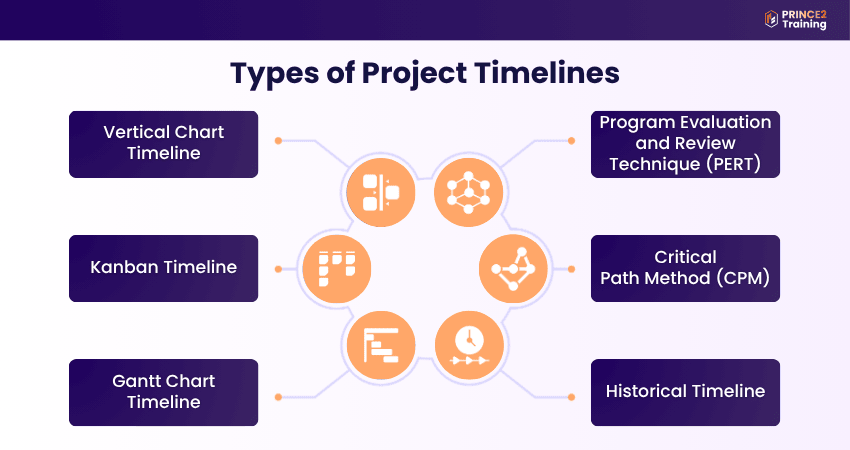
Types of Project Timelines
Project Timelines come in different formats based on project needs and complexity. Choosing the right type improves planning and execution. Let's explore the most common types:
1) Vertical Chart Timeline
A vertical chart timeline presents project tasks in a top-to-bottom sequence, making it simple and easy to follow. It is ideal for smaller projects or straightforward workflows where teams need a clear order of activities without focusing heavily on timelines, dependencies, or detailed scheduling elements.
2) Kanban Timeline
A Kanban timeline focuses on tracking task progress through visual stages such as "To Do," "In Progress," and "Done." It is widely used by Agile teams that prefer flexible workflows, continuous updates, and real-time collaboration rather than strict deadlines or fixed scheduling structures.
3) Gantt Chart Timeline
A Gantt chart timeline displays tasks along a horizontal time axis, showing start dates, end dates, durations, and dependencies. It is commonly used for complex projects, as it helps teams understand task relationships, manage schedules efficiently, and identify potential delays before they impact delivery.
4) Program Evaluation and Review Technique (PERT)
PERT is a network-based Project Timeline that focuses on estimating the time required for each task. It is especially useful for projects with uncertain durations, as it considers different time scenarios, helping teams plan more accurately and reduce risks related to time estimation effectively.
5) Critical Path Method (CPM)
The Critical Path Method identifies the longest sequence of dependent tasks that directly impacts the project's completion time. It helps teams prioritise critical activities, manage schedules effectively, and ensure that delays in key tasks do not affect the overall Project Timeline or delivery goals.
6) Historical Timeline
A historical timeline presents events in chronological order, making it useful for reviewing past projects or analysing progress over time. It helps teams understand how different phases unfold, identify patterns, and apply valuable insights to improve planning and execution in future projects.
Gain expertise in blending Agile practices with the
PRINCE2 Agile® Foundation and Practitioner Training
– Join today!
How to Create a Project Timeline Step by Step?
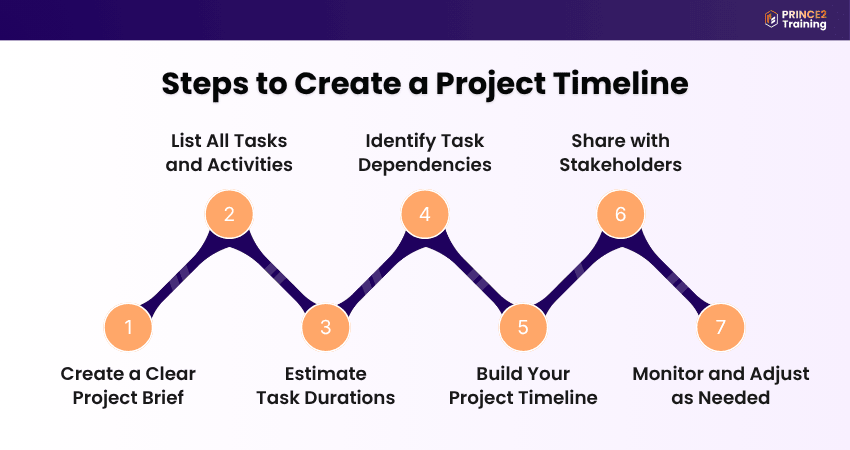
Creating a Project Timeline involves organising tasks, setting deadlines, and defining dependencies. A structured approach improves planning and execution. Let's go through the key steps:
1) Create a Clear Project Brief
Begin by defining the project's objectives, scope, deliverables, and key milestones. A clear project brief acts as a roadmap, helping teams understand goals, timelines, and responsibilities. It ensures alignment from the start and provides a strong foundation for planning an effective and well-structured Project Timeline.
2) List All Tasks and Activities
Identify all tasks needed to complete the project, including both major phases and smaller activities. Listing everything ensures full visibility of work and helps prevent missed steps. Breaking larger tasks into smaller parts improves clarity and supports better organisation and planning across the entire project lifecycle.
3) Estimate Task Durations
Set realistic time estimates for each task based on its complexity, resources, and experience. This step helps create a practical timeline and ensures deadlines are achievable. Accurate duration estimates also improve scheduling, resource allocation, and overall project planning, reducing the risk of delays during execution.
4) Identify Task Dependencies
Determine how tasks are connected and which activities rely on others to be completed first. Identifying dependencies ensures proper sequencing of work, avoids conflicts, and improves coordination. It also helps teams manage overlapping tasks efficiently while maintaining a smooth workflow throughout the Project Timeline.
5) Build Your Project Timeline
Organise all tasks, durations, and dependencies into a visual timeline using suitable tools. This step transforms planning into a structured schedule that teams can follow. A clear timeline improves visibility, supports tracking progress, and helps ensure that all activities are completed within the defined deadlines.
6) Share with Stakeholders
Once the timeline is ready, share it with all stakeholders to ensure transparency and alignment. This helps everyone understand their roles, responsibilities, and deadlines. Effective communication reduces confusion, improves collaboration, and ensures that all team members are working towards the same project objectives.
7) Monitor and Adjust as Needed
Regularly review the Project Timeline to track progress and identify any changes or delays. Adjust timelines when necessary to stay on track. Continuous monitoring ensures flexibility, helps manage risks, and allows teams to respond quickly to challenges while keeping the project moving forward efficiently.
Benefits of Project Timelines
Project Timelines offer several advantages that help teams plan, manage, and deliver projects more effectively. They improve organisation, visibility, and coordination across all stages. Let's explore the key benefits in detail:
1) Improves Accountability
A Project Timeline assigns clear tasks, deadlines, and responsibilities to each team member. This increases accountability by ensuring everyone knows what they need to deliver and when. It reduces confusion, tracks ownership, and encourages consistent progress, helping teams stay focused and complete work efficiently.
2) Enhances Team Communication
Project Timelines act as a single source of truth, showing tasks, progress, and deadlines in one place. This improves communication by keeping team members and stakeholders informed. It reduces misunderstandings, supports collaboration, and ensures everyone is aligned with project updates and expectations at every stage.
3) Ensures Team Alignment
A timeline clearly outlines project goals, tasks, and milestones, ensuring all team members work towards the same objectives. It aligns efforts across teams, reduces miscommunication, and helps maintain consistency. This shared understanding ensures smoother execution and keeps the project moving in the right direction.
4) Keeps Projects Organised
Project Timelines break complex work into manageable phases, tasks, and deadlines. This structured approach helps teams prioritise activities, manage workloads, and maintain clarity. By organising tasks chronologically, it becomes easier to track progress and ensure that every part of the project is completed systematically.
5) Identifies Bottlenecks Early
By mapping tasks and dependencies, a Project Timeline helps teams detect delays or resource constraints early. This enables proactive risk management, allowing teams to take corrective actions before issues escalate. Early identification of bottlenecks ensures smoother workflows and prevents disruptions to overall project delivery.
Build strong Project Management basics with globally recognised PRINCE2® Foundation Training – Join today!
Project Timeline Examples
Project Timeline examples show how timelines organise tasks, deadlines, and progress in real projects. They help teams understand practical use and improve planning. Let's look at common examples across key industries:
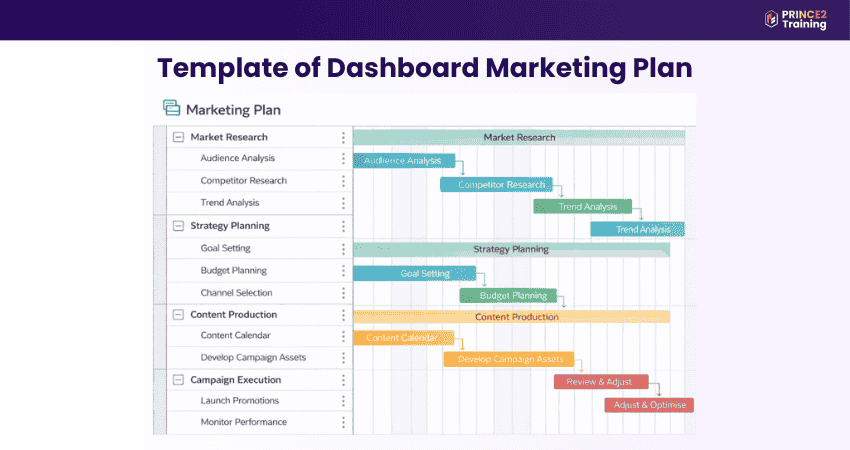
1) Marketing Campaigns
A marketing campaign timeline outlines each stage of the customer journey, from research and planning to execution and analysis. It organises tasks like content creation, promotions, and launches, helping teams track progress, manage deadlines, and ensure campaigns run smoothly and achieve desired results.
2) Event Planning Projects
Event planning timelines break down tasks such as venue booking, invitations, logistics, and execution. They help organisers manage deadlines and coordinate activities efficiently. Whether it is a conference or a corporate event, a clear timeline ensures everything is completed on time and runs smoothly.
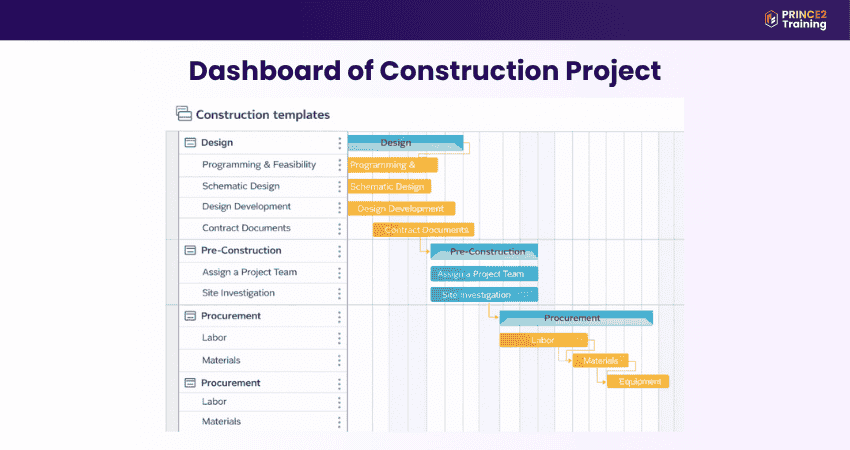
3) Construction Projects
Construction Project Timelines are detailed and complex, covering tasks like design, procurement, and building. They help manage multiple activities and dependencies efficiently. Using structured timelines ensures better coordination, avoids delays, and keeps the project aligned with deadlines and budget requirements.
4) Product Development Projects
A product development timeline outlines each phase, from idea generation and planning to testing and product launch. It highlights key milestones and tasks, ensuring teams stay organised. This helps secure stakeholder support and ensures each stage is completed efficiently for a successful launch.
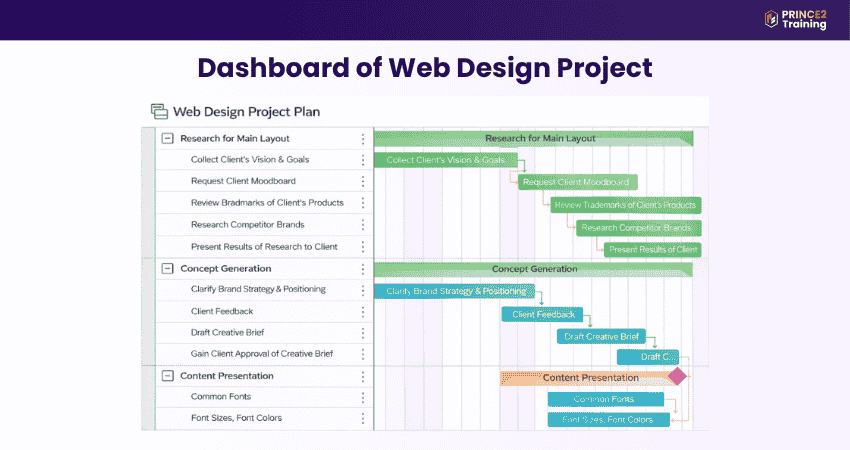
5) Web Design Projects
Web design timelines include stages such as research, concept creation, design, development, testing, and final delivery. They help teams organise tasks and track progress effectively. A clear timeline ensures smooth collaboration, timely completion, and a well-structured approach to delivering high-quality websites.
Conclusion
A Project Timeline transforms ideas into clear, actionable plans, giving teams structure and direction from start to finish. By improving visibility, coordination, and time management, it helps teams stay organised and deliver results on schedule. With the right timeline, every project becomes more efficient, controlled, and successful.
Build strong Project Management expertise with globally recognised PRINCE2® Certification – Join now!
Frequently Asked Questions?
Common Project Timeline mistakes include setting unrealistic deadlines, ignoring task dependencies, and not updating the timeline regularly. Poor communication and unclear responsibilities can also cause delays. These issues lead to missed deadlines, confusion, and inefficient resource use, affecting overall project success.
Tools used to create a Project Timeline include Gantt chart tools, Kanban boards, and Project Management software like Asana, Trello, or Microsoft Project. Simple tools like Excel or spreadsheets can also be used. These tools help organise tasks, track progress, manage deadlines, and improve collaboration.
A project schedule is a complete plan that outlines specific tasks, timelines, resources, and responsibilities, showing exactly how and when work will be completed. In contrast, a Project Timeline provides a high-level visual overview of tasks and milestones, focusing on the sequence and overall flow of the project.