

 Back
Back


 Back to
topics
Back to
topics



Table of Contents
 01-May-2026
Author-Maria Thompson
Beginning your journey in the world of Project Management can feel overwhelming, especially when conversations are filled with unfamiliar jargon. Terms like scope, milestones, and deliverables are used daily, and without understanding these Project Management Terms, it can be difficult to contribute confidently. With the market projected to reach
$20.47 billion by 2030
, the demand for Project Management skills continues to grow.
Whether you are starting out or looking to strengthen your basics, learning these terms makes everything clearer and more manageable. In this blog, you will learn about the top Project Management Terms to help you communicate effectively, stay aligned with your team, and understand how projects are successfully delivered. Let’s begin!
What are Project Management Terms?
Project Management Terms are commonly used words and phrases that help teams understand, plan, and manage projects effectively. They create a shared language within a project. They make it easier for team members, Managers, and stakeholders to communicate clearly and stay aligned on goals and expectations.
These terms describe key aspects of a project, such as processes, tools, and roles. For example, they can define how work is organised, what outcomes are expected, and how progress is measured. By using Project Management Terms, teams can avoid confusion, enhance collaboration, and ensure that everyone is working towards the same objectives.

Top 50 Project Management Terms and Definitions
Understanding key Project Management Terms helps you build confidence, improve communication, and manage projects effectively. Let’s look at them below:
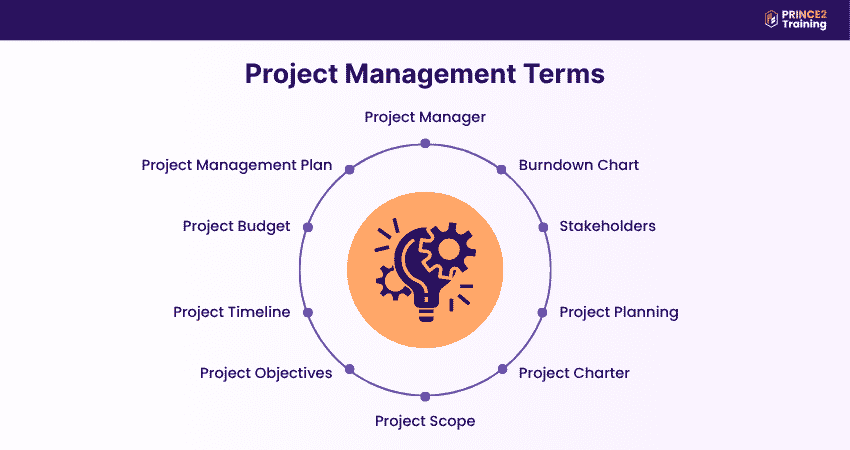
1) Project Manager
A Project Manager is a professional who is responsible for planning, executing, and closing a project. They coordinate teams, manage risks, handle communication, and ensure the project delivers value within scope, time, and budget constraints.
2) Burndown Chart
A Burndown Chart tracks remaining work against time, commonly used in Agile projects. It helps teams visualise progress daily and quickly identify delays or productivity gaps during a sprint.
3) Stakeholders
Stakeholders refer to anyone who is impacted by the project, such as clients, team members, suppliers, and executives. Managing their expectations is crucial for project approval and overall success.
4) Project Planning
Project Planning defines the roadmap for execution. It includes setting goals, defining tasks, allocating resources, estimating costs, identifying risks, and establishing timelines to guide the team.
5) Project Charter
The Project Charter formally authorises the project. It outlines the objectives, scope, stakeholders, and responsibilities. It ensures everyone understands the project purpose before work begins.
6) Project Scope
Project Scope clearly defines what work will be included and what will not be included. It sets boundaries, prevents unnecessary changes, and helps maintain focus throughout the project lifecycle.
Advance your Project Management career with PRINCE2® Foundation & Practitioner Training – Sign up now!
7) Project Objectives
Project Objectives are clear, measurable outcomes that a specific project aims to achieve. They guide planning and decision-making and help assess the project’s success at completion. Well-defined objectives ensure that team efforts remain aligned with the project’s purpose.
8) Project Timeline
A Project Timeline outlines all tasks, phases, and deadlines. It provides a structured schedule that ensures activities are completed in the correct order and within the required timeframe. Also, a clear timeline helps teams prioritise work and manage dependencies.
9) Project Budget
The Project Budget estimates total costs, including labour, tools, and materials. It helps to track expenses, control spending, and ensure the project remains financially viable. Also, a well-planned budget supports better resource allocation and prevents unexpected financial risks.
10) Project Management Plan
Project Planning is the second stage of the project lifecycle, where key steps are defined. It involves setting timelines, budgets, milestones, assessing risks, and assigning tasks to deliver projects within scope and time.
11) Agile Project Management
Agile Project Management refers to a flexible approach that divides work into small cycles called sprints. It focuses on continuous feedback, collaboration, and delivering value quickly, making it widely used in software development.
12) Scrum Master
A Scrum Master supports the team in following Agile practices, removes obstacles, and ensures sprint goals are achieved. Their focus is on improving team performance and maintaining workflow efficiency.
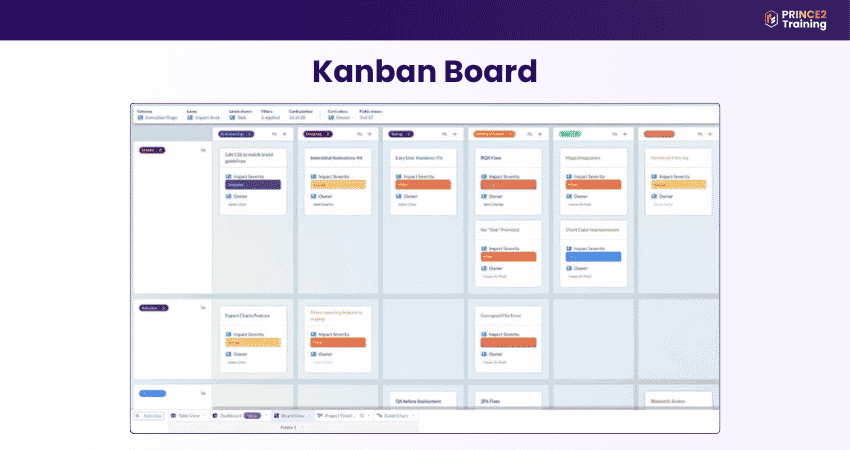
13) Kanban
Kanban is a visual method in Project Management that uses boards and cards to track tasks across stages. It helps to manage workflow, identify bottlenecks, and improve the overall efficiency of teams.
14) Sprint
A Sprint is a fixed period where teams complete a set of tasks. It includes planning, execution, and review, enabling faster and continuous delivery. Also, it helps teams deliver incremental value and track progress regularly.
15) Backlog
A Backlog is a prioritised list of tasks and requirements needed for a project. It helps teams focus on the most important work at each stage. A well-maintained backlog ensures clarity and supports effective planning.
Learn hybrid Project Management the right way with the PRINCE2 Agile® Foundation and Practitioner Training – Sign up now!
16) Daily Standup/Stand-up Meeting
A Daily Standup is a short meeting where team members share updates and discuss blockers. It keeps everyone aligned and ensures quick issue resolution. Also, it improves team communication and accountability daily.
17) Iterative Development/Iterative Process
Iterative Development involves building and refining a product in repeated cycles. It allows teams to improve work based on feedback and reduce risks. This approach supports continuous improvement and better-quality outcomes.
18) Hybrid Methodology
The Hybrid Methodology combines Agile flexibility with a Waterfall structure. It helps teams manage complex projects that require both adaptability and planning. Also, it allows organisations to customise processes based on project needs.
19) Waterfall Model
The Waterfall Model is a linear approach where every phase is completed before moving to the next. It suits projects with clear and fixed requirements. This method ensures structured planning and controlled execution.
20) Software Development Life Cycle (SDLC)
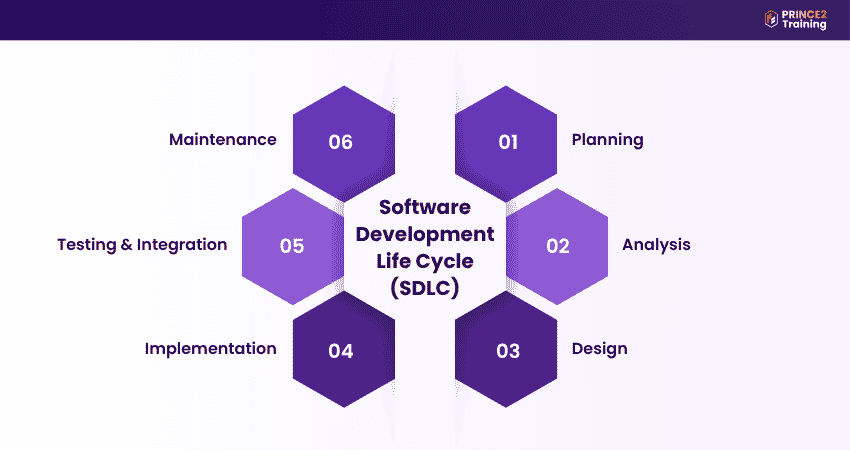
Software Development Life Cycle is a structured process for developing software, covering stages like planning, development, testing, and maintenance to ensure quality delivery. It provides a systematic approach to building reliable and efficient software.
21) Work Breakdown Structure (WBS)
A Work Breakdown Structure (WBS) refers to a visual hierarchy that breaks a project into smaller, manageable components. It outlines deliverables, tasks, and timelines, making complex projects easier to plan and track.
22) Critical Path Method (CPM)
The CPM Project Management technique is used to identify the longest series of dependent tasks in a project. It helps determine the shortest time needed to complete the project and highlights tasks that cannot be delayed.
23) Gantt Chart
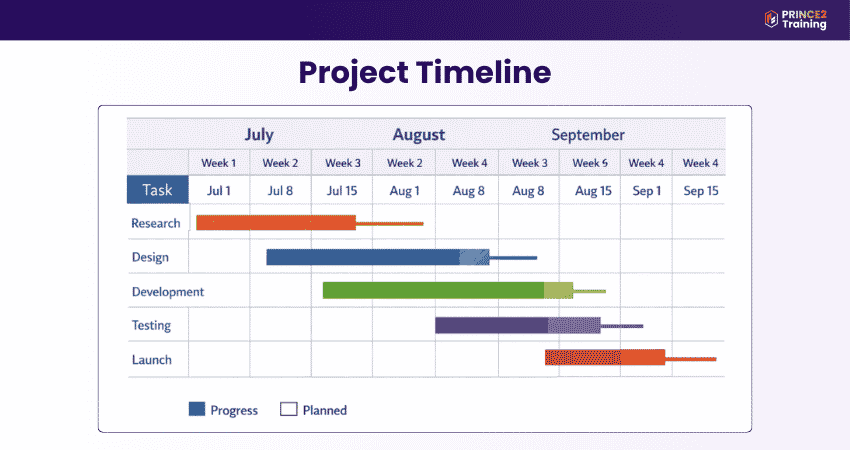
A Gantt Chart is a widely popular visual Project Management timeline that displays project tasks as horizontal bars. It shows task durations, responsibilities, and schedules, helping teams track progress and manage deadlines effectively.
24) Milestone
A Milestone is a key point in a project that marks the completion of a major task or phase. It helps teams to track progress and ensures important goals are achieved within the set time.
25) Dependencies
Dependencies refer to the tasks that are dependent on the completion of other tasks before they can begin the next. Managing dependencies ensures a smooth workflow and prevents delays in project execution.
Learn to lead Agile projects with structured clarity by joining the PRINCE2 Agile® Practitioner Training now!
26) Risk Management
Risk Management means to identify potential risks and take steps to minimise their impact. It helps protect project quality, timelines, and overall success. Also, it enables teams to plan proactively and reduce uncertainties throughout the project lifecycle.
27) Issue Management
Issue Management focuses on identifying and resolving problems during a project. Addressing issues early helps prevent delays, reduce costs, and maintain project progress. Also, it ensures that challenges are documented and handled in a structured manner.
28) Change Control
Change Control is the process of reviewing and approving changes within a project. It helps prevent scope creep and ensures the project stays aligned with its original plan. It also maintains control over project outcomes and resource usage.
29) Cost Overrun
Cost Overrun occurs when a project exceeds its planned budget due to unexpected expenses. Managing costs carefully helps avoid financial risks and maintain project stability. Regular monitoring helps identify issues early and control spending effectively.
30) Contingency Plan
A Contingency Plan is a backup strategy prepared in advance to handle unexpected issues. It helps teams respond quickly and maintain project continuity during challenges. It reduces the impact of risks and ensures smoother project execution.
31) Earned Value Management
Earned Value Management (EVM) is a technique used to measure project performance by comparing completed work with planned progress and budget. It helps track both cost and schedule efficiency, enabling Project Managers to identify variances and take corrective actions.
32) Key Performance Indicators (KPIs)
Key Performance Indicators (KPIs) are measurable metrics used to evaluate project performance. They help track progress towards goals and assess success over time. KPIs also support better decision-making by providing clear performance insights.
33) Dashboard
A Dashboard refers to a visual tool that displays key project data, metrics, and progress in one place. It provides real-time updates to help teams monitor performance easily. Dashboards also improve visibility and support quick, informed decisions.
34) Monitoring
Monitoring involves regularly tracking project progress and performance against plans. It is useful for identifying issues proactively and ensuring the project stays on schedule. Continuous monitoring supports effective control and timely adjustments.
35) Quality Assurance
Quality Assurance ensures that a project’s processes and deliverables meet defined standards. It focuses on preventing defects and maintaining consistency. It helps organisations deliver reliable and high-quality results.
Make better project decisions and strengthen leadership skills with PRINCE2® Practitioner Training – Sign up today!
36) Kick-off meeting
A Kick-off Meeting is the first meeting where all stakeholders align on project goals, plans, and expectations. It enables team members to ask important questions and clarify roles. This meeting builds the tone for team collaboration and communication.
37) RACI
A Responsible, Accountable, Consulted, and Informed (RACI) chart is a Project Management tool for defining roles and responsibilities in a project. It categorises stakeholders as Responsible, Accountable, Consulted, or Informed.
38) Resource Management
Resource Management involves planning, allocating, and managing resources such as people, time, and budget. It ensures resources are used efficiently to meet project goals. It helps prevent shortages and improve productivity.
39) Procurement
Procurement is the vital process of acquiring goods and services needed for a project. It involves selecting suppliers, negotiating costs, and ensuring timely delivery. Effective procurement helps control costs and maintain project quality.
40) Statement of Work (SOW)
A Statement of Work refers to a document that defines the project scope, deliverables, and responsibilities. It acts as a reference point for both the team and stakeholders. An SOW helps prevent misunderstandings by clearly outlining expectations.
41) Project Management Office (PMO)
A Project Management Office (PMO) is a team within an organisation that provides support, standards, and guidance for managing projects. It helps with planning, documentation, and monitoring. A PMO ensures consistency and improves project success across the organisation.
42) Project Portfolio Management (PPM)
Project Portfolio Management (PPM) involves managing multiple projects to align with organisational goals. It helps prioritise projects, allocate resources, and analyse overall performance. PPM ensures that all projects contribute to strategic business objectives.
43) Project Management Body of Knowledge (PMBOK®)
PMBOK® is a collection of standard guidelines and best practices for Project Management, as published by the Project Management Institute (PMI). It provides a common framework used globally by professionals. Also, it serves as a key reference for Project Management certifications.
44) Project Management Institute (PMI)
The Project Management Institute is a globally recognised organisation that sets Project Management standards and offers certifications. It offers resources, training, and professional development opportunities. PMI also promotes best practices across industries worldwide.
Learn Agile fundamentals with real clarity by joining the PRINCE2 Agile® Foundation Training today!
45) Project Management Professional (PMP)
A Project Management Professional (PMP) is a recognised certification for individuals working in Project Management. It validates skills, knowledge, and experience in managing projects. Earning a PMP certification enhances credibility and career opportunities.
46) SMART Goals
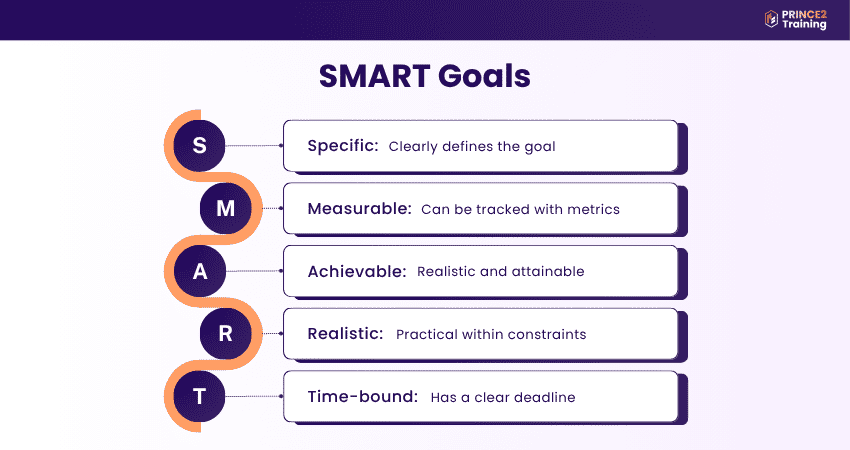
SMART Goals are a framework used to set clear and achievable objectives. They stand for Specific, Measurable, Achievable, Realistic, and Time-bound (SMART). This approach helps improve focus and ensures goals are well-defined and trackable.
47) Feasibility Study
A Feasibility Study evaluates whether a project is practical and achievable. It analyses factors such as cost, time, resources, and risks. This helps organisations decide whether to proceed with a project.
48) Waterfall Model
The Waterfall Model is a popular linear approach where project phases are completed one after another. It is best suited for projects with clear and fixed requirements. This method ensures structured planning and predictable outcomes.
49) User Acceptance Testing (UAT)
User Acceptance Testing (UAT) is the final stage of testing where users validate the system in a real-world environment. It ensures the product meets requirements and works as expected. UAT helps to confirm the readiness of a project before its final release.
50) VUCA
VUCA is short for Volatility, Uncertainty, Complexity and Ambiguity. It describes the unpredictable nature of modern business environments. Understanding VUCA helps organisations prepare for change and make better strategic decisions.
Conclusion
Understanding key Project Management Terms is the first step towards building confidence and succeeding in any project environment. These terms give you a clear understanding of how projects are planned, executed, and delivered. Familiarising yourself with these essential terms help you collaborate better, make informed decisions, and contribute more effectively to project success.
Turn your Project Management knowledge into real impact with PRINCE2® Certification – Sign up now!
Frequently Asked Questions?
The five Cs of Project Management are:
1) Complexity: Understanding tasks and dependencies
2) Criticality: Prioritising important work
3) Compliance: Following rules and standards
4) Culture: Aligning with organisational values
5) Compassion: Supporting team well-being and performance
The seven phases of Project Management are:
1) Planning: Define goals, scope, timeline
2) Analysis: Gather requirements
3) Design: Create specifications
4) Development: Build the product
5) Testing: Ensure quality and fix issues
6) Implementation: Deliver to users
7) Maintenance: Provide ongoing support
Project Management methodology terms refer to standard approaches like Agile, Waterfall, Scrum, and Kanban. They define how work is planned, executed, and controlled, guiding workflows, team collaboration, and structure across the entire project lifecycle.