

 Back
Back


 Back to
topics
Back to
topics



Table of Contents
 04-Sep-2025
Author-Veronica Davis
Have you ever managed a group project and felt like juggling endless tasks, deadlines and expectations? If yes, you have experienced the taste of what Project Management is like and understood the importance of strong Project Management Skills.
In today's dynamic work environment, you require more than technical knowledge for a project to succeed. You require the right combination of skills to lead people, manage time and resources and mitigate risk. This blog dives into essential Project Management Skills (soft, hard and technical) for sharpening your expertise, skillset to help you stay in control and deliver desired outcomes.
Table of Contents
1) What are Project Management Skills?
2) Soft Skills Every Project Manager Should Master
3) Hard Skills Every Project Manager Should Master
4) Technical Project Management Skills
5) Effective Strategies to Improve Project Management Skills
6) How to Improve Project Management Skills?
7) Conclusion
What are Project Management Skills?
Project Management Skills are the abilities that help you plan, manage, and complete projects successfully, on time and within budget. These includes soft skills, such as communication, leadership, teamwork and decision making. Also, it constitutes hard and technical skills, such as budgeting, managing risk, scheduling and utilising the right Project Management tool.
These Skills Help you to:
a) Manage tasks and meet deadlines
b) Lead and motivate your team
c) Communicate clearly with everyone involved
d) Handle budgets and resources efficiently
e) Solve problems quickly and effectively
Whether you are a beginner or an experienced Project Manager, developing these skills enables you to deliver projects successfully and meet client expectations.

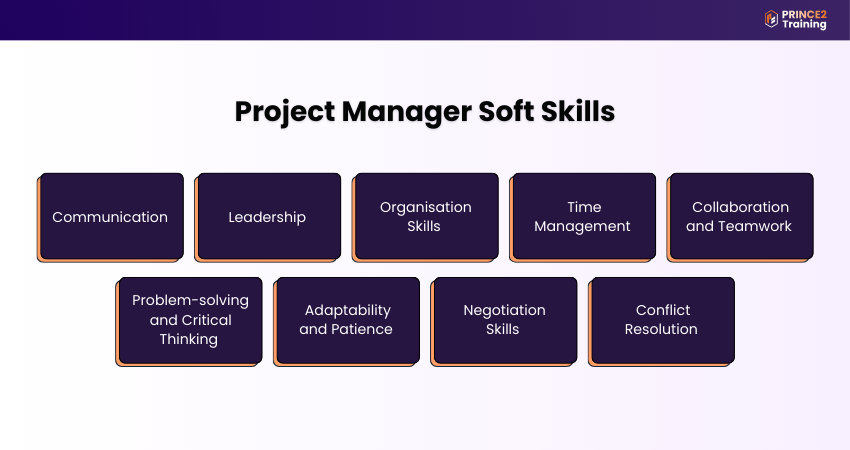
Soft Skills Every Project Manager Should Master
A successful Project Manager needs strong Project Management Skills. These include soft skills to lead teams, communicate well, and handle challenges, as well as hard skills to manage technical tasks effectively. Let's explore the key soft skills of a Project Manager:
1) Communication
Good communication is the heart of Project Management. You need to share updates, set clear expectations, and listen to your team. Clear communication avoids misunderstandings and keeps everyone aligned with project goals.
Tips to Improve:
a) Use simple and clear language
b) Practice active listening
c) Use tools like Slack, Teams, or email for updates
2) Leadership
A good leader guides the team, inspires them, and helps them stay focused on goals. Leadership is not about control; it's about supporting your team. Strong leadership builds trust and motivates the team to perform at their best.
Tips to Improve:
a) Encourage open discussions
b) Appreciate team efforts
c) Make confident decisions
3) Organisation Skills
Projects involve many moving parts. Being organised helps you keep track of tasks, documents, and deadlines. An organised approach ensures smoother workflows and better time efficiency.
Tips to Improve:
a) Use Project Management tools such as Trello, Wrike and Asana
b) Break work into smaller tasks
c) Keep project files and reports well-structured
4) Time Management
Deadlines are critical in every project. Good Time Management ensures tasks are completed on schedule. Managing your time well reduces stress and boosts productivity.
Tips to Improve:
a) Set realistic timelines
b) Use calendars and reminders
c) Priorities tasks based on importance
5) Collaboration and Teamwork
Projects succeed when the entire team works together. Collaboration ensures smooth communication and better results. Strong teamwork encourages idea-sharing and makes problem-solving faster.
Tips to Improve:
a) Build trust among team members
b) Share responsibilities fairly
c) Encourage open feedback
6) Problem-solving and Critical Thinking
Unexpected problems can arise in any project. A good Project Manager finds solutions quickly and thinks logically. Critical thinking helps you evaluate situations better and make smarter decisions.
Tips to Improve:
a) Analyse the problem before acting
b) Brainstorm multiple solutions
c) Learn from past challenges
7) Adaptability and Patience
Projects rarely go exactly as planned. You must be flexible and patient when facing changes or delays. Being adaptable allows you to handle challenges without slowing down progress.
Tips to Improve:
a) Stay calm under pressure
b) Accept changes positively
c) Be ready to adjust strategies
8) Negotiation Skills
Negotiation Skills help you manage resources, deal with vendors, and resolve conflicts smoothly. Effective negotiation ensures fair outcomes that benefit both sides.
Tips to Improve:
a) Understand everyone's needs
b) Focus on win-win solutions
c) Practise polite but firm communication
9) Conflict Resolution
Disagreements within teams are common. Handling them well keeps the project environment positive. Resolving conflicts quickly maintains team harmony and productivity.
Tips to Improve:
a) Listen to all sides
b) Stay neutral and fair
c) Focus on solving the issue, not blaming people
10) Create a Positive Environment
A positive work environment boosts motivation and team productivity. When people feel valued and supported, they contribute more effectively to the project's success.
Tips to Improve:
a) Recognise individual contributions
b) Promote respect and inclusivity
c) Encourage creativity and innovation
Elevate your career and manage projects with precision. Join our
PRINCE2 Agile® Foundation Training
today!
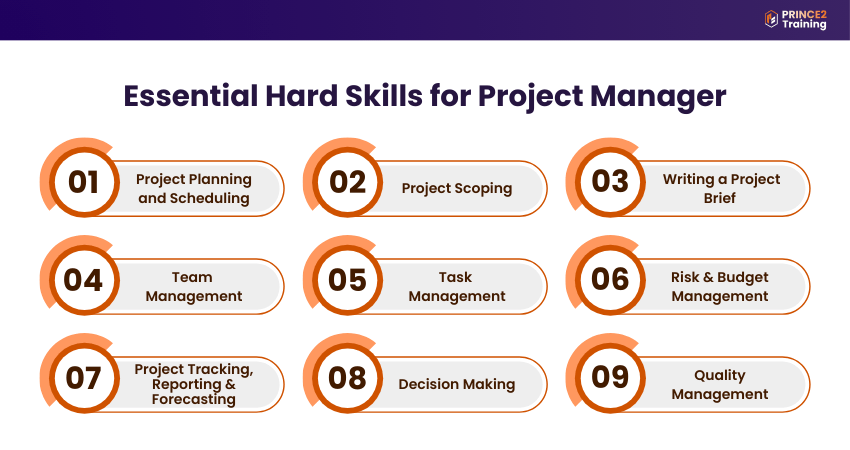
Hard Skills Every Project Manager Should Master
Project Management Skills also include important hard skills, technical abilities like planning, budgeting, Risk Management, and quality control that ensure smooth project delivery. Let's explore the key hard skills for Project Manager:
1) Project Planning and Scheduling
Planning is the foundation of every project. It involves setting goals, defining tasks, and allocating resources. Strong planning helps your team stay organised and achieve project milestones on time.
Tips to Improve:
a) Use Gantt Charts or project planning software
b) Break projects into clear milestones
c) Track progress regularly
2) Project Scoping
Project scoping is the process of defining the aims of the project and the set boundaries to execute operations. It outlines goals, deadlines, budget and resources for keeping everyone informed. A clear scope helps teams to remain aligned.
Tips to Improve:
a) Clear defines goals, budgets and resources
b) Share the scope with stakeholders and review regularly
c) Use it for decision-making for evaluation and additional requests
3) Writing a Project Brief
A project brief outlines essential purposes, goals and vision for your project. It guides teams and stakeholders towards a shared understanding of what the project is for and the steps to achieve it. A strong brief gives clarity during planning stage and acts as a reference in the project lifecycle.
Tips to Improve:
a) Begin by defining clear problems and scalable goals
b) Update the brief consistently as project evolves
c) Keep to accessible for every team member
4) Team Management
Team Management is crucial for ensuring success of the project. A Project Manager must be able to guide team members effectively and encourage collaboration. Strong people skills foster trust, motivation and a collaborative work environment.
Tips to Improve:
a) Hold regular check-ins and encourage open communication
b) Be fair and address problems effectively
c) Organise activities for building connection amongst teams
5) Task Management
Task Management means to organise and track projects for ensuring seamless workflow. An effective Task Management helps Project Managers and teams to manage time, dutifully carry responsibilities and stay aligned with the project's goals.
Tips to Improve:
a) Use Task Management for organising and tracking work live
b) Prioritise task based on urgency and importance
c) Break big task into manageable, smaller chunks for ensuring quality and clarity
6) Risk & Budget Management
Projects come with risks and costs. Managing them well ensures smooth delivery without overspending. Effective risk and budget control prevent unexpected issues from derailing your project.
Tips to Improve:
a) Identify possible risks early
b) Set aside a budget buffer
c) Monitor expenses regularly
7) Project Tracking, Reporting & Forecasting
Tracking progress and creating reports help stakeholders stay updated and ensure the project is on track. Accurate tracking allows you to address delays early and keep everyone aligned.
Tips to Improve:
a) Use dashboards for visual reports
b) Compare actual results with planned timelines
c) Forecast delays and risks early
8) Decision Making
As a Project Manager, you'll make critical decisions daily. Good decision-making ensures projects move forward smoothly. Sound decisions help you balance risks, resources, and priorities effectively.
Tips to Improve:
a) Collect enough data before deciding
b) Involve your team for better ideas
c) Weigh risks and benefits carefully
9) Quality Management
Ensuring high-quality results keeps clients happy and improves your project's success rate. Strong Quality Management builds trust and reduces costly revisions.
Tips to Improve:
a) Set quality benchmarks early
b) Review deliverables regularly
c) Encourage team accountability
Integrate flexibility and structure to deliver projects confidently with our
PRINCE2 Agile® Foundation and Practitioner Training
– Join now!
Technical Project Management Skills
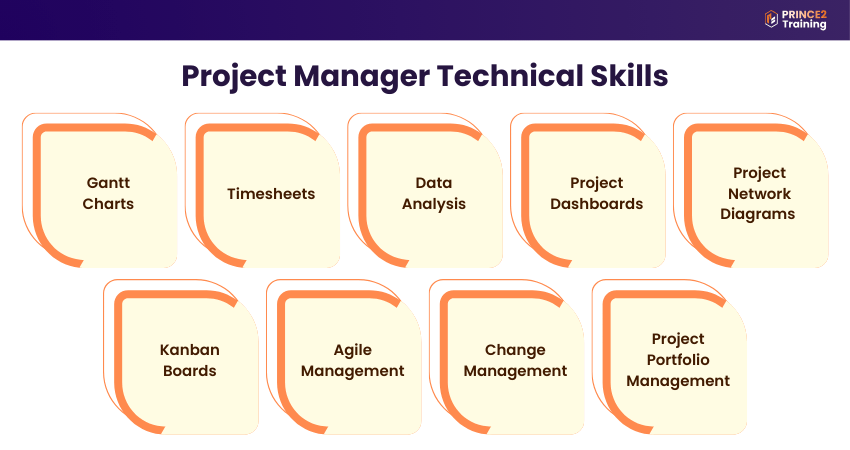
Technical Project Management Skills help Project Managers to plan, track and deliver work effectively. These skills help to manage systems, methods and software. Some of the common technical skills are mentioned below:
1) Gantt Charts
Gantt Charts are visual tools utilised for planning and tracking timelines of a project. They give Project Managers clarity over when work begins, the time it will take and interconnectedness of each task. They help projects stay on track and meet deadlines.
Tips to Improve:
a) Breakdown task and dependencies before building Gantt Chart
b) Use Project Management tools, such as Asana or MS Project
c) Review and adjust to reflect real progress and changes
2) Timesheets
It is used to track the time team members spend on certain tasks and activities. It helps Project Managers to effectively distribute workload, monitor productivity and estimate project cost. Timesheets are important for billable hours and managing tight deadlines.
Tips to Improve:
a) Utilise time-tracking tools that integrate with Project Management software
b) Regularly review timesheet data for improving workload imbalances
c) Set clear expectations and reminders for accurate time entry
3) Data Analysis
Data analysis turns raw project information into valuable insights. It adds value to data collected by Project Management tools and interprets it for making smarter decisions. This skill helps to assess project performance, identify trends and spot potential risks.
Tips to Improve:
a) Practice using reporting dashboards and analytics features
b) Familiarise yourself with basic data interpretaation techniques
C) Review project logs regularly for identifying potential risks
4) Project Dashboards
It helps to display important information in an organised manner. They pull data from many sources, such as timelines, workloads, risks and budgets. For effectively utilising project dashboards, Project Managers must be well-versed on how to gather data and analyse for trends.
Tips to Improve:
a) Select relevant metrics to clearly reflect project health
b) Regularly update dashboards to maintain accuracy and trust of stakeholders
c) Use visual charts and colour-coding to highlight trends, risk and priorities
5) Project Network Diagrams
This is a visual map for drawing the sequence and relationships between tasks in a project. They give us an overview of how activities are connected, priority tasks to be completed and prevent delays. This requires being table to build, read and update network diagrams.
Tips to Improve:
a) Define all project tasks
b) Use Project Management software, such as Lucidchart
C) Regularly review and refine your network diagrams
6) Kanban Boards
This is a visual workflow to show how work moves in each stage. Each piece is represented by a card that moves across columns during progress, this is popular amongst lean, product, engineering and software teams.
Tips to Improve:
a) Limit work-in-progress in each column to highlight bottlenecks
b) Update the board and encourage teams to move cards when status changes
c) Use metrics from the board to review efficiency in workflow
7) Agile Management
Agile Management means managing project using Agile methodologies, such as incremental delivery, iterative work cycles, and frequent feedback. It is widely used in product, Engineering and software teams
Tips to Improve:
a) Breakdown work into short iterations and review progress
b) Conduct regular retrospectives
c) Be flexible in your plan and encourage stakeholder feedback
8) Change Management
This refers to the process of managing the human and organisational side of change. It helps people move from old ways to new ways of doing tasks, such as securing buy-in, communicating transparently or providing training.
Tips to Improve:
a) Proactively engage stakeholders during transitions
b) Communicate clearly explaining the way, how and the benefits of the change
c) Keep monitoring the adoption and ask for feedback
9) Project Portfolio Management
It is about managing a collection of projects and aligning them with strategic objectives and balancing resources. It gives a view of all team's work in real-time. this helps to decide what projects need attention, if resources are effectively used and strategy can be executed.
Tips to Improve:
a) Establish clear criteria for prioritising projects, such as ROI, or resource demands
b) Use dashboard tools to give transparency across projects
c) Review the portfolio regularly for ensuring work is creating impact
How to Improve Project Management Skills?
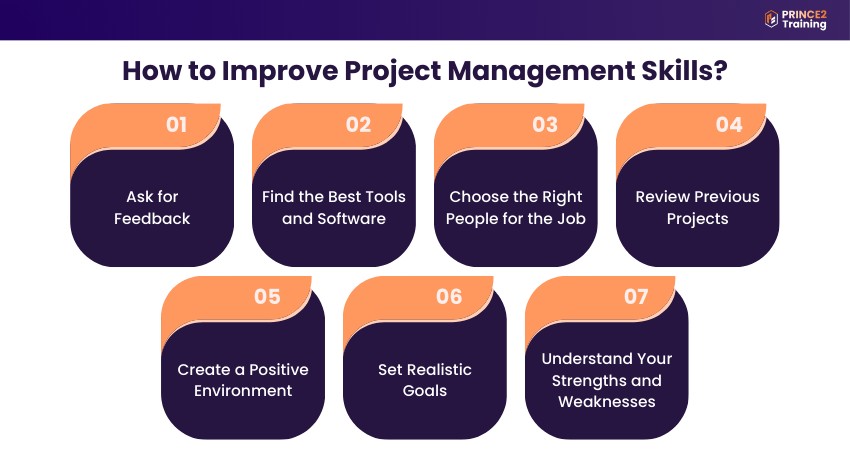
Project Management Skills grow with consistent practice, and real-world experience. Some practical ways to develop your Project Management skillset is provided below:
1) Ask for Feedback
Seek feedback from teammates, stakeholders and peers. By regular feedback, you get valuable insights into areas needing improvement. For this, hold review sessions for discussing what worked well and what did not.
2) Find the Best Tools and Software
Choosing the right Project Management tools and software is integral. Take sufficient time to explore tools extensively. Then, select the tool that is most suitable for your industry needs, working style and project demands.
3) Choose the Right People for the Job
Strong teams ensure desired outcomes. Try to identify strengths of team members, assign roles based on their skill set, and support everyone. A thoughtful team selection and assigning roles carefully drives performances effectively and brings positive outcomes.
4) Review Previous Projects
Look back at previous projects for identifying key lessons. Begin by analysing what contributed positive results and areas where mistakes occurred. Also, learn from senior Project Managers by collecting information regarding their past experiences and problem-solving tactics.
5) Create a Positive Environment
A project thrives in a positive environment, where collaboration is consistent. Always acknowledge strong efforts, give support during challenges, and foster open communication. Making team members feel valued makes them perform better and be more engaged.
6) Set Realistic Goals
Set goals that can be measured. Do not overwhelm your team with unrealistic expectations. by setting attainable goals, you maintain good morale, clarity and efficiency.
7) Understand Your Strengths and Weaknesses
It is crucial to recognise where you excel and areas where improvement is required. Utilise your strengths to provide value and seek guidance for developing your weaknesses. By embracing personal growth, it will boost confidence, enhance skillset and improve ownership.
Conclusion
Project Management Skills requires completing projects successfully and on time. With the right mix of soft skills, hard skills and technical expertise, you can manage budgeting, lead confidently, adapt to change and deliver positive outcomes. This is essential for managing stakeholders, motivating teams, analysing data and seamlessly run projects.
Transform your career and deliver projects with confidence with our PRINCE2® Certification – Join now!
Frequently Asked Questions?
The most in-demand Project Management Skills include good communication, strong leadership, knowledge of project tools, Agile methods, and risk management. Also, budget control, handling stakeholders and changing effectively.
The five basics of Project Management are:
1) Initiation: Define goals and scope
2) Planning: Create a roadmap and timeline
3) Execution: Perform project tasks
4) Monitoring & Control: Track progress and adjust
5) Closing: Close and deliver the project
The three most important skills are:
1) Communication
2) Leadership
3) Organisation