

 Back
Back


 Back to
topics
Back to
topics




Table of Contents
 23-Feb-2026
Author-David Walter
Have you ever wondered why some projects run smoothly while others face delays, confusion, and unexpected costs? Whether you are launching a product, managing a team initiative, or leading organisational change, success rarely happens by chance. It comes from applying the right Project Management Principles that guide decisions, structure work, and keep projects moving in the right direction.
When these principles are in place, projects become easier to manage and more predictable. Teams stay aligned, risks are addressed early, and goals remain clear. In this blog, you will explore the key Project Management Principles that help managers stay in control and deliver successful outcomes.
What are the Principles of Project Management?
The Principles of Project Management are core guiding concepts that help ensure projects are planned, executed, and delivered successfully. They provide a structured framework for managing goals, resources, risks, and stakeholder expectations while keeping the project focused on delivering value.
These principles emphasise clear objectives, defined scope, effective communication, stakeholder engagement, and team collaboration. They also encourage adapting approaches to suit the project environment. By applying these guidelines, organisations can improve efficiency, reduce uncertainty, and achieve consistent project outcomes.

What are the 12 Principles of Project Management?
Successful projects do not happen by chance. They are built on structured planning, clear communication, and ongoing control. Below are the 12 Principles of Project Management that guide effective Project Management from start to finish:
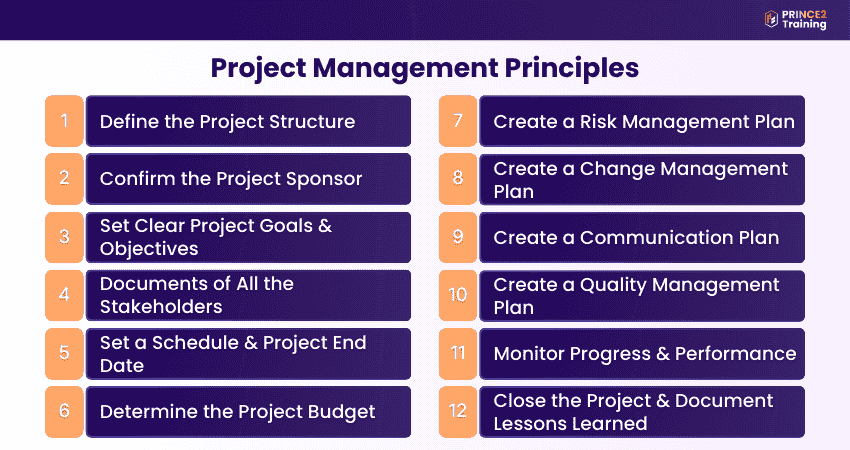
1) Define the Project Structure
A clearly defined project structure is one of the core Project Management Principles, providing the framework that guides planning, execution, and control. It outlines how the project will be organised, how tasks are grouped, and how responsibilities are distributed. This structure ensures clarity, reduces confusion, and supports coordinated teamwork.
Developing a structured framework often involves creating schedules, defining workflows, and breaking work into manageable components using tools like a Work Breakdown Structure. This improves visibility, simplifies delegation, and enables Project Managers to track progress, manage dependencies, and maintain control throughout execution.
2) Confirm the Project Sponsor
Confirming the project sponsor is an essential part of effective Project Management principles, as this role provides strategic direction, authority, and executive-level support. Identifying the sponsor early ensures the project aligns with organisational priorities and has access to the necessary resources.
A clearly identified sponsor strengthens accountability and governance. They act as a bridge between leadership and the project team, providing guidance and removing organisational barriers. Their involvement enables faster decision-making, stronger alignment with business goals, and sustained executive commitment throughout the project.
3) Set Clear Project Goals & Objectives
Setting clear goals is a core element of strong Project Management Principles, providing direction and purpose from the beginning and ensuring alignment with overall organisational strategic objectives. Clearly defined objectives establish what the project aims to achieve and help teams focus their efforts effectively.
Effective goals should be specific, measurable, achievable, relevant, and time-bound. These SMART criteria make progress easier to track and performance easier to evaluate. When objectives are clearly communicated, teams remain aligned, decision-making improves, and the project stays focused on delivering intended results.
4) Documents of All the Stakeholders
Identifying stakeholders early reflects good Project Management Principles, as stakeholders influence or are affected by the project’s outcomes and play a key role in decision-making processes. Documenting them helps managers understand expectations, priorities, and potential concerns.
Proper stakeholder documentation enables structured engagement and communication. By understanding influence levels and information needs, Project Managers can maintain transparency and build trust. Active stakeholder involvement supports faster decisions, reduces misunderstandings, and ensures alignment between project outcomes and expectations.
5) Set a Schedule & Project End Date
Establishing a clear timeline is a critical part of applying effective Project Management Principles to maintain coordination and ensure timely project delivery. A defined project schedule provides a structured timeline that guides execution and ensures activities occur in the correct order.
Setting a clear end date creates accountability and enables performance tracking. A realistic timeline helps identify delays early and supports timely corrective action. Structured scheduling improves resource coordination, keeps progress measurable, and ensures the project remains aligned with planned delivery objectives.
6) Determine the Project Budget
Financial planning is a key aspect of responsible Project Management principles, ensuring resources are allocated and controlled effectively to prevent unexpected cost overruns. Determining the project budget involves estimating costs for labour, materials, technology, and contingency reserves.
Monitoring spending against the planned budget allows early detection of overruns and enables corrective actions such as reallocating resources or adjusting plans. Strong financial control supports informed decision-making, prevents unnecessary expenses, and ensures the project remains economically viable.
Gain end-to-end Project Management expertise with PRINCE2® Foundation & Practitioner Training and deliver successful outcomes – Register today!
7) Create a Risk Management Plan
Managing uncertainty is central to effective Project Management Principles, which emphasise identifying and addressing risks early through structured analysis and proactive planning approaches. Risk management prepares the project for potential threats that could affect progress or outcomes.
A structured risk management plan defines mitigation strategies and response actions. Documenting risks in a register and monitoring them continuously helps teams respond proactively rather than reactively. This preparation improves stability, reduces disruptions, and supports consistent project performance.
8) Create a Change Management Plan
Handling change effectively is an important component of modern Project Management Principles, especially in dynamic and constantly evolving project environments. A change management plan ensures that all proposed modifications are evaluated systematically before implementation.
Formal change control allows teams to assess impact, feasibility, and resource implications before approving adjustments. By managing changes carefully, organisations remain flexible while protecting project stability. Controlled adaptation ensures progress continues without compromising scope, cost, or overall objectives.
9) Create a Communication Plan
Clear and structured communication is a cornerstone of successful Project Management Principles across all project stages and ensures transparency among teams and stakeholders. A communication plan defines how information is shared across the project, including what updates are communicated and who receives them.
Consistent communication prevents misunderstandings and improves collaboration among teams and stakeholders. Using clear reporting methods and defined channels ensures information flows efficiently. Effective communication strengthens coordination, supports timely decisions, and helps maintain alignment throughout the project lifecycle.
10) Create a Quality Management Plan
Maintaining high standards is a central focus of effective Project Management, particularly when delivering consistent results across complex project environments. A quality management plan ensures that project deliverables consistently meet defined standards and stakeholder expectations.
Continuous quality monitoring helps detect issues early and prevent rework. By tracking performance indicators such as defect rates or compliance measures, teams maintain consistency and reliability. Strong quality management ensures outcomes meet requirements and deliver lasting value.
11) Monitor Progress & Performance
Monitoring progress ensures the project consistently remains aligned with planned objectives, timelines, and budgets throughout the entire project lifecycle. By comparing actual performance with expected targets, Project Managers can identify deviations early and take corrective action before problems escalate.
Performance tracking uses metrics, milestone reviews, and regular reporting to evaluate project health. Continuous monitoring supports informed decision-making and enables timely adjustments. This ongoing evaluation ensures consistent progress and helps maintain control throughout execution.
12) Close the Project & Document Lessons Learned
Project closure confirms that all deliverables are fully completed, approved, and formally handed over to stakeholders or relevant operational teams for implementation. It involves reviewing performance, validating results, and ensuring contractual and operational requirements have been satisfied.
Documenting lessons learned is equally important for organisational growth. Reflecting on successes, challenges, and improvement opportunities helps refine future practices. This knowledge capture supports continuous improvement and strengthens long-term Project Management effectiveness.
Build advanced project leadership skills with PRINCE2® Practitioner Training and manage complex projects with confidence and precision - Join now!
Why are Project Management Principles Important?
Project Management Principles deliver a structured approach to organising work, managing resources, and aligning outcomes with stakeholder expectations, improving efficiency and increasing the likelihood of project success.
Key reasons why Project Management Principles are important include:
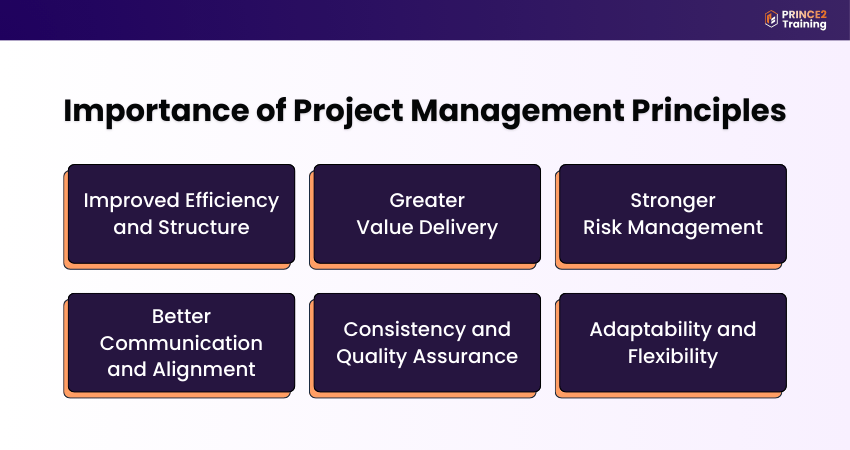
1) Improved Efficiency and Structure: Clear workflows, roles, and responsibilities help teams work in an organised and coordinated manner. This reduces confusion, prevents delays, and ensures resources are used efficiently throughout the project lifecycle.
2) Greater Value Delivery: These principles keep teams focused on outcomes that matter most. By prioritising high-impact activities, projects deliver meaningful and measurable results for the organisation and its stakeholders.
3) Stronger Risk Management: Early risk identification and proactive mitigation strategies help minimise disruptions. This improves stability and allows teams to manage challenges more effectively.
4) Better Communication and Alignment: Consistent communication and collaboration keep expectations clear and teams aligned. This supports faster decision-making and ensures everyone works toward shared goals.
5) Consistency and Quality Assurance: Standardised processes and proven practices maintain reliable performance. This reduces errors, prevents rework, and supports high-quality project outcomes.
6) Adaptability and Flexibility: Structured change management supports continuous improvement. Teams can respond effectively to evolving requirements while keeping the project aligned with its objectives.
Conclusion
Strong Project Management Principles provide the structure, clarity, and control needed to deliver successful outcomes. By guiding planning, execution, and continuous improvement, they help teams manage risks, optimise resources, and stay aligned with goals. Applying these principles consistently enables organisations to deliver value, maintain quality, and achieve long-term project success.
Build practical project leadership skills with PRINCE2® Certification and manage complex projects with clarity and control – Join now!
Frequently Asked Questions?
No FAQs available