

 Back
Back


 Back to
topics
Back to
topics




Table of Contents
 21-May-2025
Author-Gary Moore
Imagine trying to construct a house without a blueprint, with a wall in the wrong place, missing doors, and total chaos. That’s exactly what happens when you start a project without a solid plan. A Project Management Plan is your project’s blueprint. It brings structure, clarity, and order to even the most complex tasks, making sure nothing slips through the cracks.
Whether you're leading a team or managing tasks alone, a Project Management Plan keeps you focused, aligned, and in control. In this blog, we’ll discuss its importance, key components, how to write one, and common mistakes to avoid so you can turn ideas into action and goals into results.
Table of Contents
1) What is a Project Management Plan?
2) Importance of Project Management Plan
3) Components of Project Management Plan
4) Factors You Need to Consider Before Writing a Project Management Plan
5) How to Write a Project Management Plan?
6) Tips for Writing an Effective Project Management Plan
7) Common Pitfalls to Avoid When Developing a Project Management Plan
8) Conclusion
What is a Project Management Plan?
A Project Management Plan is a conventional document that outlines how a project will be managed from beginning to end. It provides a structured framework by covering the project’s main goals, key tasks, expected timelines, available resources, and potential risks.
By clearly defining these elements, the plan helps the entire team understand their roles and responsibilities. As a result, it ensures the project stays organised, progresses smoothly, and remains aligned with its objectives.

Importance of Project Management Plan
Here are the key reasons why the Project Management Plan is important:
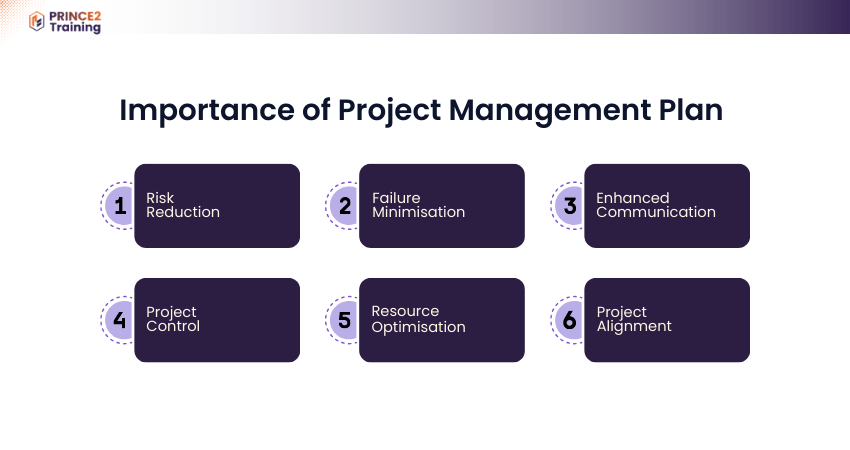
Risk Reduction
The plan helps identify risks early and prepares ways to avoid or manage them. This prevents surprises and keeps the project running smoothly. It also allows the team to create backup strategies in case things go wrong.
Failure Minimisation
With proper planning, the chances of failure are much lower. The plan outlines what to do if something goes off track. It helps to understand small issues before they grow into major problems.
Enhanced Communication
It sets clear rules for how and when team members should share updates. This makes sure everyone is informed and on the same page. Clear communication reduces misunderstandings and builds trust within the team.
Project Control
It helps the Project Manager monitor time, budget, and progress, making it easier to adjust plans when needed. The plan provides tools to track each stage of the project in real time.
Resource Optimisation
The plan ensures that people, money, and tools are used wisely, helping to prevent waste and save time. It helps allocate the right people to the right tasks, based on their strengths and availability.
Project Alignment
It keeps the project aligned with the main business goals, ensuring every task supports the bigger picture. This ensures the team focuses on what truly matters and avoids distractions.
Boost your project skills with our
PRINCE2® Foundation & Practitioner Training
– Join now!
Components of Project Management Plan
A Project Management Plan has many parts that help guide the project from beginning to end. Each part plays a special role in keeping the project on track. Here are the main components:
Scope Definition
This explains what the project will cover and what it won’t. It sets clear boundaries, so the team knows exactly what to do. It helps avoid extra work that isn’t part of the original plan.
Executive Overview
A short summary of the project. It includes the purpose, main goals, and expected results. This section gives decision-makers a quick understanding of what the project is about.
Project Timeline
This shows when each task will begin and end. Tools like Gantt Charts or software help in creating a clear timeline. It helps to monitor progress and makes it easier to spot delays early.
Budget Allocation
This outlines how much money the project needs and how it will be spent. It helps manage the resources wisely. A clear budget avoids overspending and ensures all parts of the project are covered.
Resource Planning
This part lists all the people, equipment, and tools needed. It ensures that the team has everything ready to do the work. It also helps prevent overallocation or shortages.
Stakeholder List
A list of all the stakeholders included in the project includes clients, team members, sponsors, and anyone affected by the work. Knowing who the key people are helps with communication and decision-making.
Communication Plan
Explains how and when updates will be shared. This keeps everyone informed and ensures smooth communication. It outlines the format (emails, meetings, reports) and frequency of updates.
Risk Log
A list of possible risks and how to manage them. This helps avoid delays or problems during the project. It includes the chance of each risk happening and how serious it would be.
Procurement Strategy
This part explains how the team will get any goods or services they need, like hiring vendors or buying tools. It helps ensure that everything is available when needed.
Factors You Need to Consider Before Writing a Project Management Plan
Before you start preparing your Project Management Plan, it's important to prepare properly. Thinking about the following points will help you create a strong and useful plan:
Determine Project Baselines
Set clear starting points for time, cost, and scope. These baselines act as a guide to measure how the project is progressing. Without them, it becomes difficult to tell if you're on track or falling behind.
Determine Project’s Failure Repercussions
Understand what might happen if the project fails. This helps in planning for risks and preparing backup solutions. Knowing the consequences also helps in getting stronger support from stakeholders.
Choose Undertaking Players
Pick the right people to be part of the project. Every team member should know their role and responsibilities. This ensures tasks are done by the right people with the right skills.
Identify Project Milestones
List the key moments or targets during the project. These milestones help track progress and keep the team motivated. They also provide clear checkpoints to review and adjust the plan if needed.
Establish Situation Responsibilities
Decide who will act in different situations, like delays or budget issues. Clear roles make problem-solving easier and faster. It prevents confusion and saves time when unexpected issues arise.
Build strong project skills with our
PRINCE2® Foundation Training
– Register today!
How to Write a Project Management Plan?
Writing a Project Management Plan helps you organise your project step by step. Here are five clear steps to assist you:
1) Summarise the Core Components of Your Project in an Executive Summary
Start by giving a quick outline of the project to set the stage for the rest of the plan:
1) Write a short summary of the project
2) Include the purpose, key goals, and what you aim to achieve
3) Helps stakeholders quickly understand the full plan
4) Acts as a useful reference overall the project
2) Visually Map out Your Project Timeline Using a Gantt Chart
Next, outline the project schedule clearly so everyone knows what happens and when:
1) Create a timeline showing start and end dates for tasks
2) Use a Gantt Chart or Project Management tools for clarity
3) Helps track progress and spot delays early
3) Define Your Team Structure With a Project Organisation Chart
Now, make sure everyone understands their role by defining the team structure clearly:
1) Show team roles, responsibilities, and reporting lines
2) Keeps everyone clear on who does what
3) Improves planning, accountability, and communication
4) Identify and Categorise Potential Risks Using a Risk Breakdown Structure
After setting roles and timelines, focus on possible risks to avoid project setbacks:
1) Find all possible risks that could affect the project
2) Group them by type and write down response plans
3) Helps the team stay prepared and avoid surprises
5) Prepare Ahead by Drafting Status Reports to Keep Stakeholders Informed
Finally, plan your updates in advance to keep stakeholders informed throughout the project:
1) Prepare simple report templates early in the project
2) Use them to update stakeholders on progress and issues
3) Saves time and ensures consistent communication
Tips for Writing an Effective Project Management Plan
A well-written Project Management Plan helps your project run smoothly. Here are some helpful tips to make your plan clear, useful, and easy to follow:
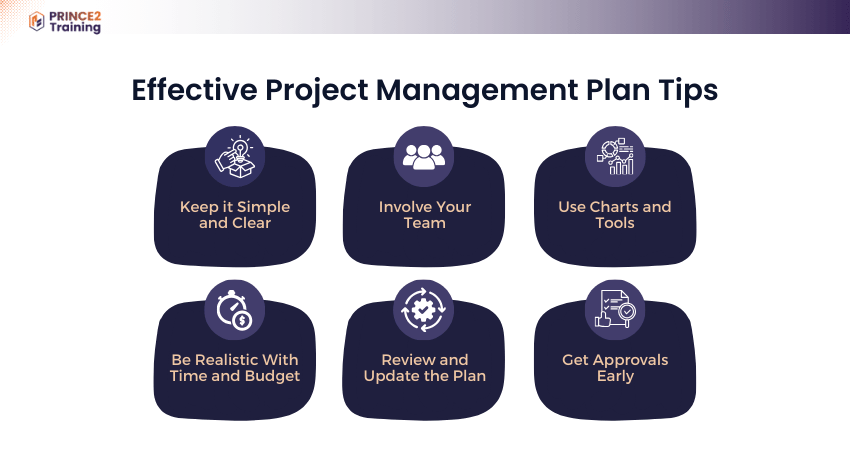
1) Keep it Simple and Clear:
Avoid complex language. Use short sentences and everyday words so everyone understands the plan.
2) Involve Your Team:
Talk to your team and key stakeholders while writing the plan. Their input can help spot problems early and improve the plan.
3) Use Charts and Tools:
Add charts like Gantt Charts or a project organisation chart. These visuals make the plan easier to read and follow.
4) Be Realistic With Time and Budget:
Plan based on what is possible. Don’t guess; use real numbers and timelines, when possible, to manage resources well.
5) Review and Update the Plan:
A Project Management Plan should not stay the same forever. Review it regularly and make updates when things change.
6) Get Approvals Early:
Make sure the plan is checked and approved by key stakeholders before the project starts. This avoids delays later.
Advance your project career with agile expertise. Join our
PRINCE2 Agile® Foundation Training
today!
Common Pitfalls to Avoid When Developing a Project Management Plan
While creating a Project Management Plan, it's easy to make wrong decisions that can cause confusion, delays, or even failure. Here are some common pitfalls to watch out for:
1) Missing Risk Planning:
If you don’t list and plan for risks, small problems can turn into big ones. Always include a section for risks in your plan.
2) Unclear Scope:
Without a clear scope, the project can grow out of control. Be clear about what’s included and what’s not.
3) Ignoring Communication:
Poor communication causes misunderstandings. Make sure your communication plan explains how updates will be shared with the team and stakeholders.
4) Unrealistic Timelines or Budgets:
If your plan is too hopeful, it may fail. Always use real data to set your project timeline and budget.
5) Leaving out key Stakeholders:
If you don’t involve the right stakeholders, you may miss important input. Make sure everyone important is included early on.
6) Not Updating the Plan:
A good Project Management Plan must be updated as the project changes. Don’t treat it as a one-time document.
Conclusion
A well-crafted Project Management Plan brings clarity, structure, and direction to any project. It helps manage time, resources, risks, and communication effectively. Whether your project is big or small, this plan keeps your team focused and goals within reach. Investing time in planning upfront leads to smoother execution and successful project delivery.
Get certified and lead projects with confidence. Join our PRINCE2® Practitioner Training now!
Frequently Asked Questions?
The Project Manager is mainly responsible for creating the Project Management Plan. They often work with the team and key stakeholders to gather input and make sure the plan covers all important areas.
The crucial path is the longest chain of tasks a in project that must be done on time for the whole project to finish as planned. If any task on this path is delayed, the entire project will also be delayed.
A RACI Chart is a simple tool that shows who is Responsible, Accountable, Consulted, and Informed for each task in a project. It helps prevent confusion and makes sure everyone knows their role.