

 Back
Back


 Back to
topics
Back to
topics




Table of Contents
 04-Sep-2025
Author-David Walter
The best projects don't happen by accident; they begin with perfect intention. If you've ever faced unclear goals, confused teams, or last-minute changes, chances are your project lacked a solid starting point. Too often, teams rush ahead without setting the foundation, only to get into confusion, delays, and missed goals later.
But when you take the time to define the scope, align stakeholders, assess risks, and plan resources, everything else flows more smoothly. That's what every Project Initiation tends to offer! It turns raw ideas into structured action and gives a strong head start. In this blog, we will uncover what it is, its key steps, tools, and best practices to lead your project with clarity and control. Let's delve in!
Table of Contents
1) What is Project Initiation?
2) Importance of Project Initiation
3) 9 Steps in Project Initiation Phase
4) Essential Tools and Techniques for Project Initiation
5) Best Practices for the Project Initiation Phase in 2025
6) Project Initiation vs Project Planning
7) Conclusion
What is Project Initiation?
Project Initiation is the first step in starting any new project. This is where you establish why the project is needed, what value it will bring to the business, and whether it is worth investing in. It is also the point where your project moves from idea to action by laying out objectives, scope, stakeholders, resources, and initial risk assessments.
You'll also write important documents, like a business case or project brief, and get approval from decision-makers to move forward into project planning and execution. This ensures the project begins with clarity, direction, and full support from stakeholders.

Importance of Project Initiation
Skipping the initiation phase in
Project Management
can lead to confusion, wasted money, or even failed projects. Here's why Project Initiation is so important:
1) Clarifies Objectives and Expectations:
Clear goals help everyone understand the aim of the project. It sets shared expectations from the start and aligns the team around a common purpose.
2) Engages Stakeholders Early:
Involving key stakeholders early in your project builds trust, captures valuable insights, and encourages buy-in. This ensures the project reflects actual business needs.
3) Prevents Future Issues:
By addressing possible risks or challenges early, you can solve them before they become costly issues. Also, it will be easier to correct at the beginning than mid-project.
4) Secures Necessary Resources:
Through feasibility studies and a project charter, you can show the project's value. This helps secure funding, staffing, and other resources with confidence and authority.
5) Sets a Clear Path Forward:
With a solid roadmap, you will know what needs to happen, when, and why. It keeps the project grounded in its original purpose.
9 Steps in Project Initiation Phase
Now, let's check the nine steps involved in the Project Initiation phase:
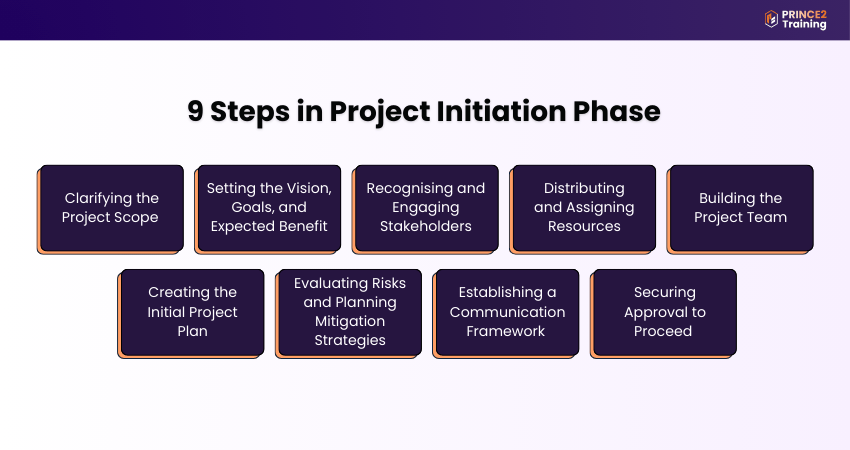
1) Clarifying the Project Scope
The project scope tells you what the project includes and what it doesn't. It defines what needs to be delivered, what tasks are involved, and what the end result needs to be. A clear scope keeps all stakeholders aligned and sets clear expectations from the beginning.
Tips:
1) Define project boundaries and exclusions
2) Clarify key deliverables and success criteria
3) Point out any limits, challenges and assumptions
4) Align all stakeholders on what is in and out of scope
2) Setting the Vision, Goals, and Expected Benefits
Once the project scope is set, it needs a vision to put into action. Create strong visions and set SMART (Specific, Measurable, Achievable, Relevant, Time-bound) goals. Clearly identifying expected benefits and how they'll be measured.
Tips:
1) Plan a concise and inspiring vision statement
2) Set goals that match your business strategy
3) Identify measurable benefits and key value drivers
4) Agree on how success will be evaluated
3) Recognising and Engaging Stakeholders
Every project involves a range of stakeholders, those who influence or are impacted by the project. Identifying them early allows you to manage expectations, gather input, and reduce potential resistance. It also builds collaboration and keeps communication flowing throughout the project lifecycle.
Tips:
1) Create a stakeholder register or matrix
2) Analyse interest, influence, and expectations
3) Engage key stakeholders early through workshops or meetings
4) Develop a strategy to have stakeholder involvement
Boost your Project Management skills with our
PRINCE2® Practitioner Training
– Register and take your career to the next level!
4) Distributing and Assigning Resources
Every project needs resources like people, tools, money, and time to execute it. This step ensures resource availability, optimises usage, and prevents overloads or shortages. This also helps justify costs and supports approval processes.
Tips:
1) Estimate the budget and confirm funding sources
2) Identify employee needs and assign their roles
3) Get access to tools, facilities, and infrastructure
4) Review resources capacity and availability
5) Building the Project Team
As the next step, you'll start forming teams as per the project requirement. You need to assemble team members with the appropriate skills and experience. Make sure everyone knows their roles and responsibilities in their team for smooth collaboration and accountability.
Tips:
1) Select team members based on skills and experience
2) Define individual roles and responsibilities clearly
3) Establish a project governance structure
4) Agree on decision-making and conflict resolution methods
6) Creating the Initial Project Plan
You don't need a full plan yet, but you can have a basic project outline. It includes initial timelines, important deadlines, dependencies, and major deliverables. While this plan will be extended, having a basic structure will help in communicating the vision and getting approvals.
Tips:
1) Develop a high-level project timeline chart
2) Find the factors that your project can depend on
3) Highlight major phases or workstreams
4) Include extra time, money, or flexibility for later changes
7) Evaluating Risks and Planning Mitigation Strategies
No project is risk-free. Therefore, identifying risks early can prevent surprises later. Think about what could go wrong and find the possible threats. Create a simple plan to avoid or handle these risks and show you are prepared.
Tips:
1) List and categorise potential project risks
2) Assess the impact of each risk of your project
3) Develop risk prevention or avoidance strategies
4) Make backup plans to deal with major risks if they occur
8) Establishing a Communication Framework
Good communication keeps the team connected and the project running smoothly. You can create a communication plan which outlines how updates, feedback, and decisions will be shared. Define your channels, like email, meetings, or dashboards and the frequency of updates.
Tips:
1) Identify communication needs for each stakeholder group
2) Choose communication channels like email, chat, meetings, etc.
3) Set update frequency as daily stand-ups, weekly reports, etc.
4) Outline approval processes and information flow
9) Securing Approval to Proceed
Once everything is in place, you'll present your project plan to the people in charge, like stakeholders or key decision-makers. Present your business case or project charter with the scope, goals, costs, and benefits. Securing approval confirms support and authorises the team to move forward.
Tips:
1) Finalise and present the business case or charter
2) Review the scope, estimated costs, and benefits
3) Gain formal approval from the respective people
4) Confirm stakeholder commitment to the project
Deliver successful projects with our
PRINCE2® Foundation & Practitioner Training
– Join and advance your expertise now!
Essential Tools and Techniques for Project Initiation
Using the right tools and techniques during every Project Initiation helps build a strong base and improve decision-making. Here are some of the tools and techniques:
1) SWOT Analysis Method
SWOT Analysis is a simple and powerful tool for evaluating internal and external factors that influence your project. It helps teams understand where you currently stand and what potential challenges or opportunities can come.
1) Strengths:
Includes the advantages like a skilled team, strong support, or solid funding.
2) Weaknesses:
Consists of issues such as limited budget, tight deadlines, or skill gaps.
3) Opportunities:
Focuses on external factors like market trends, new technology, or partnerships.
4) Threats:
Involves risks such as regulation changes, competition, or market shifts.
2) Stakeholder Analysis Approach
Stakeholder analysis helps you understand who your stakeholders are, how much influence they have, and how interested they are in the project. This ensures you select the right people for your project. It involves:
1) Identification:
List all possible stakeholders who can influence the project.
2) Classification:
Categorise the stakeholders based on their level of influence and interest.
3) Engagement Planning:
Create tailored communication and involvement strategies to secure stakeholder support and manage their expectations.
3) Risk Assessment Strategies
Risk assessment is important in the initiation phase to find what could go wrong and get prepareed in advance. This prevents issues and builds stakeholder confidence. Doing this early keeps you prepared, manage challenges and avoid costly surprises. It consists of:
1) Risk Identification:
List all potential risks, such as internal and external risks, that could affect your project.
2) Risk Analysis:
Evaluate each risk based on how likely it is to happen and how big its impact would be.
3) Risk Mitigation:
Develop strategies to minimise high-priority risks and outline alternate plans for emergencies.
4) Project Management Software Solutions
Project Management software plays a key role during the Project Initiation. They help you stay organised, manage data, and build plans with clarity. These tools cover everything from timelines to resource planning. Popular tools include:
1) Microsoft Project:
Offers detailed scheduling, Gantt charts, resource allocation, and advanced tracking features.
2) Trello:
A visual, board-based tool that is perfect for managing tasks and workflows with a clear overview.
Jira:
Designed for Software Development projects, it supports Agile methodologies, issue tracking, and sprint planning.
Blend Project Management with Agile delivery – Sign up for
PRINCE2 Agile® Foundation and Practitioner Training
soon!
Best Practices for the Project Initiation Phase in 2025
Now, it is time for you to check the best practices for an effective Project Initiation phase. So, here are those best practices:
1) Set Clear, Measurable Objectives
Start with specific and realistic goals that align with your business's strategy. Clear objectives will lead to proper decisions and help measure success throughout the project.
2) Involve Key Stakeholders from the Start
Engage stakeholders early to understand their needs, gain support, and avoid surprises later. Their input strengthens alignment and project direction.
3) Create a High-level Timeline and Budget
Instead of a detailed timeline, you can prepare a basic project timeline and estimate the cost expectations. This provides structure and helps get project approval.
4) Define an Effective Communication Plan
You need to plan how updates and decisions will be shared. Early communication planning improves transparency and keeps everyone informed and involved.
5) Allocate Well-defined Roles and Responsibilities
A clear role ensures accountability, smooth team collaboration, and quicker decision-making. This helps the team stay focused and reduces delays during execution.
6) Apply Insights and Lessons from Past Projects
You can use insights from previous projects to avoid the same mistakes. Learning from experience will improve your planning and the chance of success.
Project Initiation vs Project Planning
Sometimes, people might get confused between Project Initiation and project planning. Here are the differences between them:

Conclusion
Project Initiation is more than just the starting point. It is the framework upon which your entire project is built. Taking the time to clearly define the scope, align with stakeholders, check risks, and set realistic expectations helps in smoother execution and a greater chance of success. Because in the world of projects, how you begin often determines how well you finish.
Lead projects with clarity and control with our PRINCE2® Certification – Explore today!
Frequently Asked Questions?
Projects are typically started to solve a problem, meet a goal, follow a regulation, or take advantage of a new opportunity. Initiation helps decide if the project is worth doing and if it fits the bigger picture.
The goal of initiation is to determine whether a project is viable and worth investing in. It sets the project purpose, scope, stakeholders, and risks, and ends with formal approval to proceed into the planning phase.
Project Initiation generally involves three stages:
1) Conceptualisation: Identifying the need and exploring solutions
2) Feasibility: Analysing whether the project is achievable and aligned with goals
3) Approval: Gaining formal authorisation and stakeholder agreement for execution