

 Back
Back


 Back to
topics
Back to
topics




Table of Contents

 21-Mar-2026
Author-David Walter
Every successful project, be it towering skyscrapers or innovative digital platforms, relies on a clear path from ideation to completion. This journey is known as Project Delivery. It transforms plans on paper into solutions that shape our world. From defining the vision to coordinating teams, managing timelines, and choosing the right delivery method, every stage plays a vital role in making projects succeed.
Understanding how Project Delivery works helps teams stay organised, manage risks and meet expectations. In this blog, we’ll explore what it means, the key stages involved, and the methods that help projects triumph. So read on!
What is Project Delivery?
Project Delivery refers to a structured process of planning, managing and completing a project. It involves coordinated efforts across planning, design and construction stages. A Project Delivery system brings together numerous stakeholders, procedures and industry standards to make sure the project progresses well from concept to completion.
Project delivery also focuses on ensuring that projects are completed on time, within budget, and to the required quality standards. It involves clear communication, effective resource management, and continuous monitoring of progress. By following a well-defined delivery approach, organisations can reduce risks, improve efficiency, and achieve successful project outcomes.

The Key Stages of Project Delivery
Understanding Project Delivery as a complete process helps ensure better outcomes. When each stage is clearly defined, teams can avoid common issues like scope creep, unclear goals and poor resource management. Here are the key steps involved:
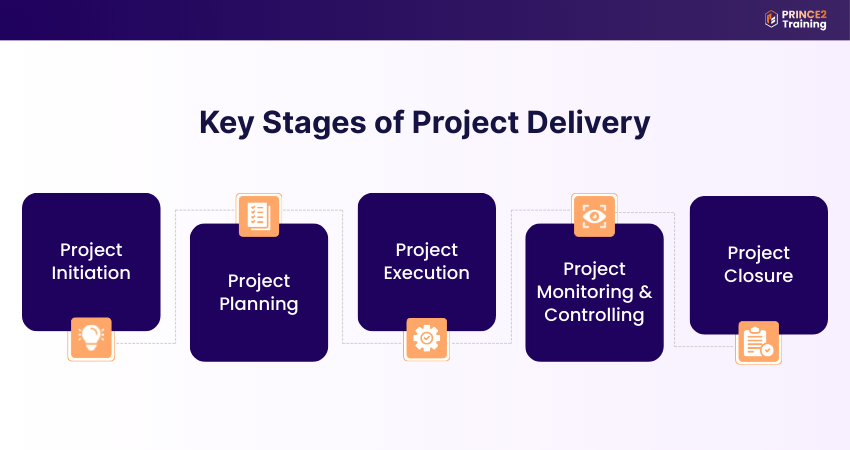
Step 1. Initiation
This is the starting phase where the project idea is defined and approved. Here, teams assess its feasibility, analyse the costs, review similar projects and determine whether the initiative is worth pursuing. Project Managers typically lead the charge in this stage, but involving key stakeholders early can provide additional helpful insights.
Step 2. Planning
During the planning stage, the project goals are transformed into a clear roadmap. The team defines the project scope, deliverables, timelines, resource allocation, workflows and the essential Risk Management strategies. Key Performance Indicators (KPIs) are also established to measure success. The phase usually concludes with a kick-off meeting where the plan is shared with the whole team.
Step 3. Execution
The execution stage is where the bulk of the work happens. Here, team members begin carrying out the tasks, by using defined tools and processes to achieve the project objectives. This stage ensures that responsibilities are clear, communication channels are established and tasks move forward according to the planned schedule.
Step 4. Monitoring and Controlling
In this phase, progress is tracked to ensure the project remains on schedule and within scope. Performance, resources and outcomes are continuously reviewed in this stage. Adjustments are made when necessary to address challenges and remove obstacles that could affect delivery.
Step 5. Closure
Project closure marks the final stage where deliverables are completed and handed over. The team reviews results, documents all the lessons learned, stores important materials, evaluates resource use and recognises contributions. This reflection helps improve future projects.
Sign up for our PMP® Exam Prep Boot Camp and find your place where Project Managers evolve into globally certified leaders - Register now!
Project Delivery Methods
Now let’s explore the five most commonly used Project Delivery Methods, each offering different levels of control, collaboration, and efficiency depending on the project requirements:
1) Design-bid-Build (DBB)
The Design-Bid-Build approach is one of the most widely used Project Delivery methods. In this model, the owner hires a Designer and a contractor separately, and each phase is completed in sequence. Here are the steps:
a) The Designer develops the drawings and specifications based on the owner’s vision.
b) Once the design is completed, contractors submit bids for the project.
c) The owner selects a contractor and construction begins.
It’s ideal for less complex projects with strict budget considerations. The Design-Bid-Build method gives project owners a high level of control since the design and construction are handled separately. The competitive bidding process helps owners secure the most cost-effective contractor.
However, since each stage must be completed before the next begins, this method can stretch the overall project timeline. Additionally, limited interaction between Designers and contractors may reduce collaboration and create potential communication gaps.
2) Design-build (DB)
The Design-Build method combines design and construction responsibilities within a single team known as the design-builder. This integrated approach helps streamline Project Delivery. This method is best for projects that require quicker completion or accelerated timelines. Design-Build improves efficiency by combining design and construction under one team.
This integration speeds up project timelines and can reduce costs and risks associated with delays or miscommunication. On the other hand, owners typically have less direct control over the design decisions since the same team manages the entire project. Choosing a reliable and experienced design-build firm is, therefore, critical to project success.
3) Construction Manager at Risk (CMR)
In the Construction Manager-at-Risk method, the owner appoints a Construction Manager to oversee the project and guide it toward successful completion. The Manager works closely with Designers and contractors throughout the process. The responsibilities of the Construction Manager include:
a) Reviewing design plans with the design team
b) Developing schedules and timelines
c) Establishing the Guaranteed Maximum Price (GMP)
d) Monitoring budgets and costs
e) Selecting suitable contractors
f) Supervising construction quality and progress
This approach allows owners to benefit from a Construction Manager's expertise in planning, budgeting and execution. Setting a GMP helps control costs and encourages efficient Project Delivery while maintaining quality standards.
However, if project costs exceed the agreed limit, the Construction Manager may have to absorb the additional expenses, which can affect profitability. Disagreements between the owner and the Construction Manager may also cause delays or complications.
Build your project mindset from day one. Start with the essentials in our comprehensive Introduction to Project Management Course - Sign up now!
4) Multi-prime Contracting (MP)
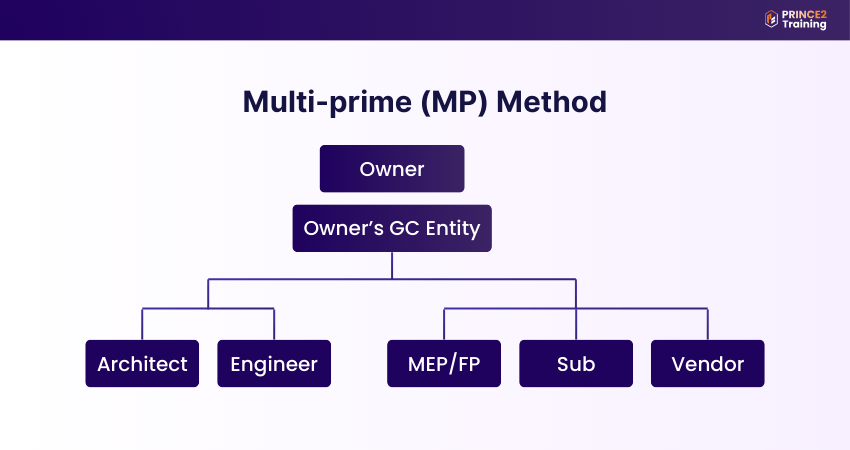
The Multi-prime approach places the owner in the role of general contractor. The owner directly hires Designers and specialised contractors for different parts of the project. It’s best for situations where the experienced owners want full control or need faster decision-making. This method allows owners to maintain strong control over budgets, schedules, and contractor selection.
By working directly with suppliers and specialised contractors, they may also reduce costs and streamline procurement. However, this method places significant responsibility on the owner to coordinate multiple contractors. Without strong Project Management, miscommunication or scheduling conflicts can lead to delays and increased expenses.
5) Integrated Project Delivery (IPD)
Integrated Project Delivery focuses on strong collaboration among all stakeholders involved in the project. Designers, contractors and other professionals work together from the earliest stages to improve outcomes. It’s best for large or complex projects that require close coordination among multiple stakeholders.
IPD promotes collaboration among Designers, contractors and stakeholders from the beginning of the project. This increases efficiency and allows teams to leverage collective expertise for better planning and execution.
But despite its benefits, IPD requires strong coordination and active participation from all parties involved. It also depends on clearly defined performance metrics and processes, and since it is relatively new, not all organisations are familiar with implementing it effectively.
How to Choose the Right Method?
Choosing the appropriate Project Delivery method is essential. The chosen approach influences how teams collaborate and complete each phase of the project. Therefore, owners should carefully evaluate several factors before making a decision. Consider these points when making that choice:
1) The kind of project is being planned
2) The activities and requirements of the project
3) The funding is available for the project
4) Whether the project follows a traditional sequence or requires a faster schedule with overlapping phases
5) The expected final outcome, and how it operates
6) Potential challenges or safety concerns that could affect the project
7) Whether the organisation have prior experience with similar projects
8) The extent of the owner's involvement in managing the project
Tips for Successful Project Delivery
Regardless of the methodology used, certain universal practices can significantly improve the success of your Project Delivery. By focusing on planning, communication, and continuous monitoring, teams can ensure smoother execution and better outcomes.
1) Use Project Management Software to Power Your Project Delivery
Project Management software can streamline every stage of a project. These platforms help teams organise tasks and track progress. Features like project dashboards, Gantt charts, Kanban boards, workflow automation, progress reports and integrated communication tools make it easier to manage projects from initiation to completion.
2) Define and Communicate Your Project Goals
Well-defined project goals provide proper direction for the entire team. When the objectives are clear from the beginning, team members can understand how their work contributes to the overall outcome. Establishing structured request and intake processes can help capture requirements and align the project with stakeholder expectations.
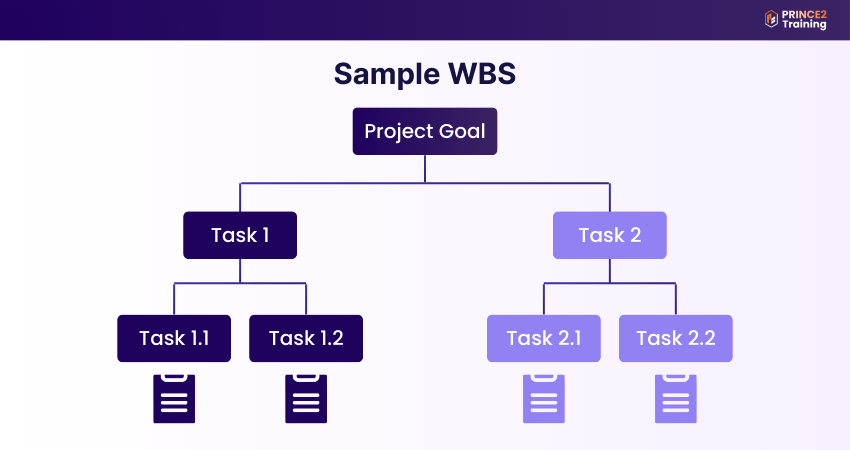
3) Build a Work Breakdown Structure to See all the Necessary Steps
Breaking the project into smaller tasks and subtasks improves clarity. A Work Breakdown Structure (WBS) helps teams allocate resources, identify dependencies and monitor each stage of progress, thus ensuring that nothing important is overlooked.
4) Consistently Evaluate Your Work
Regular evaluation is essential throughout the project lifecycle. By tracking progress, reviewing performance, and addressing challenges early, teams can stay on schedule and within scope. Continuous monitoring also allows for timely adjustments, ensuring the project remains aligned with its goals.
Conclusion
Successful projects rarely happen by chance; they are the result of structured planning, clear communication and the right delivery method. By understanding the stages and approaches to Project Delivery, teams can handle challenges with confidence. With the right strategy in place, ideas can quickly evolve into tangible outcomes, turning ambitious visions into lasting realities.
Garner global credibility with the gold standard in Project Management. Sign up for our PMI® Certifications now!
Frequently Asked Questions?
A Project Delivery plan is important because it:
a) Provides clarity and direction the team
b) Helps with efficient resource allocation
c) Streamlines the Risk Management process
d) Delivers improved communication
Creating a strong Project Delivery plan requires collaboration, the right tools, and flexibility. These elements help teams build a practical roadmap for achieving project goals. You must gather stakeholder input, use Project Management tools to simplify planning and improve collaboration, and review and adapt to new information.
A Project Delivery Team is responsible for planning, managing and executing a project from start to finish. The team coordinates tasks, allocates resources, monitors progress, and ensures the project meets its objectives, timeline, and budget. They also communicate with stakeholders and maintain quality standards.