

 Back
Back


 Back to
topics
Back to
topics



Table of Contents

 11-Apr-2026
Author-Maria Thompson
Every project starts with a great idea, but what really matters is what you deliver at the end. Whether you are launching a product or running a campaign, clear Project Deliverables help turn plans into real results, keeping teams focused, organised, and moving in the right direction.
Without clearly defined Project Deliverables, projects can quickly lose direction, miss deadlines, or fall short of expectations. This blog explores their importance, types, and examples, helping you understand how to manage them effectively and achieve successful project outcomes. Let's get started!
What are Project Deliverables?
Project Deliverables are the tangible or intangible outputs, results, or products produced and handed over at the end of a project or a specific phase. These may include final items such as software, reports, or documents, as well as interim outputs created during the project lifecycle.
They are measurable and testable, ensuring they meet defined requirements and directly support project goals. Deliverables act as clear indicators of progress and help teams and stakeholders evaluate whether the project is on track and delivering expected value.

Importance of Deliverables in Project Management
Deliverables play a key role in ensuring that a project runs smoothly and achieves its goals, providing structure and clarity throughout the lifecycle. To understand their impact better, let’s explore how they support different aspects of project success:
1) Serve as Key Project Milestones
Deliverables act as important checkpoints within a project, marking the completion of key phases or tasks. Each finished deliverable confirms progress, helping teams stay aligned with the plan, maintain focus, and move forward step by step towards successful project completion.
2) Facilitate Progress Tracking and Measurement
Deliverables make it easier to track what work has been completed and what remains pending. They allow teams to measure performance against plans, identify delays early, take corrective action quickly, and ensure the project stays on schedule and within expected timelines consistently and efficiently.
3) Strengthen Stakeholder Communication
Clear deliverables help communicate expectations effectively by showing what will be delivered and when. This keeps stakeholders informed, reduces misunderstandings, builds trust, and ensures everyone involved in the project has a shared understanding of progress and outcomes at every stage.
4) Maintain Quality Standards
Deliverables define clear expectations for outputs, making it easier to review and maintain quality. They help teams check work against standards, reduce errors, ensure consistency, and confirm that final results meet stakeholder requirements and overall project quality goals effectively and consistently.
Types of Project Deliverables
Project Deliverables come in different forms based on their purpose and use within a project, helping teams manage tasks, track progress, and deliver outcomes effectively. Let’s explore the main types and roles of these deliverables below:
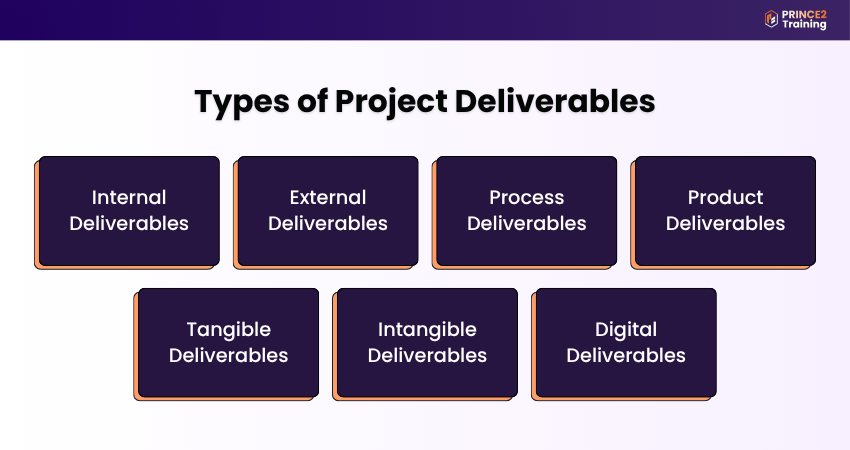
1) Internal Deliverables
Internal deliverables are created for use within the project team or organisation. These include documents like project plans, status reports, and internal guidelines that help teams organise work, monitor progress, and ensure smooth execution throughout the project lifecycle.
2) External Deliverables
External deliverables are the final outputs shared with clients or external stakeholders. These may include a completed product, marketing campaign, or service. They represent the end result of the project and must meet stakeholder expectations and agreed requirements.
3) Process Deliverables
Process deliverables are created during the project to support how work is carried out. Examples include prototypes, testing reports, and workflow documents. They help guide the project, improve efficiency, and ensure that tasks are completed in a structured way.
4) Product Deliverables
Product deliverables are the final goods or services produced by the project. These could include software applications, training materials, or finished products. They directly fulfil the project objectives and provide value to stakeholders or customers.
5) Tangible Deliverables
Tangible deliverables are physical items that can be seen, touched, or measured. Examples include equipment, hardware, printed reports, or physical products. They are easy to evaluate as they exist in a visible and measurable form.
6) Intangible Deliverables
Intangible deliverables are non-physical outcomes created through the project. These may include improved processes, enhanced workflows, or increased customer satisfaction. Although they cannot be touched, they add significant value to the organisation.
7) Digital Deliverables
Digital deliverables are outputs created and delivered in digital format. These include websites, mobile apps, software solutions, or online reports. They are commonly used in modern projects and play a key role in technology-driven environments.
Learn to apply and adapt PRINCE2 methods across real project environments with the
PRINCE2® Foundation & Practitioner Training
– Register today!
How to Identify Project Deliverables?
Identifying Project Deliverables ensures all outputs are clearly defined and aligned with project goals. It helps teams plan, assign responsibilities, and track progress. Follow these key steps to identify and define deliverables clearly:
1) Define the Project Scope
Start by clearly outlining what the project will include and exclude. A well-defined scope helps prevent confusion, avoids unnecessary work, and ensures the team focuses only on relevant tasks and expected outcomes.
2) Align with Project Objectives
Ensure each deliverable directly supports the project’s main goals and overall purpose. When deliverables are aligned with objectives, teams can prioritise tasks more effectively, maintain focus, and measure success clearly, ensuring all efforts contribute to achieving the desired project outcomes.
3) Break Down the Work Structure
Divide the project into smaller, manageable tasks using a structured approach such as a Work Breakdown Structure. This helps teams clearly understand what needs to be done at each stage, making it easier to plan, organise work, and identify required outputs for better coordination and control.
4) Determine Specific Deliverables
Review each task carefully and identify the outputs it will produce. These outputs, such as reports, designs, or products, become deliverables. Clearly defining them ensures teams understand expectations and can complete tasks efficiently without confusion or missed requirements.
5) Engage Key Stakeholders
Involve stakeholders such as clients, managers, and team members when defining deliverables. Their input ensures all expectations are captured, improves clarity, and reduces the risk of missing important outputs, leading to better alignment and smoother project execution across all project phases.
6) Evaluate Internal and External Deliverables
Identify which deliverables are meant for internal use and which are intended for external stakeholders. This distinction helps teams organise work effectively, improve communication, and ensure that both internal processes and client expectations are properly addressed throughout the project.
7) Link Deliverables to KPIs
Connect each deliverable to measurable Key Performance Indicators to track success. This ensures deliverables contribute directly to project goals, allows teams to evaluate performance clearly, and helps maintain accountability and continuous improvement throughout the project lifecycle.
How to Manage Project Deliverables Effectively?
Managing deliverables properly is important to ensure timely and successful completion of the project. To achieve this, let’s explore the key steps that help manage Project Deliverables effectively:
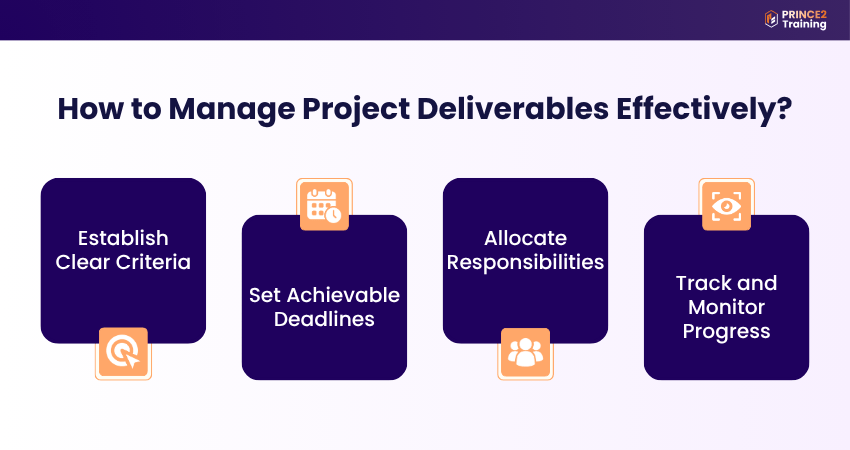
1) Establish Clear Criteria
Define clear acceptance criteria for each deliverable, so everyone understands what needs to be achieved. These criteria should be specific and measurable, helping reduce confusion, avoid scope creep, and ensure that deliverables meet agreed quality standards.
2) Set Achievable Deadlines
Assign realistic deadlines by considering project scope, resources, and potential risks. Involving the team in setting timelines improves accuracy, supports better planning, and ensures deliverables are completed on time without unnecessary pressure.
3) Allocate Responsibilities
Clearly assign each deliverable to specific team members. This ensures accountability and helps track ownership of tasks. Using tools like a RACI matrix can further clarify roles and responsibilities, improve coordination, and reduce delays.
4) Track and Monitor Progress
Regularly monitor deliverables using Project Management tools to track status, quality, and risks. This helps teams identify issues early, make timely adjustments, and ensure deliverables stay on track and meet project expectations.
Learn to combine PRINCE2 structure with Agile flexibility for better project delivery through the
PRINCE2 Agile® Foundation Training
– Join now!
Examples of Project Deliverables
Project Deliverables should align with project goals, fit within scope, and be realistic based on time and resources. Clear deliverables help teams stay focused, track progress, and achieve successful outcomes. Let’s explore some common examples below:
1) Marketing Campaign Plan
A marketing campaign plan is an external deliverable that outlines how a product or service will be promoted. For example, it may include creating a 60-second live-action video for platforms such as YouTube to reach the target audience effectively.
2) Sales Plan
A sales plan is typically an internal deliverable used by teams to guide business growth. It may include detailed strategies for inbound and outbound sales, revenue targets, customer segments, and tools required to achieve sales objectives within a specific period.
3) Usability Testing Plan
A usability testing plan is an external deliverable focused on improving user experience. For instance, it may involve conducting a complete testing session with a defined number of participants on a specific date to evaluate product performance and usability.
4) Product Marketing Launch
A product marketing launch is an external deliverable that includes all promotional activities for introducing a product. This may involve campaigns across social media, websites, and public relations to ensure a successful and well-coordinated launch.
5) Company Event Plan
A company event plan is usually an internal deliverable that outlines how an event will be organised. For example, it may include planning and executing a virtual company event with defined schedules, resources, and arrangements to ensure smooth execution.
Project Deliverables vs Project Milestones
Project Deliverables and project milestones are related but serve different purposes. Deliverables are the outputs produced during a project, such as reports, products, or services, and directly contribute to achieving project goals.
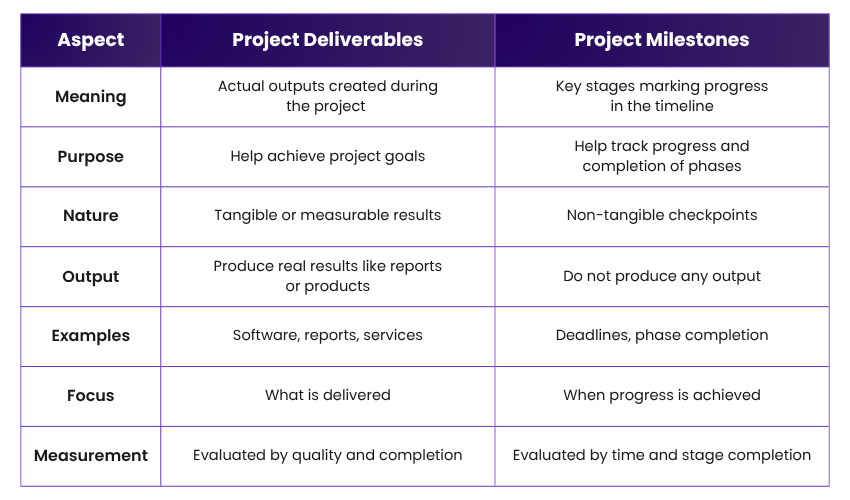
Milestones are key points in the project timeline that mark the completion of important phases or tasks. They do not produce outputs but help track progress. In simple terms, deliverables show what is produced, while milestones show when progress is achieved.
Conclusion
Project Deliverables turn plans into real results by giving structure, clarity, and purpose to every stage of a project. When clearly defined and managed well, they keep teams aligned, improve quality, and ensure success. Mastering deliverables helps you deliver projects confidently and achieve meaningful, measurable outcomes every time.
Learn proven Project Management methods and deliver successful projects with PRINCE2® Certification – Join today!
Frequently Asked Questions?
Project Deliverables are approved based on predefined acceptance criteria. Stakeholders or Project Managers review the deliverables to ensure they meet requirements before giving final approval.
Project Deliverables are managed using tools like Jira, ClickUp, and Asana for task tracking. Gantt charts plan timelines, Kanban boards show workflow, and WBS breaks work into smaller tasks for better control and clarity.
Project objectives are high-level goals that define why a project is undertaken. Deliverables are the tangible outputs created to achieve those goals. In simple terms, objectives give direction, while deliverables represent the actual results produced during the project.