

 Back
Back


 Back to
topics
Back to
topics




Table of Contents

 13-Feb-2026
Author-Maria Thompson
Have you ever begun a project that seemed straightforward, only to see it expand with new requests, shifting expectations, and unclear boundaries? Deadlines begin to slip, budgets stretch, and suddenly no one can confidently define what “complete” actually means. This is where PRINCE2 Project Scope steps in, providing the structure needed to keep projects disciplined and manageable.
In this blog, we explore what PRINCE2 Project Scope involves, why effective Scope Management is essential, and the key steps and practical approaches that help prevent scope creep. By the end, you will understand how to define clear boundaries and keep projects aligned with their original objectives from initiation through to closure.
What is Project Scope Management?
Project Scope Management is the structured process of defining, documenting, and controlling what is incorporated in a project and what is deliberately excluded. It provides a clear blueprint for the project, ensuring that all required work is identified, approved, and aligned with the project’s objectives, deadlines, and budget.
By setting clear boundaries and managing changes in a controlled way, PRINCE2 Project Scope Management helps prevent scope creep, where unplanned tasks or requirements are added over time. This ensures that the project team stays focused on delivering agreed outcomes efficiently, without unnecessary delays, cost overruns, or confusion.

Why is Project Scope Management Important?
Project Scope Management keeps projects focused by clearly defining what work is included and excluded. This clarity supports timely delivery, cost control, and expected quality. Here is why it is important:
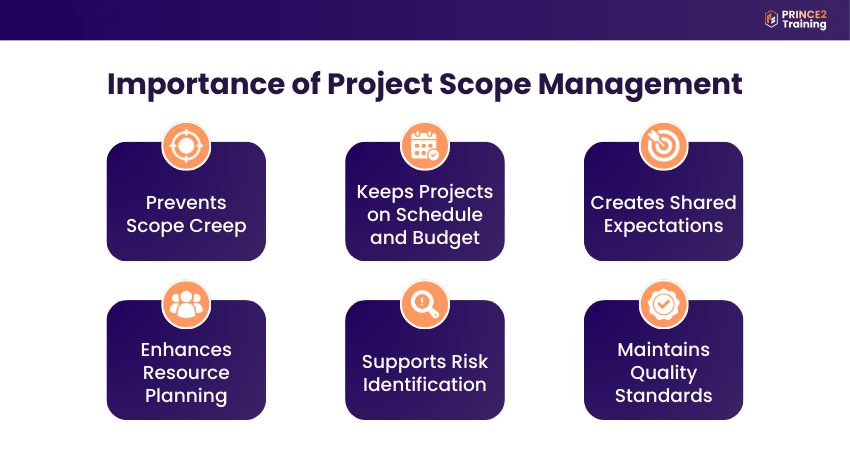
1) Prevents Scope Creep:
Clear scope boundaries reduce the risk of unapproved changes, ensuring the project stays aligned with its original objectives.
2) Keeps Projects on Schedule and Budget:
Well-defined tasks and deliverables allow accurate planning, helping avoid delays and unexpected costs.
3) Creates Shared Expectations:
Documented scope ensures stakeholders and team members have a common understanding of goals, responsibilities, and deliverables.
4) Enhances Resource Planning:
Defined scope clarifies resource requirements, enabling efficient allocation of people, time, and materials.
5) Supports Risk Identification:
Early scope definition helps identify potential risks sooner, allowing timely mitigation and informed decision-making.
6) Maintains Quality Standards:
Scope provides a reference point for validation, ensuring final outputs meet agreed requirements and expectations.
Take your Project Management career further with
PRINCE2® Practitioner Training
- Register today!
Steps for Project Scope Management in PRINCE2
PRINCE2 uses a structured approach to manage scope throughout the project lifecycle. The following steps show how the PRINCE2 Project Scope is defined, controlled, and closed effectively:
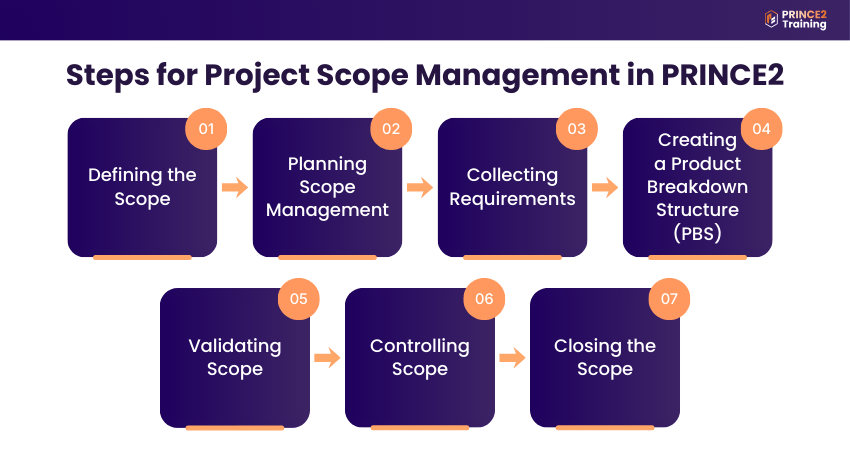
1) Defining the Scope
The process begins by defining the Project Scope, including goals, outcomes, deliverables, and required work. In PRINCE2, this happens during initiation through the project brief and project product description. A clear scope provides a strong planning foundation and prevents misunderstandings later.
2) Planning Scope Management
Once the scope is defined, the next step is to plan how it will be managed throughout the project. This includes establishing processes for handling scope changes, defining roles, and setting up communication channels. In PRINCE2, this planning ensures that any scope changes are controlled, assessed, and communicated effectively to stakeholders.
3) Collecting Requirements
Collecting requirements focuses on understanding and documenting stakeholder needs and expectations. This step ensures that the project delivers value and meets business goals. In PRINCE2, requirement gathering supports the development of the business case, helping confirm that the project remains justified and aligned with organisational objectives.
4) Creating a Product Breakdown Structure (PBS)
PRINCE2 uses a Product Breakdown Structure to define and organise all project deliverables. The PBS breaks the project into smaller, manageable products, clearly showing what needs to be delivered. This product-focused approach helps teams understand the full scope of the project and ensures that no essential deliverables are missed.
5) Validating Scope
Scope validation involves reviewing project deliverables with stakeholders to confirm they meet agreed requirements and expectations. In PRINCE2, this is an ongoing activity supported by regular reviews and quality checks. Continuous validation ensures that the project remains aligned with its objectives and reduces the risk of rework or rejection at later stages.
6) Controlling Scope
Controlling scope focuses on monitoring progress and managing changes to the approved scope. This includes identifying scope creep, documenting change requests, assessing impact, and updating project plans as needed. PRINCE2 applies a formal Change Control approach to ensure all scope changes are evaluated and approved before implementation.
7) Closing the Scope
The final step is formally closing the Project Scope. This confirms all deliverables meet quality standards and are accepted by stakeholders. In PRINCE2, this is part of the Closing a Project process and includes documenting lessons learned and post-project reviews. Proper closure ensures a clear and controlled project end.
Challenges and Solutions for Project Scope Management
Even with a structured framework like PRINCE2, managing the PRINCE2 Project Scope can be challenging. The following challenges and practical solutions address common issues that affect Project Scope clarity and control:
1) Project Obscurity
Project obscurity occurs when the scope is unclear or open to constant interpretation. While flexibility is valuable, too much ambiguity can distract teams from the project’s core objectives. Ensuring the Project Scope is clearly defined and documented before work begins helps maintain focus and prevents unnecessary deviations during delivery.
2) Scrappy Definition
A scrappy or incomplete scope can confuse project teams and delay progress. When purpose, deliverables, or boundaries are unclear, extra unplanned work may occur, increasing costs and delays. A clear and accurate Project Scope helps teams understand expectations and work efficiently.
3) Transitory Scope
Transitory scope refers to a scope that changes frequently throughout the project. Constant changes increase the risk of scope creep and can delay delivery. Maintaining a stable scope document and using formal change control procedures helps ensure that only necessary and approved changes are introduced.
4) Singular Scope
Project Scope should not be defined in isolation. When key stakeholders, especially clients, are not involved, misunderstandings can arise that affect design, resources, and outcomes. Sharing the Project Scope document with all stakeholders and gaining formal agreement helps align expectations and reduces the risk of rework.
Build strong project fundamentals with
PRINCE2® Foundation Training
and gain confidence to lead successful projects – Join now!
Project Scope Management Examples
Effective Project Scope Management brings clarity, controls change, and keeps teams focused on agreed outcomes. The examples below show how defining boundaries early and managing changes properly can protect time, cost, and quality.
1) Website Redesign Project
A company planning a website redesign defines the scope to include a refreshed user interface, improved navigation, and mobile optimisation. Advanced features such as custom animations or complex integrations are deliberately excluded to safeguard the budget and delivery timeline. Clear boundaries help the team stay focused and avoid unnecessary additions.
2) Marketing Campaign Launch
A marketing team defines the campaign's scope to cover social media advertising, email outreach, and a dedicated landing page. When requests for additional video content arise, they are assessed through a formal change management process to evaluate impact before approval. This ensures the campaign remains aligned with agreed objectives and deadlines.
3) Software Development Project
A development team outlines the scope of a customer portal, including user authentication, an account dashboard, and a support chat function. Any new feature requests are reviewed through a structured change control process to confirm alignment with business goals, available resources, and the original timeline.
Conclusion
PRINCE2 Project Scope provides the structure that keeps projects controlled and purposeful. By setting clear boundaries, managing change effectively, and securing stakeholder agreement early, teams can avoid confusion and maintain direction. A well-defined scope minimises disruption, safeguards resources, and helps ensure outcomes are delivered as planned and with measurable value.
Strengthen your Project Management capability with
PRINCE2® Certification
- Join now!
Frequently Asked Questions?
The five parts of the Project Scope Plan are:
1) Project Objectives: Define project goals and outcomes
2) Deliverables: List the required project outputs
3) Scope Boundaries: State what is included and excluded
4) Constraints: Identify limits such as time or budget
5) Assumptions: Note conditions assumed during planning
To write an effective Project Scope, begin by clearly defining the project objectives and desired outcomes. Describe deliverables in specific, measurable terms and outline what is included and excluded. Identify key assumptions and constraints, and establish clear acceptance criteria to ensure quality, control changes, and maintain stakeholder alignment.
The Project Scope is approved by the Project Sponsor, client, or key stakeholders who have authority over the project. While the Project Manager prepares and documents the scope, final approval comes from these decision makers to ensure the scope aligns with business needs, budget limits, and overall strategic objectives.