

 Back
Back


 Back to
topics
Back to
topics



Table of Contents
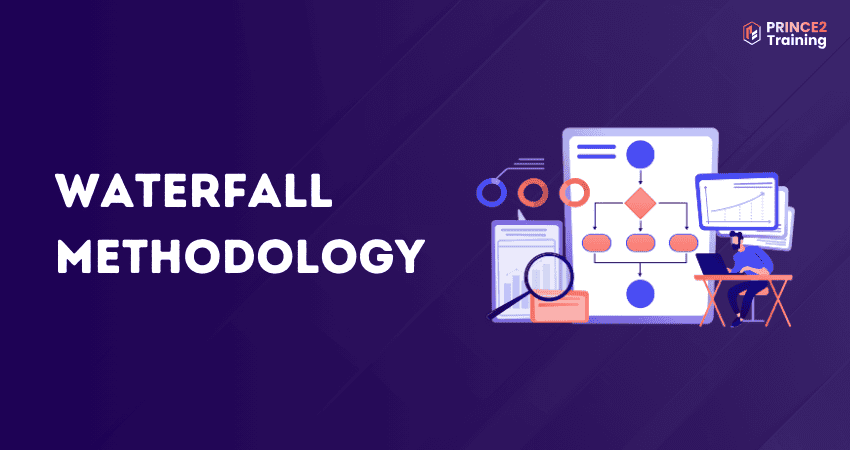
Have you ever started a project with great enthusiasm, only to feel lost in shifting plans, unclear goals, and constant last-minute changes? You are not alone. Many projects struggle without a clear structure to guide them. That is where the Waterfall Methodology comes in, offering a step-by-step approach that helps teams stay organised, focused, and in control from planning to final delivery, especially in Software Development and technical projects.
But does the Waterfall Methodology still hold value in today’s fast-moving work environments? In this blog, you will explore how it works, its key stages, advantages, and limitations. By the end, you will understand how structured planning helps deliver successful project outcomes.
What is the Waterfall Methodology?
The Waterfall Methodology is a structured Project Management approach that follows a linear and sequential process where work moves through clearly defined stages, such as requirements, design, implementation, testing, and maintenance. Each phase must be completed before the next begins, creating a structured flow from planning to delivery. This helps teams follow a clear plan, track progress, and maintain detailed documentation.
It is best suited for projects with fixed and well-defined requirements that are unlikely to change. The method offers high predictability and clear timelines, making it ideal for stable environments like construction and engineering. However, its structured nature makes changes difficult once the project has started.
What are the Stages of the Waterfall Methodology?
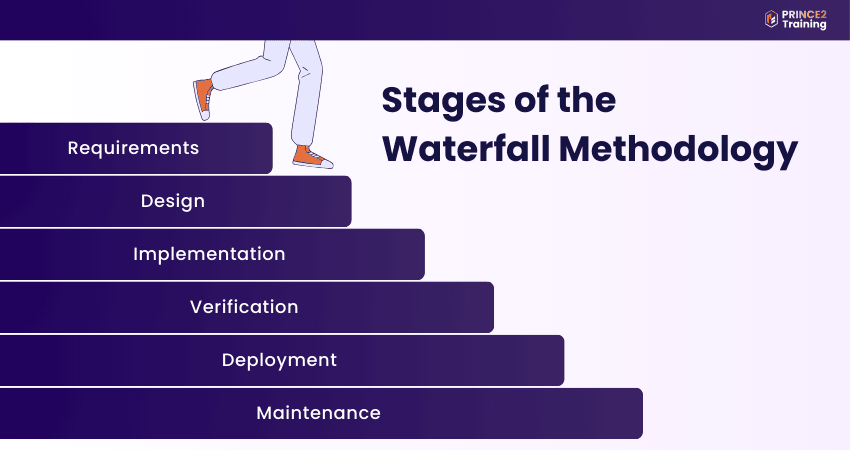
The Waterfall Methodology follows five sequential stages: requirements, design, implementation, verification, and maintenance. Each stage must be completed before the next stage begins. Let’s look at each stage in detail:
1) Requirements
The requirements stage defines what the system or product should achieve. Teams identify project scope, business goals, user needs, resources, timelines, and responsibilities. This phase establishes a clear roadmap and expectations, ensuring all deliverables and specifications are understood before development begins.
2) Design
The design stage determines how the solution will be built. Based on the approved requirements, teams create system architecture, technical specifications, data structures, workflows, and interface designs. These blueprints guide developers during construction. A well-structured design ensures the system’s functionality, performance, and integration requirements are understood before development begins.
3) Implementation
During implementation, the approved design is developed into a working product or system. Teams build the solution, assign tasks, allocate resources, and gather necessary data for efficient execution. This stage focuses on execution, transforming plans into functional deliverables according to defined specifications.
4) Verification
The verification stage ensures that the completed product meets the original requirements and expected quality standards. Teams perform testing, identify defects, evaluate performance, and confirm functionality across different scenarios and environments. This quality assurance process verifies the solution works as intended before final delivery or release.
5) Deployment
In the deployment stage, the finished product is released into the live environment. Teams install, configure, and launch the system for real users. They also provide initial user training, documentation, and operational support to ensure a smooth transition from development to production use.
6) Maintenance
The maintenance stage begins after the product is delivered and actively used by end users. Teams monitor performance, fix issues, and implement updates or improvements over time. Ongoing support ensures reliability, resolves user concerns, and keeps the system or product effective and relevant after deployment.
Build adaptable Project Management skills by integrating Agile practices through the PRINCE2 Agile® Foundation Training – Register now!
Advantages of the Waterfall Methodology
The structured nature of the Waterfall model offers several benefits, particularly for software projects that require stability and predictable development cycles. These are the advantages of the Waterfall Methodology:
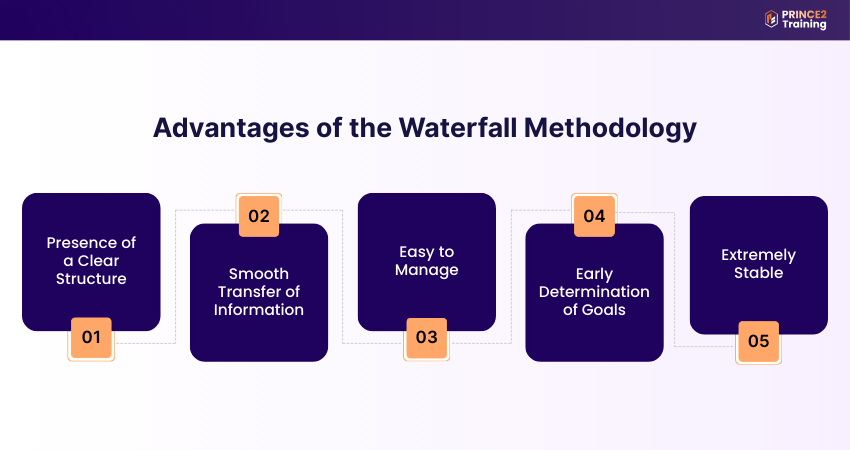
1) Presence of a Clear Structure
The Waterfall Methodology follows a well-defined and sequential structure, where each phase has specific goals and deliverables. Work progresses step by step, from requirements to maintenance, ensuring tasks are completed in an organised manner. This clarity helps teams understand their responsibilities and maintain consistency throughout the project.
2) Smooth Transfer of Information
Each stage produces clear documentation and deliverables, allowing information to pass smoothly from one phase to the next without confusion. This structured flow of knowledge supports effective communication between teams and ensures continuity, especially when different teams handle different stages of the project lifecycle.
3) Easy to Manage
Because milestones and deliverables are defined in advance, managers can easily monitor progress and measure performance. Each completed phase acts as a checkpoint, making it easier to track schedules and identify delays. This predictability simplifies project planning, scheduling, and resource allocation. Project Managers can maintain tighter control over timelines and budgets compared to more flexible methodologies.
4) Early Determination of Goals
The Waterfall approach emphasises thorough planning at the beginning of the project. Requirements, scope, and expected outcomes are defined and approved before development begins. This early clarity ensures stakeholders share a common understanding of the project objectives. It also reduces ambiguity and helps teams work confidently toward clearly defined targets.
5) Extremely Stable
The linear nature of the Waterfall Methodology makes it highly stable and predictable in execution across all project phases. Once requirements are finalised, the project follows a fixed path with minimal changes or deviations. This stability allows managers to predict outcomes more accurately and maintain strong control over execution.
Disadvantages of the Waterfall Methodology
Despite its benefits, the Waterfall approach also has limitations that make it unsuitable for certain types of projects. These are the disadvantages of the Waterfall Methodology:
1) Costly and Inflexible
The Waterfall Methodology follows a strict sequence where each phase must be completed before the next begins. This structured approach offers minimal flexibility for changes throughout the project lifecycle. If requirements change or new features are needed later in the project, teams may have to revisit earlier stages, which can be time-consuming and costly.
2) Does Not Prioritise the Client or End-user
The Waterfall approach focuses mainly on meeting predefined requirements rather than continuously gathering user feedback during development. Since client or end-user input is limited during development, changing needs or expectations may not be addressed until the project is completed and delivered.
3) Delayed Testing
Testing usually occurs after the development phase is fully finished and implementation is completed. By this stage, significant time and resources have already been heavily invested in the project. If issues are discovered during testing, fixing them can require extensive rework and may lead to delays or additional costs.
4) No Scope for Revision or Reflection
The strictly sequential nature of the Waterfall makes it difficult to review progress and make adjustments during earlier stages of development. Since teams typically move forward only after fully completing each phase, there is a limited opportunity to reflect, revise, or change direction if new insights emerge.
Build strong project leadership skills with comprehensive PRINCE2® Foundation & Practitioner Training – Join today!
Waterfall Project Management Best Practices
Successful Waterfall implementation requires careful planning, clear communication, and strong process control. Because each phase depends on the previous one, following best practices ensures smooth execution. Here are the Waterfall Project Management best practices:
1) Define Requirements Thoroughly From the Start:
Ensure all project requirements are clearly documented, approved, and understood before development begins. Detailed planning reduces confusion and prevents costly changes later.
2) Create Detailed Documentation at Every Stage:
Maintain comprehensive records for requirements, design, development, and testing. Proper documentation supports knowledge transfer, accountability, and easier maintenance after delivery.
3) Set Realistic Timelines and Milestones:
Develop a clear project schedule with defined milestones for each phase. This helps teams track progress, identify delays early, and maintain control over deadlines.
4) Conduct Thorough Design Reviews Before Implementation:
Carefully evaluate design plans to ensure they meet requirements and are practical to implement. Early validation reduces errors and improves development efficiency.
5) Maintain Strong Communication Between Teams:
Ensure regular updates and coordination between stakeholders, designers, developers, and testers. Clear communication prevents misunderstandings and keeps the project aligned.
6) Plan for Risks and Contingencies:
Recognise potential risks early and plan effective strategies to address them. Proactive risk planning helps avoid disruptions and unexpected setbacks.
7) Prioritise Quality Assurance and Testing:
Even though testing occurs later in the Waterfall, teams should prepare testing strategies early. Well-planned testing ensures the final product meets expectations and standards.
Waterfall vs Agile Methodology: What's the Difference?
Waterfall and Agile are two popular Project Management approaches that differ mainly in structure and flexibility. The Waterfall Methodology follows a linear sequence with fixed requirements and predictable timelines, making it suitable for stable projects with clear goals.
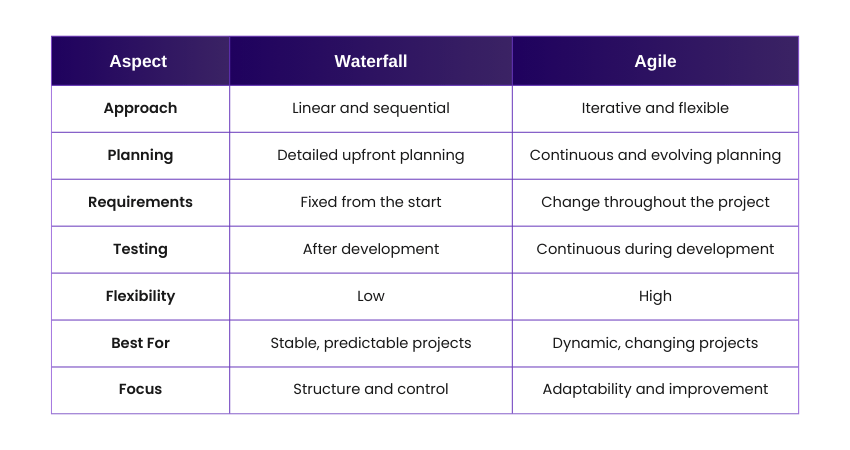
Agile, in contrast, is flexible and iterative. Work is completed in smaller cycles with regular feedback and continuous improvements. While Waterfall focuses on structure and control, Agile emphasises adaptability, collaboration, and responding to change.
Conclusion
The Waterfall Methodology remains a powerful choice for projects that demand structure, clarity, and predictable outcomes. When requirements are well defined, the step-by-step approach ensures control and consistency. Understanding its strengths and limits helps you choose the right method and deliver projects with greater confidence and precision.
Build strong project leadership skills through comprehensive PRINCE2® Certification designed for real-world success – Register now!