

 Back
Back


 Back to
topics
Back to
topics



Table of Contents
 28-Mar-2026
Author-Veronica Davis
Struggling to decide what to do first when every task feels important? It is something many people experience, especially when their day is filled with deadlines and constant interruptions. You may stay busy from morning to evening and still feel like the most important tasks are not yet unfinished. Then, you might need the Eisenhower Matrix to bring clarity to this situation.
It offers a simple way to sort your tasks based on what is urgent and needs immediate attention, helping you focus on what really matters. In this blog, we'll explore What is Eisenhower Matrix, its quadrants, and practical ways to use it in your daily life to stay organised. Let's dive in!
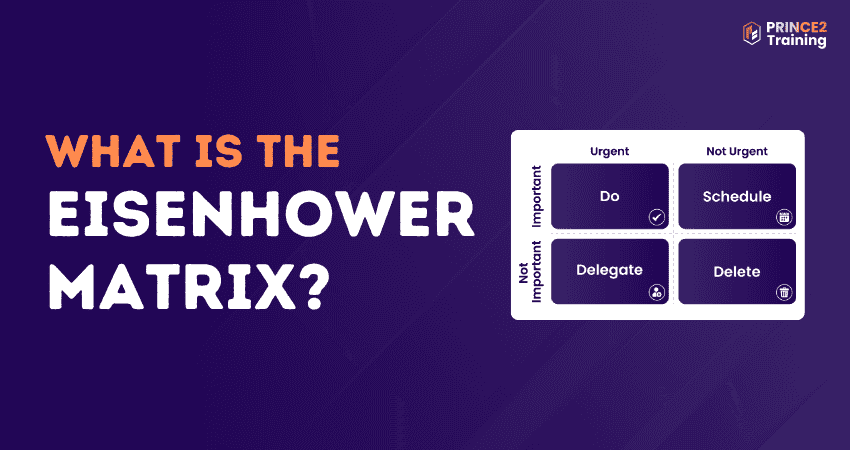
What is the Eisenhower Matrix?
The Eisenhower Matrix is a decision-making framework and task management tool that helps individuals prioritise tasks based on two factors such as urgency and importance. It divides your tasks into four quadrants, so you can decide what to do immediately, what to plan for later, what to delegate, and what to eliminate.
This method helps you focus on meaningful work instead of getting distracted by tasks that only feel urgent. Over time, this Eisenhower Matrix encourages better planning and reduces last-minute pressure by balancing different responsibilities in your daily life.

History of the Eisenhower Matrix
The concept behind the Eisenhower Matrix was developed by Dwight D. Eisenhower, the 34th President of the United States and Supreme Allied Commander of World War II. He used this approach of urgency and importance to prioritise and manage high-pressure decisions he faced throughout his career as both military leader and president.
Eisenhower believed that not all urgent tasks are important, and not all important tasks are urgent. This idea became the foundation of the Eisenhower Matrix. Later, author Stephen Covey brought this concept into the mainstream, expanded Eisenhower’s idea, and presented it as a practical framework for time management and decision making.
The Four Quadrants of the Eisenhower Matrix
The Eisenhower Matrix is divided into four quadrants, each representing a different type of task. Let’s now check what those quadrants are:
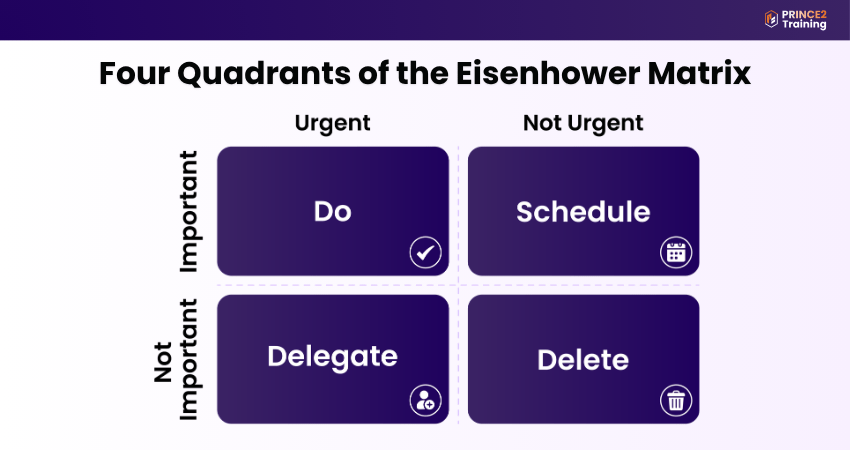
Quadrant 1: Do (Urgent + Important)
This quadrant includes tasks that require immediate attention and have significant consequences if not completed. They are both urgent and important. These are your top priorities and should be handled as soon as possible.
Examples Include:
1) Completing urgent work deadlines
2) Handling emergencies
3) Fixing urgent issues at work
4) Preparing for an important presentation
Quadrant 2: Schedule (Important + Not Urgent)
The second quadrant is where real growth happens. These tasks are important but do not require immediate action, allowing you to plan and execute them thoughtfully. Spending more time in this quadrant helps you stay proactive rather than reactive.
Examples Include:
1) Planning long-term goals
2) Skill development
3) Building relationships
4) Strategic thinking
Quadrant 3: Delegate (Urgent + Not Important)
These tasks demand immediate attention but do not contribute significantly to your long-term goals. Delegating these tasks helps you focus your time on more meaningful work. They are more often interruptions that can be handled by someone else.
Examples Include:
1) Replying to routine emails
2) Small administrative tasks
3) Scheduling meetings
4) Minor requests from others
Quadrant 4: Delete (Not Urgent + Not Important)
This quadrant includes tasks that add little to no value and often act as distractions. These activities usually do not contribute to your goals or productivity. It is best to minimise or completely avoid such tasks whenever possible.
Examples Include:
1) Updating reports that no one uses
2) Rechecking completed work unnecessarily
3) Attending unnecessary meetings
4) Doing tasks with no clear purpose
Improve your ability to handle various projects with
PRINCE2® Practitioner Training
– Register today!
How to Prioritise Tasks: 4 Practical Tips
Using the Eisenhower Matrix becomes easier when you follow a few simple tips. Here are four practical tips you can follow:
1) Limit Tasks to 10 Per Quadrant
Try not to add too many tasks to each quadrant. Keeping around 10 tasks per section makes your list clear and manageable. When you limit your tasks, you are forced to think about what really matters. This helps you focus on the most important work instead of trying to do everything.
2) Use Colour-coding for Your Tasks
Colour-coding is a simple but effective way to visually organise tasks. You can assign different colours to work, personal, or urgent tasks to quickly identify priorities. This visual method helps you identify what needs attention at a glance. It also makes your planning more organised and easier to follow.
3) Eliminate Tasks Before Prioritising
Before you start assigning tasks to quadrants, take a moment to remove unnecessary tasks. Many to-do lists are filled with low-value activities that do not need to be done at all. By eliminating these tasks first, you reduce clutter and ensure that your matrix focuses only on meaningful work.
4) Create Personal and Professional To-do Lists
Separating personal and professional tasks can improve clarity. While both types of tasks can be included in the same matrix, having distinct lists helps you maintain balance. This approach ensures that neither area of your life is neglected. This makes it easier to manage priorities across different responsibilities.
How to Use the Eisenhower Matrix?
Using the Eisenhower Matrix is simple, but it works best when you follow a clear process. Thus, here’s how you can use it effectively:
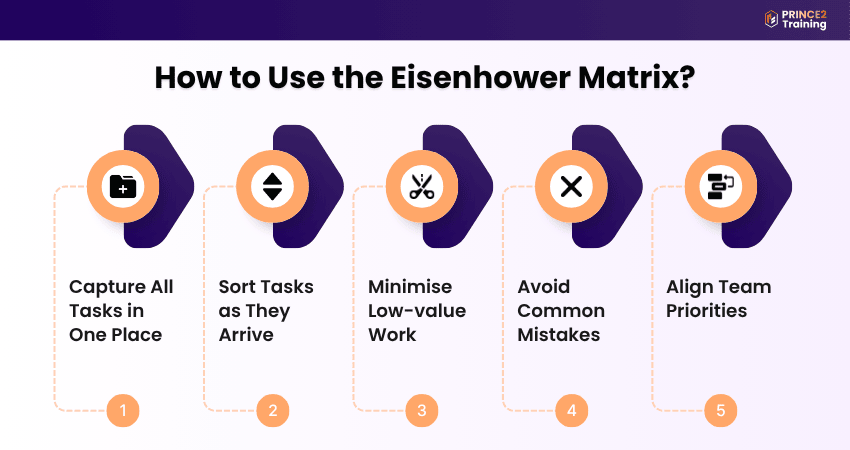
1) Capture All Tasks in One Place
Start by listing all your tasks in one place. This could be a notebook, a digital app, a task management tool, or a simple to-do list. Having everything in one place helps you see your full workload clearly. It also ensures that no important task is forgotten or overlooked.
Key Tips:
1) Use one central list for all tasks
2) Avoid spreading tasks across multiple tools
3) Write tasks as soon as they arise
4) Review your list at least daily
2) Sort Tasks as They Arrive
As new tasks come in, assign them immediately to the correct quadrant based on urgency and importance. This keeps your matrix organised and up to date. Also, doing this regularly helps you avoid confusion and prevents tasks from piling up.
Key Tips:
1) Use urgency and importance as decision factors
2) Avoid delaying task classification decisions
3) Keep your matrix updated throughout the day
4) Recheck priorities when tasks frequently change
3) Minimise Low-value Work
Actively reduce the time spent on tasks that do not add value. This includes both eliminating unnecessary work and delegating tasks when possible. When you spend less time on low-value work, you have more time for important activities.
Key Tips:
1) Eliminate distractions during focused work hours
2) Delegate repetitive tasks whenever possible
3) Set limits for time-wasting activities daily
4) Focus on tasks aligned with your goals
4) Avoid Common Mistakes
One common mistake while doing this matrix is treating urgent tasks as always important. Not all urgent tasks deserve your full attention. Another mistake is ignoring important tasks because they are not urgent. Focusing on the right tasks helps you stay productive in the long run.
Key Tips:
1) Prioritise long-term goals over quick tasks
2) Avoid skipping regular task review sessions
3) Avoid multitasking on high-priority tasks
4) Stay realistic about your daily capacity
5) Align Team Priorities
If you are working in a team, make sure everyone understands what tasks are most important. Sharing the matrix can help align priorities and improve collaboration. This makes teamwork smoother and ensures that everyone focuses on the right tasks.
Key Tips:
1) Use a matrix during team planning discussions
2) Assign tasks based on team strengths
3) Avoid duplication of tasks across team members
4) Track progress and update tasks frequently
Learn how to manage projects efficiently with
PRINCE2® Foundation & Practitioner Training
– Join now!
Eisenhower Matrix Example
To understand how the Eisenhower Matrix works in real life, let’s look at a simple example of a working professional managing daily tasks. Imagine a Project Manager handling multiple tasks during a busy workday. Here is how they create the matrix and manage the work
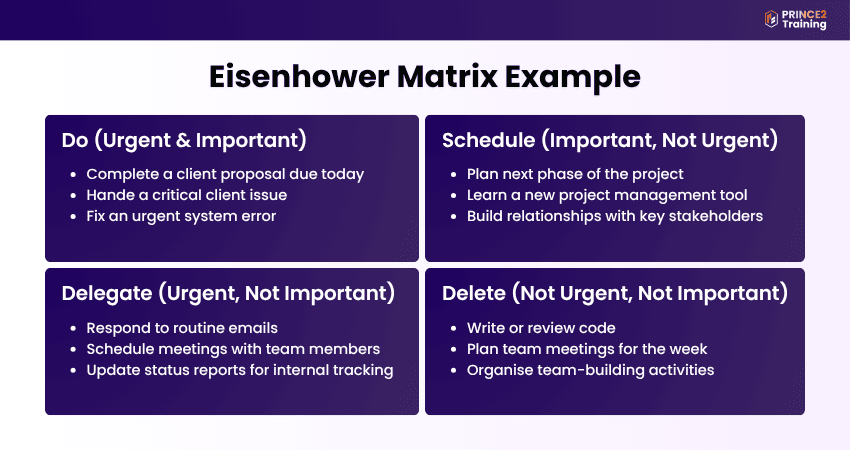
This example shows how the Eisenhower Matrix helps you organise your tasks clearly. It allows you to focus on what really matters while reducing time spent on less important activities.
Advantages of the Eisenhower Matrix
The Eisenhower Matrix offers several benefits that make it a popular productivity tool. The following are its key advantages:
1) Improves Task Prioritisation:
It helps you clearly identify which tasks should be prioritised. This makes it easier to decide what to focus on first without confusion.
2) Enhances Time Management:
By organising tasks, you can manage your time effectively. It helps you spend more time on meaningful work instead of low-value activities.
3) Reduces Stress and Overwhelm:
Having a clear structure reduces the feeling of being overwhelmed. You know exactly what needs to be done and what can wait.
4) Encourages Better Decision-making:
The matrix provides a simple framework for making decisions. It helps you think logically rather than reacting to every task.
5) Promotes Focus on Important Work:
It shifts your attention from urgent tasks to important ones. This leads to better long-term results and productivity.
6) Supports Work-life Balance:
By separating tasks clearly, it becomes easier to balance personal and professional responsibilities.
7) Helps in Delegation:
The matrix makes it easier to identify tasks that can be delegated. This improves team efficiency and saves your time.
8) Increases Overall Productivity:
By prioritising important tasks and reducing distractions, you can accomplish more tasks in less time.
Disadvantages of the Eisenhower Matrix
While the Eisenhower Matrix is a useful tool for managing tasks, it is not without its challenges. Here are some of its disadvantages:
1) Requires Consistent Effort:
The matrix only works well when used regularly. If you stop updating it, it can quickly become outdated and less useful.
2) Not Ideal for Rapidly Changing Work:
Priorities can change quickly in Agile environments, meaning tasks may need to be reassigned frequently, which can be challenging.
3) May Oversimplify Complex Tasks:
Some tasks may not fit neatly into one quadrant. This can make it difficult to categorise them accurately.
4) Risk of Ignoring Small Tasks:
Focusing too much on important tasks may cause smaller tasks to be overlooked, even if they still need attention.
5) Can be Time-consuming:
Sorting tasks into quadrants regularly can take time, especially when you have a busy schedule. It may feel like extra work if not managed properly.
Conclusion
The Eisenhower Matrix is more than just a productivity tool. It is a mindset that encourages you to focus on what truly matters. By distinguishing between urgency and importance, you can take control of your time rather than reacting to every demand. In a world full of distractions, this simple framework offers a powerful way to stay focused and productive.
Develop practical project skills that employers value with PRINCE2® Certification – Sign up soon!
Frequently Asked Questions?
The Eisenhower Matrix was developed from principles used by Dwight D. Eisenhower, the 34th U.S. President, who prioritised tasks based on urgency and importance. His approach later became formalised as the matrix and was widely popularised by Stephen Covey.
The Eisenhower Matrix is important because it helps individuals focus on meaningful work rather than getting caught up in urgent but unimportant tasks. It improves productivity, reduces stress, and supports better decision-making.
The Eisenhower Matrix works by dividing tasks into four categories based on urgency and importance. You then decide whether to do, schedule, delegate, or delete each task. This structured framework ensures that your time and energy are spent on tasks that meet your goals, helping you achieve better results with minimum effort.