

 Back
Back


 Back to
topics
Back to
topics




Table of Contents
 27-Aug-2025
Author-Hailey Davis
When it comes to advancing your career in Project Management, professionals find themselves between APM vs PMP certifications. Both are globally recognised and highly sought after, but they serve different purposes. Understanding these differences is important for choosing the right qualification that aligns with your professional goals.
APM, rooted in the UK, offers a progressive pathway suitable for beginners and experienced professionals alike. PMP, originating in the US, is renowned for its rigorous standards and credibility. In this blog, you will learn about APM vs PMP, their differences, and similarities.
Table of Contents
1) An Overview of APM vs PMP
2) What is APM (Association for Project Management)?
3) What is PMP (Project Management Professional)?
4) APM vs PMP: Detailed Comparison
5) Similarities Between APM and PMP
6) APM and PMP: Which One to Choose?
7) Conclusion
An Overview of APM vs PMP
Project Management is a growing field, and holding the right certificate can set you apart from the competition. Two of the most popular ones are the Association for Project Management (APM) and the Project Management Professional (PMP). Let's check what they are and how they differ:
What is APM (Association for Project Management)?
The Association for Project Management (APM) is a UK-based organisation that provides certifications and standards for Project Management. It is aligned with PRINCE2 and Agile methodologies and focuses on broad Project Management knowledge. APM equips professionals with practical skills that can be applied across multiple industries, helping them manage projects with flexibility

Benefits and Challenges of APM
So far, you have explored APM vs PMP. Let’s check the benefits and challenges of APM now:
1) Benefits of APM
1) Flexibility:
APM allows you to adapt the Project Management methods that suit the specific needs of each project.
2) Collaboration:
It promotes teamwork and open communication. This helps employees work together effectively.
3) Faster Delivery:
APM focuses on meeting deadlines, which can provide shorter delivery times and faster time-to-market.
4) Broad Applicability:
APM principles work across multiple sectors, including construction, IT, healthcare, and government projects.
2) Challenges of APM
1) Lack of Clear Framework:
Since APM is flexible, it can be hard sometimes to track progress and measure success, especially in big projects.
2) Limited Suitability:
APM may not work well for projects with strict budgets, fixed deadlines, or highly controlled environments.
3) Challenging Content:
Preparing for APM certifications, like the PMQ, can be difficult and might require time and effort.
What is PMP (Project Management Professional)?
The Project Management Professional (PMP) is one of the most recognised Project Management credentials worldwide. It focuses on the PMBOK® Guide framework, which defines global Project Management standards. PMP is preferred by multinational companies and opens doors to international Project Management Opportunities.

Benefits and Challenges of PMP
Now, it’s time to check the benefits and challenges of PMP. So, here they are:
1) Benefits of PMP
1) Global Recognition:
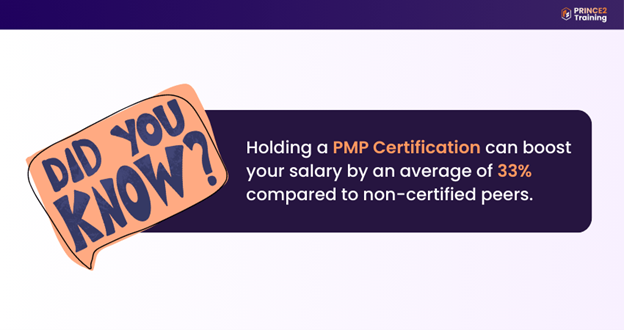
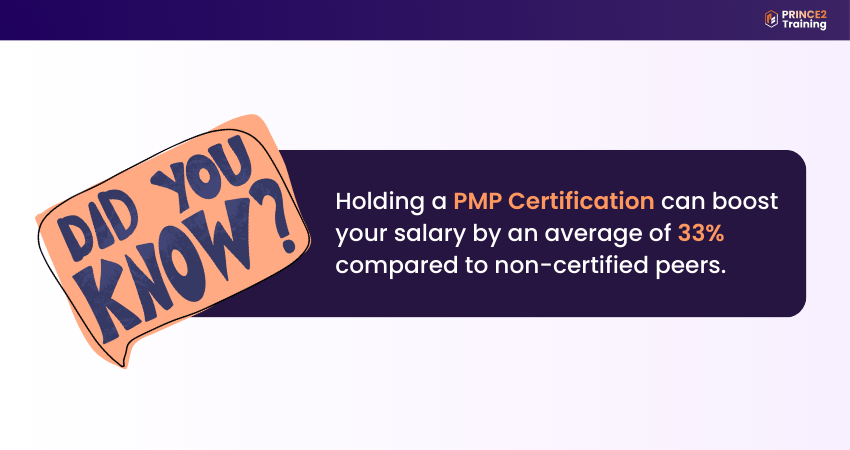
PMP is well-known worldwide and can boost career opportunities and salary potential.
2) Standardisation:
It follows a structured methodology based on the PMBOK® Guide, ensuring consistent project outcomes.
3) Comprehensive Coverage:
PMP includes ten knowledge areas and five process groups, giving professionals deep expertise in Project Management.
4) High Value in Multinational Roles:
It is preferred by global organisations, making it ideal for professionals aiming to work internationally.
2) Challenges of PMP
1) Rigidity:
PMP’s standardised approach can be less flexible, making it harder to adapt to unique project needs.
2) High Costs:
The exam fees, study materials, and training costs can be expensive.
3) Complexity:
PMP involves detailed frameworks and processes, which might be difficult for beginners.
Start your Project Management journey and learn the fundamentals with
APM Introductory Certificate – Project Fundamentals Qualification (PFQ)
now!
APM vs PMP: Detailed Comparison
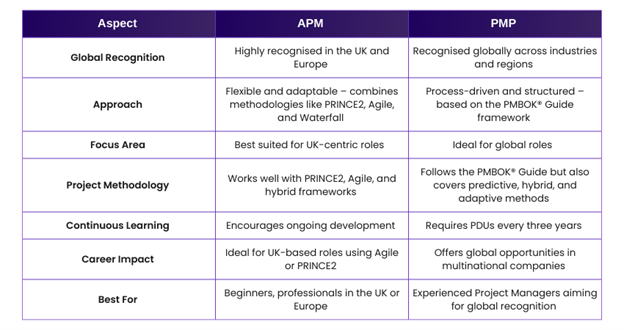
APM vs PMP differ in their approach, structure, global reach, and industry relevance. Let’s check their difference in detail:
APM vs PMP: Detailed Comparison
APM vs PMP differ in their approach, structure, global reach, and industry relevance. Let’s check their difference in detail:
1) APM vs PMP: Tools and Methodologies
The APM offers flexibility when it comes to tools and methodologies. It does not follow a specific framework, allowing you to choose approaches that best fit your project needs. It focuses on core principles and has methodologies like Agile, Waterfall, or hybrid models that suit your projects and organisational needs.
Meanwhile, PMP follows the PMBOK® Guide, offering a standardised framework with tools, techniques, and best practices. While it covers Agile, Waterfall, and hybrid approaches, it emphasises PMBOK standards to plan, execute, monitor, and control projects effectively in structured, complex environments.
2) APM vs PMP: Eligibility Criteria
The APM certification is beginner-friendly, making it accessible to individuals starting their careers in Project Management. It provides a foundation in Project Management principles and is designed to help learners build skills without demanding prior experience or qualifications.
PMP certifications has a well-defined eligibility criterion set by the Project Management Institute. Candidates must meet any one of the three criteria: a secondary school diploma with five years of Project Management experience and 35 hours of training. It also includes a bachelor’s degree with three years of experience and 35 hours of training, and lastly, a bachelor’s degree with from the PMI Global Accreditation Centre Program with two years of experience.
3) APM vs PMP: Industry Focus
APM Certifications are widely recognised and respected in the UK and Europe. They are best suited for professionals working in industries like construction, engineering, IT, government, and healthcare.
In contrast, the PMP Certification has a global reach and is highly valued worldwide. It is particularly popular in industries such as IT, telecommunications, finance, consulting, and manufacturing.
4) APM vs PMP: Continuous Professional Development
APM offers a Continuing Professional Development (CPD) programme that helps professionals improve their skills by attending workshops, seminars, conferences, and training sessions. It is flexible, letting you choose learning activities based on your career goals and areas of interest.
Similarly, PMP also focuses on continuous learning. To keep the certification active, you need to earn Professional Development Units (PDUs) by attending webinars, reading industry updates, conferences, or training programmes. This ensures PMP-certified professionals stay up to date with global Project Management practices.
5) APM vs PMP: Exam Structure
The APM Project Management Qualification (PMQ) exam is for three hours, with 40 questions to answer. It consists of multiple-choice, long and short answer questions. This exam assesses your understanding of stakeholder engagement and communication, Risk and Issue Management, lifecycle and Quality Management.
On the other hand, the PMP exam uses a multiple-choice format with 180 questions that takes 230 minutes to complete. It focuses on situational problem-solving and tests your knowledge of frameworks, tools, and techniques from the PMBOK® Guide.
Showcase your leadership and advance to a professional level of expertise with
APM Project Professional Qualification (PPQ) Course
– Join today!
Similarities Between APM and PMP
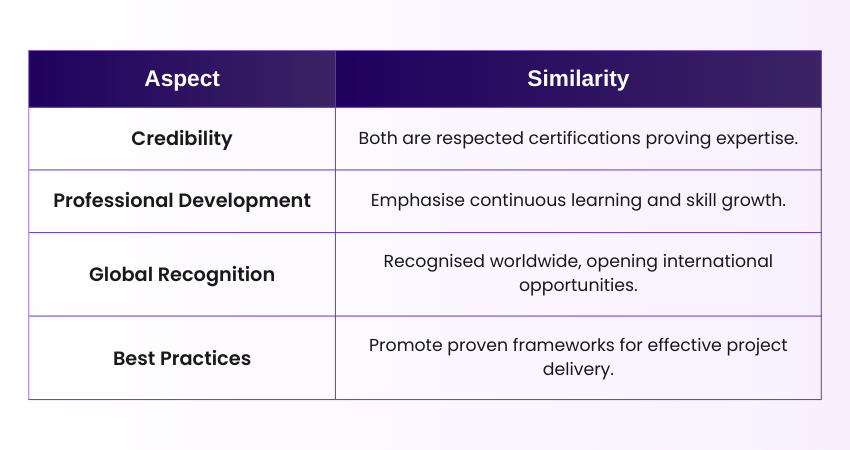
Below are the similarities between APM and PMP:
1) Credibility:
Both are highly respected certifications that validate expertise and professionalism in Project Management.
2) Professional Development:
Both emphasise continuous learning and enhance skillset to keep professionals aligned with evolving practices.
3) Global Recognition:
APM is stronger in the UK, while PMP is stronger in the US, but both enjoy worldwide recognition and open international career opportunities.
4) Best Practices:
Both provide frameworks and methodologies based on proven industry standards for effective project delivery.
APM and PMP: Which One to Choose?
APM and PMP both hold strong value in Project Management, but the right choice depends on your career goals, industry, and location. To guide your decision, let’s explore which option best fits different project needs and professional paths.
Why Choose APM?
APM can be an excellent choice if you want a flexible and adaptable certification that supports your career growth at every stage. It is suitable for both beginners and experienced professionals, and ideal for anyone who wants to strengthen their Project Management skills.
It works best for projects that require adaptability and collaboration. It is also valuable for Agile projects with dynamic needs, where priorities may change frequently.
Why Choose PMP?
PMP is a great fit for professionals working with multinational organisations or managing global projects. It is especially useful for those seeking international roles or working in environments that demand structured frameworks and consistent practices. Recognised as the global benchmark in Project Management, PMP sets you apart as a leader capable of delivering consistent results worldwide.
In short, choose APM if you want flexibility and adaptability, and choose PMP if you want a globally respected, structured certification that opens doors to international opportunities.
Conclusion
Both APM and PMP are respected Project Management Certifications, but they serve different purposes. APM is ideal for professionals seeking adaptable frameworks, while PMP offers a globally standardised approach for multinational organisations. Understanding APM vs PMP will help you choose the right one based on your career goals, work location, and methodologies.
Want to control your projects effectively? Join our APM Project Management Qualification (PMQ) Course immediately!
Frequently Asked Questions?
PMP and APM are both recognised certifications. PMP is globally recognised and ideal for structured, process-driven environments. APM emphasises a broader, principle-based approach. You can choose it depending on your location, industry, and preferred project methodology.
APM and PMI are professional bodies offering Project Management Certifications. APM promotes a holistic, principle-led approach, while PMI offers standardised processes and frameworks like PMBOK.
No, APM and Agile are not the same. APM is a certification that teaches a wide range of Project Management skills and approaches. Agile is a specific methodology focusing on flexibility, collaboration, and iterative delivery, which APM may include but does not exclusively follow.